
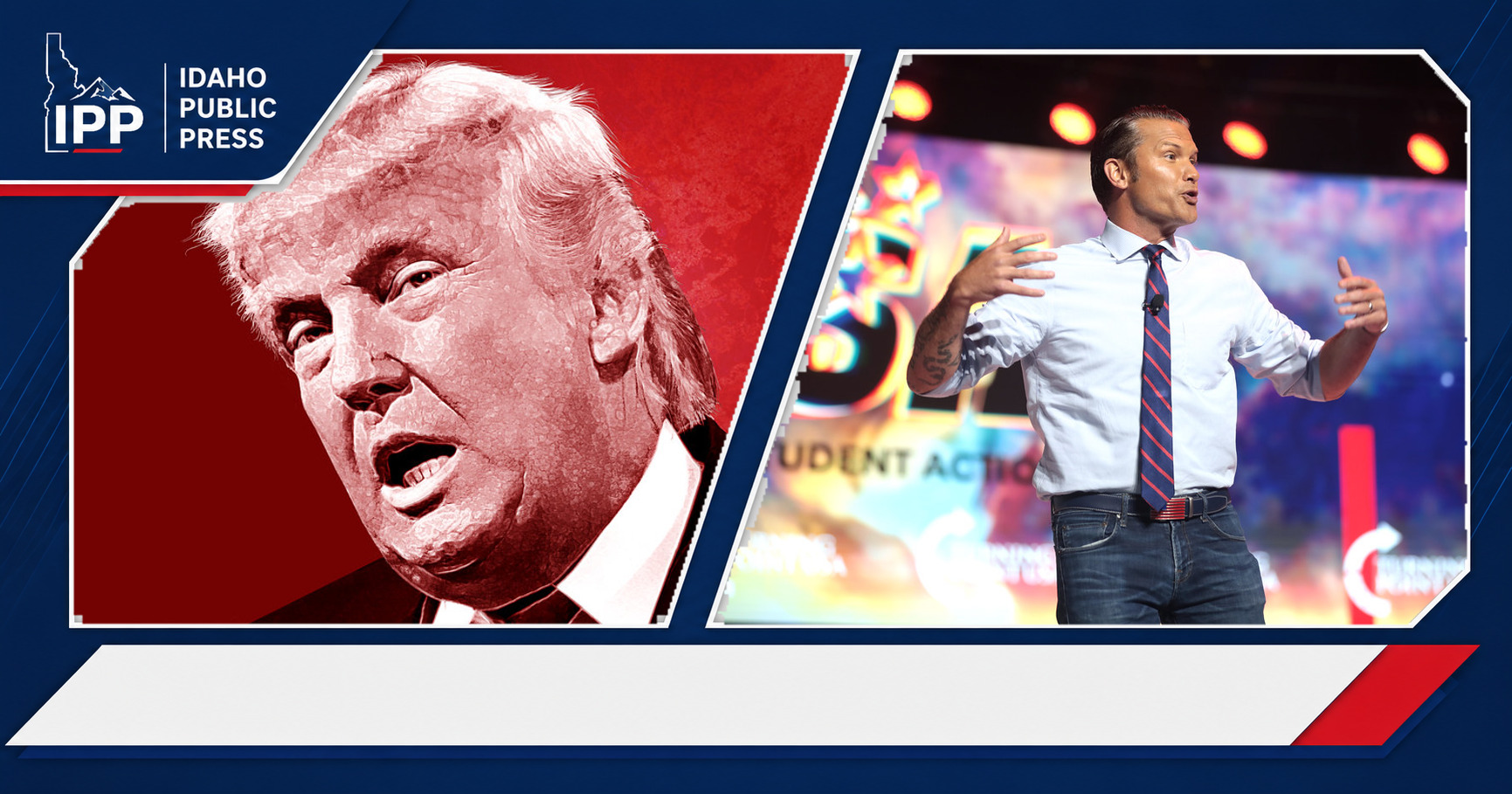
The fight is less about ceremony than leverage. Trump withheld his signature to protest stalled voter ID legislation, even as a major housing measure became law anyway.
Pete Hegseth criticized Donald Trump on Fox News after Trump did not sign the housing bill, turning an unsigned housing bill into a Washington fight on Friday, July 10, 2026. The housing bill became law without Trump’s signature anyway, because Trump chose neither to sign nor veto it before the deadline.
The viral framing — Fox News halted as Pete Hegseth humiliates Trump — captured the on-air drama. The bigger story is more practical: a bipartisan housing measure is now law, while Trump used his missing signature to protest stalled voter ID legislation.
The signature Trump withheld
The Associated Press reported that Trump said he would not sign the bipartisan housing bill because the Senate had not moved ahead with the SAVE America Act, a strict voter ID measure he has pushed.
Trump posted that he would not sign the Housing Bill, which had been approved by Congress and sent to the White House, in protest over what he described as the Senate’s failure to pass the elections bill.
That move did not stop the housing bill. Under the process described in the AP report, Trump had a deadline to sign it, veto it or allow it to take effect without his signature. He chose the third option.
That is why the phrase unsigned housing bill is doing so much work here. The bill is not dead. It is law. What is missing is Trump’s name on it.
Why Hegseth’s criticism landed
The Fox News exchange mattered because criticism from Pete Hegseth, a Trump-aligned media figure, cut against the usual expectation that conservative television would treat the president’s standoff as a show of strength.
The available source material identifies Hegseth’s criticism on Fox News, but it does not provide a full transcript of his remarks. That makes the verified policy record especially important: Trump did refuse to sign the housing bill, and the housing bill did become law without his signature.
The embarrassment for Trump is not that a host or commentator used a sharp line on television. It is that the law moved forward while the White House declined to claim ownership of a bill aimed at one of the country’s most visible affordability problems.
For supporters, Trump’s refusal may read as a pressure tactic meant to force attention back to election rules. For critics, it looks like a president distancing himself from housing relief because he did not get a separate political demand.
The bill had rare bipartisan backing
The housing legislation, called the 21st Century ROAD to Housing Act, passed with large bipartisan margins. AP reported the Senate vote was 85-5 and the House vote was 358-32.
That matters because housing has become one of the few areas where lawmakers in both parties have political incentive to act. Rent, mortgage rates, insurance costs and tight supply are pressuring voters across red states, blue states and fast-growing suburbs.
The bill aims to lower housing costs and encourage more construction. According to AP, it seeks to cut federal housing rules, slim down environmental reviews, speed up homebuilding and limit the ability of corporations to buy single-family homes.
White House economists had estimated earlier in the year that the country faced a shortage of 10 million homes. The bill is not a cure-all, but supporters see it as a federal attempt to reduce some barriers to supply.
The voter ID fight behind it
Trump linked his refusal to sign the housing bill to the SAVE America Act, a voter ID proposal that would require proof of citizenship for voters. AP reported that the measure did not have enough Republican support to pass.
That is the tension at the center of the unsigned bill fight. Trump used a broadly supported housing measure as leverage for a more divisive elections bill, but Congress had already sent him the housing legislation.
House Speaker Mike Johnson had urged Trump to sign it, telling reporters that he hoped the president would use the “fattest black marker” and sign his name “really big” on the bill. Johnson also said that if Trump did not sign it, it would still be law.
Democrats immediately saw an opening. Senate Democratic leader Chuck Schumer argued that Trump’s priorities were clear, framing the refusal as a choice against families facing higher costs.
What the law can and cannot do
The housing bill now enters a market where affordability is still moving in the wrong direction for many buyers. The National Association of Realtors said the median sales price rose 1.8% in June from a year earlier to $440,600, an all-time high in data going back to 1999, according to AP.
Supporters say the law can help by making it easier to build homes and by reducing red tape. Housing advocates and parts of the real estate industry backed the measure for that reason.
But the bill does not address every force pushing housing costs higher. AP noted that it does not solve shortages of construction workers, rising insurance costs or wages that have not kept pace with what renters and buyers need.
That makes the political fight sharper. Trump declined to sign a bill that his administration could have presented as an affordability win, yet he also avoided a veto that would have killed it.
The real takeaway from the Fox moment
The Fox News moment drew attention because it suggested discomfort inside Trump-friendly media over the optics of the unsigned bill. But the durable consequence is not the clip. It is the unusual split between lawmaking and presidential ownership.
Trump got to register protest without blocking the housing measure. Congress got its housing bill enacted. Voters are left to judge whether that was hardball politics, needless drama or a missed chance to plainly embrace a policy aimed at lowering costs.
What remains unclear is whether the unsigned law will produce visible relief quickly enough to matter politically. Housing construction takes time, local rules still shape supply, and prices are already at record highs.
For now, the bill’s status is simple: it became law without Trump’s signature. The politics around that choice are anything but simple.


Leave a Reply