

The open-seat contest is more than a Michigan nomination fight. It is a live test of whether Democratic voters want a pro-Israel establishment voice or a progressive challenger backed by grassroots energy.
Michigan Democratic primary voters are deciding the party’s direction on Tuesday, Aug. 4, 2026, as Abdul El-Sayed and Haley Stevens are the main rivals in the race for the Democratic nomination for an open U.S. Senate seat in Michigan. Live updates and results from the Michigan primary matter beyond one nomination: the outcome will show whether Democrats reward Stevens’s establishment-aligned, pro-Israel profile or El-Sayed’s progressive challenge.
For Michigan primary voters, the Senate race has become a compressed version of the Democratic Party’s larger argument over electability, money, Gaza and the left’s power in primaries. The Associated Press reported that AIPAC and affiliated groups spent around $30 million backing Stevens, their largest investment ever in a single race.
A primary with national weight
The Michigan contest is not just another August primary. It is an open U.S. Senate race in a battleground state, which means the Democratic nominee will likely enter the general election carrying both state-level expectations and national pressure.
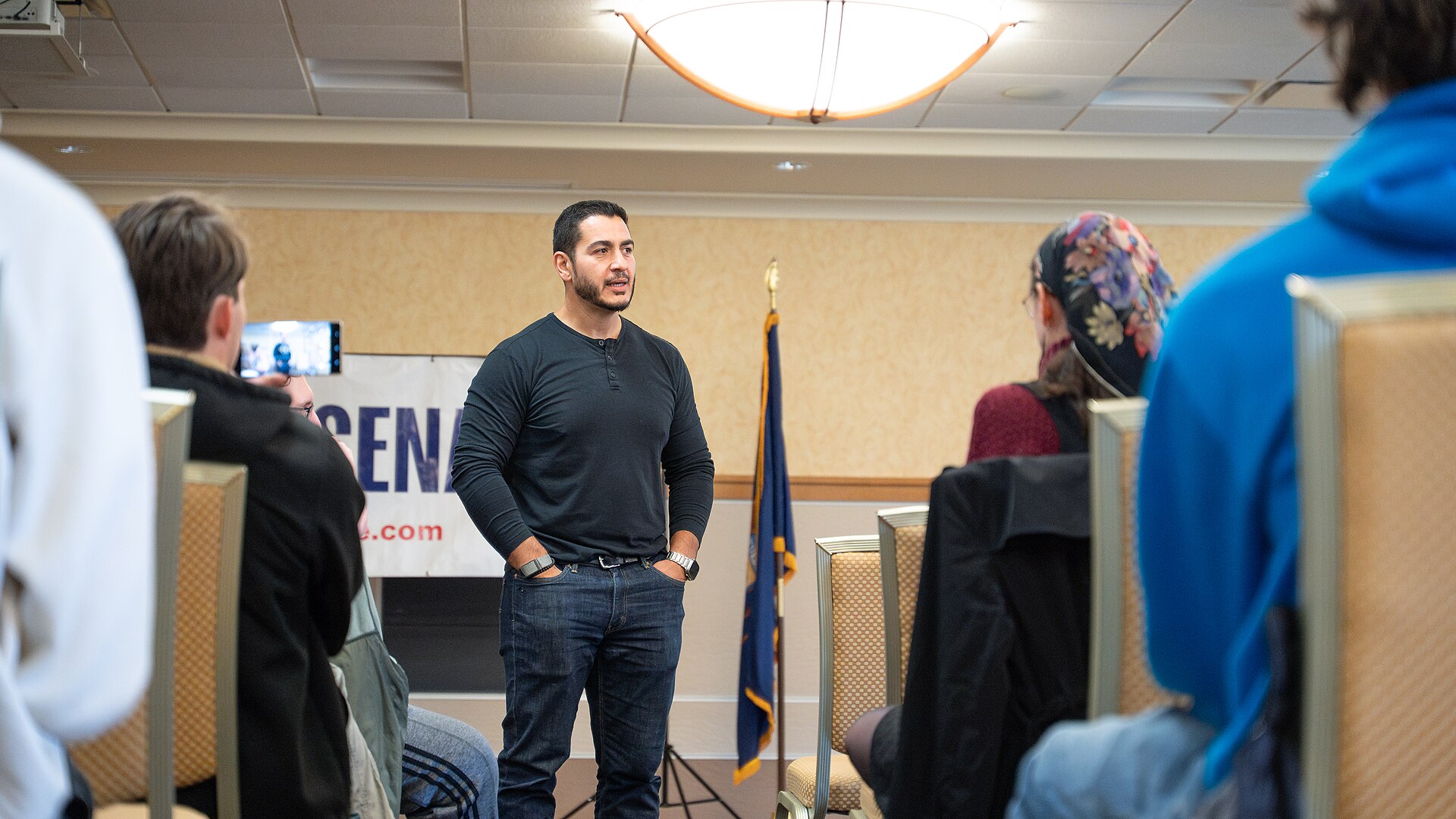
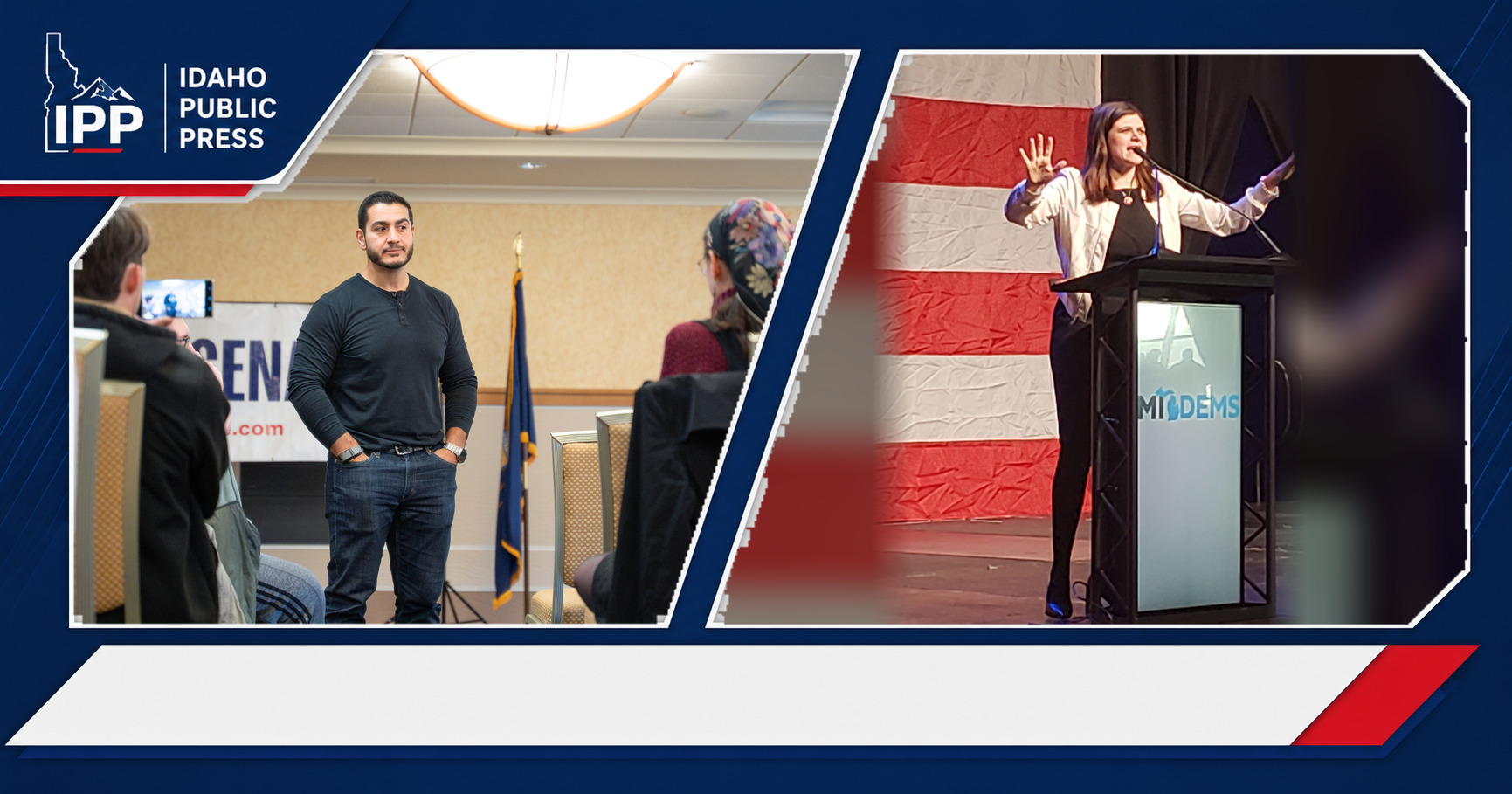
Stevens, a U.S. representative from Michigan, is running as a more conventional Democratic candidate with a record in Congress and strong support from pro-Israel groups. El-Sayed, a progressive figure and former public health official, is trying to prove that a left-flank campaign can win a major statewide nomination in one of the country’s most politically watched states.
That contrast is why the race has drawn attention outside Michigan. A Stevens win would be read by many Democrats as a sign that institutional support, fundraising strength and a pro-Israel message can still hold against progressive pressure. An El-Sayed win would be taken as evidence that Democratic primary voters are more willing to challenge party orthodoxy, especially on foreign policy.
The live-update picture so far
The reviewed live updates centered on Election Day voting, the candidates’ final public appearances and the outside spending that helped define the closing stretch. At the time of the available updates, the most important result was still unresolved: Michigan Democrats had not yet delivered a nominee in the material reviewed.
AP described Stevens speaking with media after voting at the Baldwin Public Library in Birmingham, Michigan. It also reported El-Sayed visiting a polling place at Salina Intermediate School in Dearborn, a city with deep Arab American and Muslim communities and obvious symbolic weight in a race shaped partly by Israel and Gaza.
Those images captured the geographic and political split in the race. Stevens’ campaign has leaned on her congressional profile and her standing with mainstream Democratic and pro-Israel donors. El-Sayed’s campaign has leaned into progressive identity, discontent with the party establishment and anger among some Democrats over U.S. support for Israel during the war in Gaza.
The $30 million signal
The money story is unusually central here. AP reported that the American Israel Public Affairs Committee, or AIPAC, and its affiliated groups spent around $30 million to support Stevens and defeat El-Sayed. AP characterized that as the pro-Israel group’s largest-ever investment in a single race.
That number matters because it turns a state primary into a national test case. Outside spending can help define a candidate before voters do, especially in a primary where turnout is smaller and late advertising can have an outsized effect.
For Stevens supporters, the spending reflects the stakes of nominating a candidate they see as more durable in a general election and more aligned with a long-standing U.S.-Israel consensus. For El-Sayed supporters, it is evidence of exactly the kind of donor-driven politics they argue the party should reject.
The deeper question is not simply whether the ads worked. It is whether heavy outside spending in Democratic primaries now creates a backlash, especially among younger and more progressive voters who already distrust national party power centers.
Gaza sharpened the contrast
The primary’s ideological divide became sharper because Stevens and El-Sayed have taken very different positions on Israel and Gaza. AP described Stevens as one of Congress’ most outspoken supporters of Israel and noted that she has called herself a proud pro-Israel Democrat.
El-Sayed, by contrast, has been identified as a progressive favorite in the race. His candidacy has drawn energy from Democrats who believe the party has been too cautious, too donor-driven or too unwilling to break from Israel policy that has become increasingly unpopular with parts of the Democratic base.
The Israel-Gaza issue is not the only thing voters are weighing. Michigan Democrats are also choosing a nominee for a competitive Senate campaign, which means questions of turnout, suburban appeal, labor politics, Arab American voter engagement and statewide electability all overlap.
But Gaza has made this race more than a résumé comparison. It has forced Democrats to confront whether foreign policy can now be a decisive primary issue, rather than a secondary concern behind health care, jobs and abortion rights.
Two theories of winning
Stevens’ theory is familiar to Democrats who prioritize general-election strength. A sitting member of Congress with institutional backing can argue she is vetted, experienced and better positioned to keep an open Senate seat in Democratic hands.
El-Sayed’s theory is that Democrats cannot win the future by sounding like the past. His campaign asks whether a more openly progressive nominee could energize voters who feel ignored by the party’s leadership, particularly voters frustrated by money in politics and U.S. policy toward Israel.
Both arguments have risks. A conventional nominee can look safe until voters decide she represents a party establishment they are tired of defending. A progressive nominee can generate energy in a primary but still face attacks in a statewide general election, especially in a battleground environment.
That is why Michigan is being watched so closely. The winner will not just get a nomination. The winner will hand Democrats a data point in their fight over what kind of candidate can hold a Senate seat in a polarized state.
How to read the results
The final margin will matter almost as much as the winner. A narrow Stevens victory after record outside spending would tell a different story than a comfortable win. A narrow El-Sayed victory would be explosive for progressives, but it would also raise immediate questions about whether Democrats can unify quickly for the general election.
Geography will matter, too. Watch whether El-Sayed runs up support in communities where anger over Gaza is especially intense, and whether Stevens performs strongly in suburbs where Democrats often look for general-election margins. The balance between those blocs could shape the post-primary narrative.
Turnout is another clue. A primary electorate that looks older, more suburban and more institutionally Democratic could favor Stevens’ model. A younger or more activist-heavy electorate would strengthen the argument that the party’s base is shifting faster than its leadership.
- Stevens win: establishment Democrats and pro-Israel groups would likely argue their approach remains viable in tough states.
- El-Sayed win: progressives would claim a major breakthrough against heavy outside spending.
- Close result: the party would still face a bruising unity challenge after an expensive, ideological primary.
The takeaway for Democrats
The Michigan Democratic Senate primary is a nomination fight, but it is also a measurement of pressure inside the party. Stevens and El-Sayed represent different answers to the same question: how should Democrats compete when their coalition is united against Republicans but divided over donors, war, generational change and political style?
The live updates and results will settle who advances from Michigan. They will not settle the larger Democratic argument. If anything, the race shows how quickly a single open Senate seat can become a referendum on where the party is headed next.
What remains unclear is whether the eventual nominee emerges strengthened by the attention or weakened by the fight. In a state as competitive as Michigan, that answer could matter long after primary night.









Leave a Reply