
The charges turn a highly visible incident on the National Mall into a federal case involving a memorial dedicated to World War II service members. Prosecutors’ account includes video and witness allegations, but the charges have not been tested in court.
Federal authorities charged a woman, Melissa Farris, with two felony charges connected to the alleged vandalism of the World War II Memorial in Washington, D.C. The U.S. Department of Justice says the charges stem from spray paint and foam found at the National Mall landmark on Thursday, Aug. 13.
Farris, 41, of Elizabethtown, Kentucky, is accused of depredation against U.S. property and destruction of veterans’ memorials. The case matters because the World War II Memorial is both a major public site and a monument honoring Americans who served in the war; the allegations remain unproven in court.
Two felony counts filed
The U.S. Attorney’s Office for the District of Columbia said Friday that Farris had been arrested and charged with depredation against property of the United States and destruction of veterans’ memorials.
Each count carries a potential sentence of up to 10 years in federal prison, according to prosecutors. That is the statutory maximum described by the government, not a prediction of any sentence if Farris is convicted.
Farris made an initial appearance at the federal courthouse in Alexandria, Virginia, and was detained, according to a spokesperson for U.S. Attorney Jeanine Pirro’s office cited by CBS News.
What prosecutors say happened
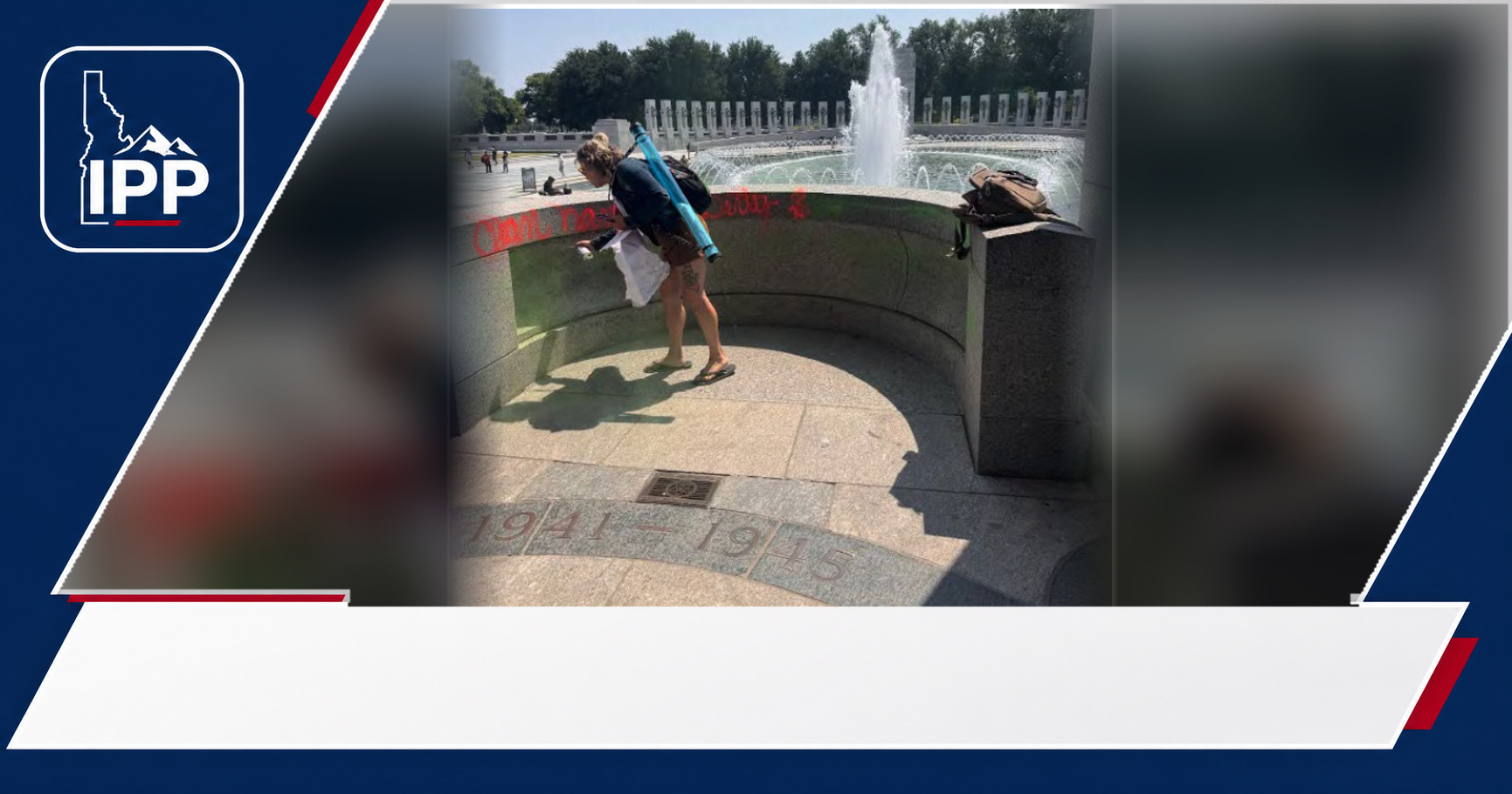
Federal prosecutors say a witness told U.S. Park Police officers that they saw a woman spray-painting a pavilion at the memorial. A Park Ranger then arrived and saw foam in the fountain area of the Atlantic pavilion, prosecutors said.
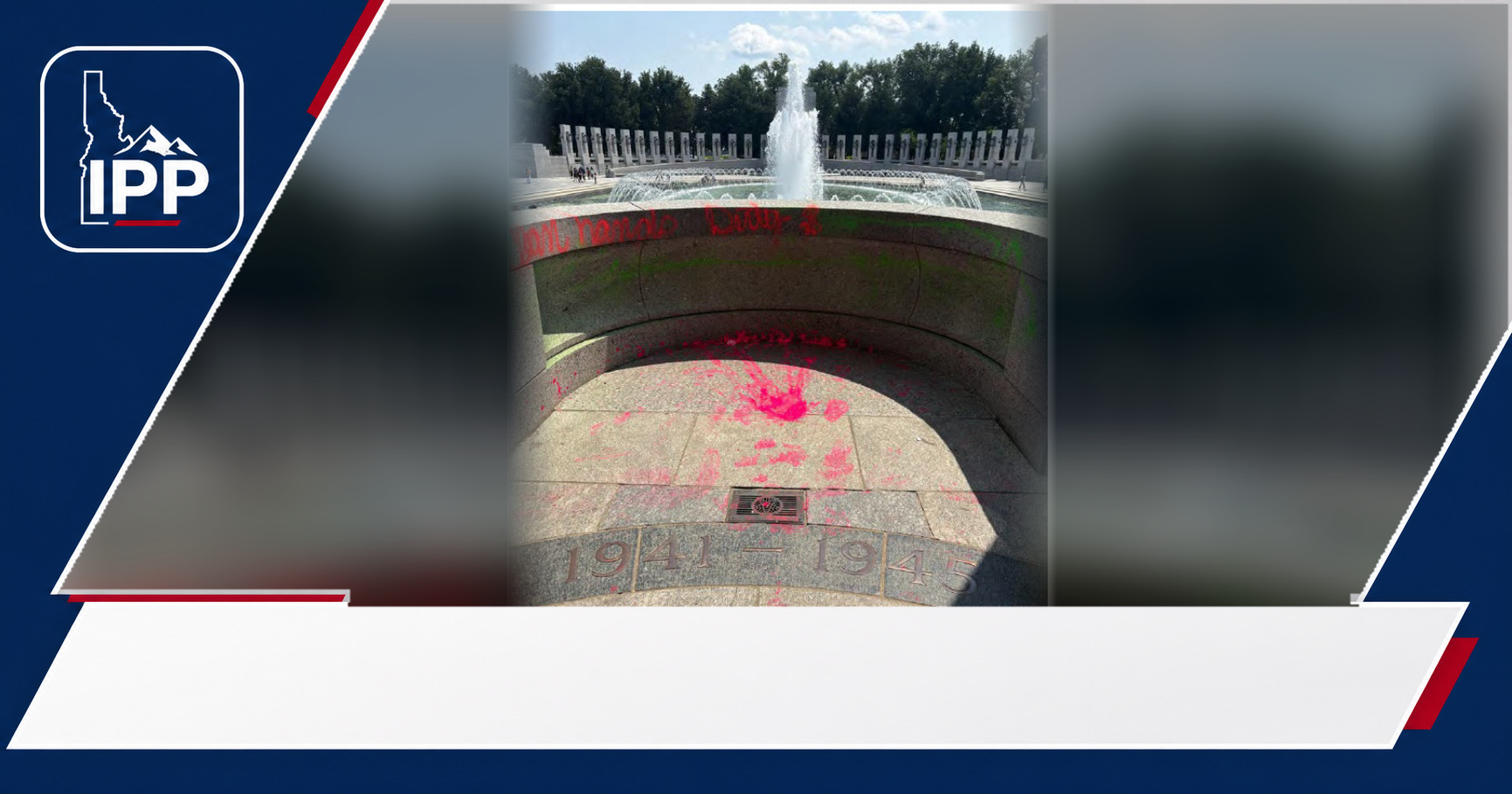
Photos and videos from the scene showed soapy bubbles in the fountains and multicolored paint on a wall. The graffiti included the phrase Clean Hands Dirty $.
Authorities said several people had gathered on a balcony as a woman recorded herself. The woman allegedly left after noticing the ranger, prosecutors said.
Pirro also posted a photo on X that she identified as showing Farris spray-painting the memorial. Those claims are part of the government’s case and have not been adjudicated by a judge or jury.
Videos are central to the case
Prosecutors cited social-media videos they say Farris posted from the memorial. In a Facebook livestream described by CBS News, Farris said she was aware of the choices she was making and identified herself as a whistleblower.
The government says the footage showed her using spray paint and later leaving the area. Farris also posted videos from outside the Alexandria courthouse Friday before turning herself in, according to the report.
In those later remarks, Farris said she had never been in that position before and said she had been trying to get people to listen. Her comments offer an explanation for her actions, but they do not resolve the factual and legal issues a federal case will examine.
Why the location changes the stakes
The World War II Memorial sits on the National Mall between the Lincoln Memorial and the Washington Monument. It commemorates the Americans who served in World War II and those who did not return home.
That setting helps explain the forceful response from public officials and preservation advocates. Pirro called the alleged vandalism an attack on a monument honoring people who fought and died for the country, while the Friends of the National World War II Memorial said a national memorial should not be used as a canvas for vandalism.
The dispute is not only about cleanup costs or damage to federal property. It also concerns the treatment of a shared civic space intended for remembrance, where political expression can collide with rules designed to protect public monuments.
National Mall cases draw scrutiny
The charges arrive during a period of heightened attention to damage and restoration work on the National Mall. In July, four people, including former Olympian David Hearn, were indicted or charged in a separate case involving alleged damage to the renovated Lincoln Memorial Reflecting Pool.
That earlier case took an unexpected turn: prosecutors later dropped the charges after saying the damage resulted from a botched construction job by a contractor rather than vandalism. CBS News also reported that White House officials later asked the Justice Department to consider bringing charges again, though no final decision had been made.
Another unresolved incident involved markings that emerged in grass near the Washington Monument in June. No one had been charged in that matter as of the CBS report.
What remains to be decided
Farris is entitled to contest the allegations, the evidence and the government’s interpretation of the events. Federal charging documents and any court filings will be important in showing how prosecutors connect the reported vandalism, witness account and social-media material.
The immediate question is not whether public outrage is justified, but whether prosecutors can prove each element of the two felony counts beyond a reasonable doubt. The case will also show how federal authorities distinguish protected speech from conduct that allegedly damages a federally protected memorial.
For now, the confirmed development is narrow: federal authorities have filed two felony charges over the alleged vandalism at the World War II Memorial in Washington, D.C. The eventual outcome will depend on the court process, not on the allegations alone.






Leave a Reply