
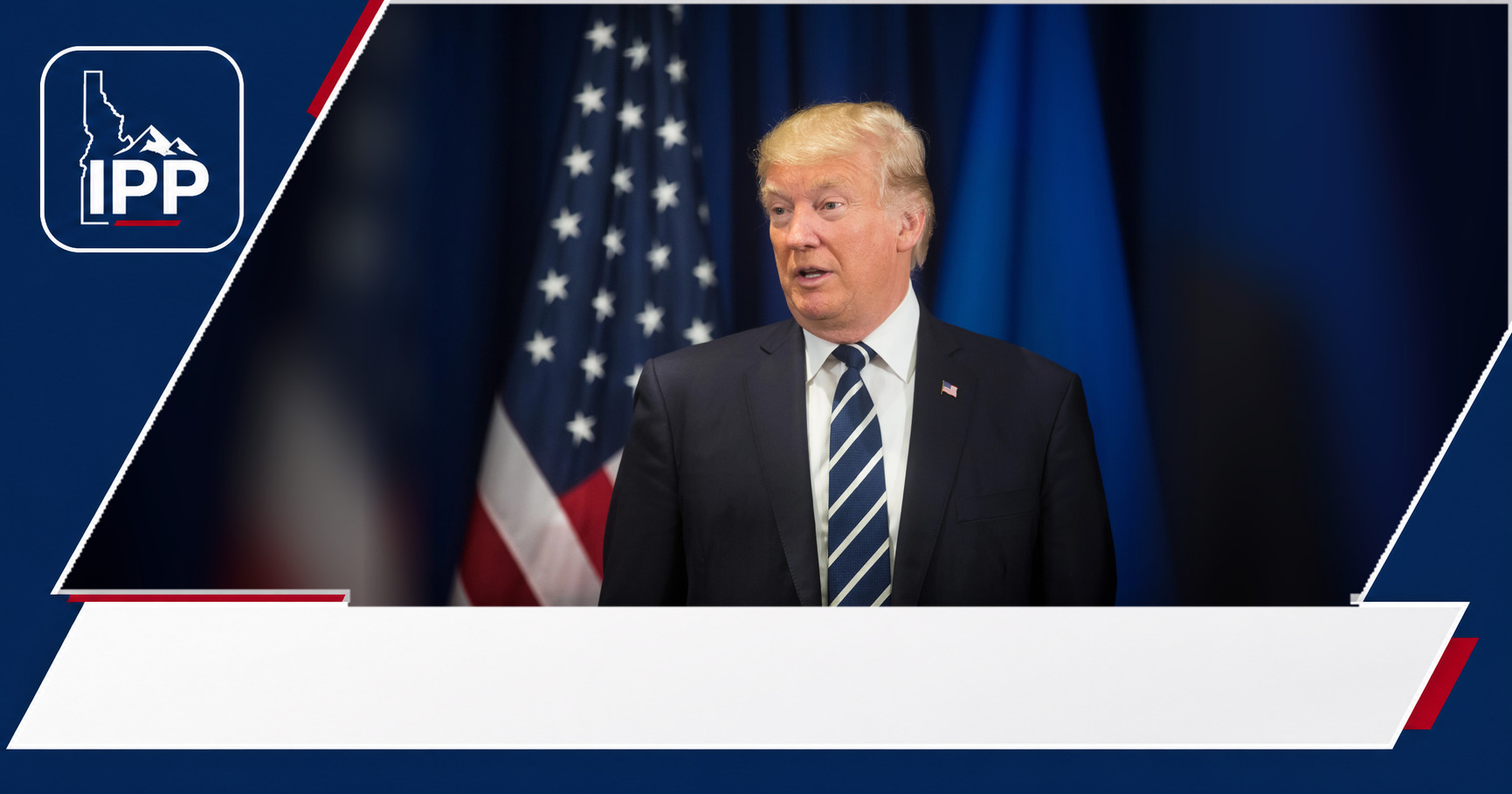
Trump’s comments put a blunt political frame around a household concern: whether the economic costs of the Iran war should affect U.S. policy. The available reporting shows gas prices above the $4 threshold cited in a viral headline.
Donald Trump told Americans he was not weighing their financial situation as gasoline costs climbed above the roughly $4 per gallon threshold cited in a headline about the Iran war. Trump linked the pain at the pump to a conflict he says must be pursued because Iran cannot be allowed to obtain a nuclear weapon.
The available reporting does not verify that Trump used the phrase “suck it up.” It does show him saying that Americans’ finances were not a factor in his Iran negotiations—a blunt answer with consequences far beyond one fill-up.
Trump’s priority was Iran
Speaking to reporters on the White House South Lawn before a diplomatic trip to China, Trump was asked how much Americans’ financial situations were motivating him to reach a deal with Iran.
“Not even a little bit,” Trump replied, according to NBC News. He said the only thing that mattered in his talks with Iran was preventing the country from having a nuclear weapon.
When pressed on the economic impact of the war, Trump again placed that objective above market movements and household finances. “Every American understands,” he said.
That is the core of the dispute around his remarks. Supporters can view the statement as a declaration that national-security decisions cannot be governed by short-term political or economic pressure. Critics see it as an unusually direct acknowledgment that the administration is willing to accept domestic financial fallout.
The $4 headline understates the reported average
The headline circulating about $4 gasoline captures the public anxiety around fuel costs, but the national average reported by NBC News was higher: $4.50 per gallon for regular unleaded gasoline on May 12, based on AAA tracking.
Diesel averaged $5.64 per gallon, according to the same report. That matters because diesel costs move through freight networks, construction, agriculture and retail supply chains, often reaching consumers in prices well beyond gasoline stations.
A national average is not what every driver pays. Fuel prices vary sharply by state, taxes, refinery access and local competition. Still, a national figure above $4 is politically potent because it makes a highly visible household expense a daily reminder of wider instability.
Why the war affects fuel prices
NBC News reported that after the United States and Israel launched joint strikes on Iran in late February, Iran blocked access to the Strait of Hormuz. The waterway normally carries about 20% of global oil supply each day.
Oil markets react not only to barrels that have already been removed from circulation, but also to the risk that shipping routes, insurance, refinery supplies and future deliveries could be disrupted. That uncertainty can push crude prices higher, and fuel prices typically follow.
The connection is not necessarily a straight line from a military decision to the price posted at a local station. Crude prices, refining capacity, seasonal fuel blends, inventories and regional distribution all matter. But a disruption around the Strait of Hormuz is significant precisely because it touches a major artery of global energy trade.
For the White House, that creates a difficult message to manage: the administration can argue that the security objective is necessary while still facing voter anger over costs that feel immediate and personal.
Inflation raises the political stakes
Fuel costs do not stay isolated in the energy category. NBC News reported that April inflation reached 3.8%, the highest level in nearly three years, with the Bureau of Labor Statistics saying higher energy costs accounted for more than 40% of the monthly increase in the all-items measure.
That helps explain why Trump’s answer drew such attention. A driver may notice a higher price at the pump first, but families can also face increased costs for deliveries, groceries, rides, travel and other goods moved by truck.
The economic picture is not uniformly negative. NBC reported that job growth exceeded expectations in the previous month and that major U.S. stock indexes reached record highs during the war. Those data points give the administration a basis for arguing that the economy has retained resilience.
Yet strong market numbers do not erase the political weight of consumer prices. Households tend to experience inflation through recurring bills, and gasoline is among the most easily observed of them.
Public opinion offers a warning sign
Polling cited by NBC News suggests Trump faces broad unease over both the economy and the Iran conflict. A CNN/SSRS survey conducted from April 30 to May 4 found that 70% of Americans disapproved of his handling of the economy.
An NBC News Decision Desk Poll released the prior month found that two-thirds of respondents disapproved of Trump’s handling of inflation and of the Iran conflict. Polls are snapshots, not predictions, but the overlap is important: voters may be connecting foreign-policy decisions with their own economic strain.
Democrats quickly used Trump’s language as evidence that he is detached from ordinary costs. A Michigan Democratic Party spokesperson compared the message to “let them eat cake,” according to NBC. The White House and Trump allies, by contrast, can argue that treating Iran’s nuclear capability as a negotiable concern would carry greater long-term risks.
A ceasefire and talks remain uncertain
The immediate question is whether diplomatic progress can reduce the conflict and the pressure on energy markets. NBC reported that Trump rejected Iran’s latest offer to end the conflict as “unacceptable” and said an ongoing ceasefire was “on life support.”
That leaves Americans with two unresolved issues. One is strategic: whether the administration can secure its stated goal involving Iran’s nuclear program. The other is economic: how long consumers will be asked to absorb higher fuel and inflation costs while that effort continues.
Trump’s remarks made his answer to the trade-off unusually clear. He is arguing that the Iran objective comes first. Whether Americans accept that ordering may depend less on rhetoric than on what happens next in diplomacy, energy markets and their monthly budgets.








Leave a Reply