
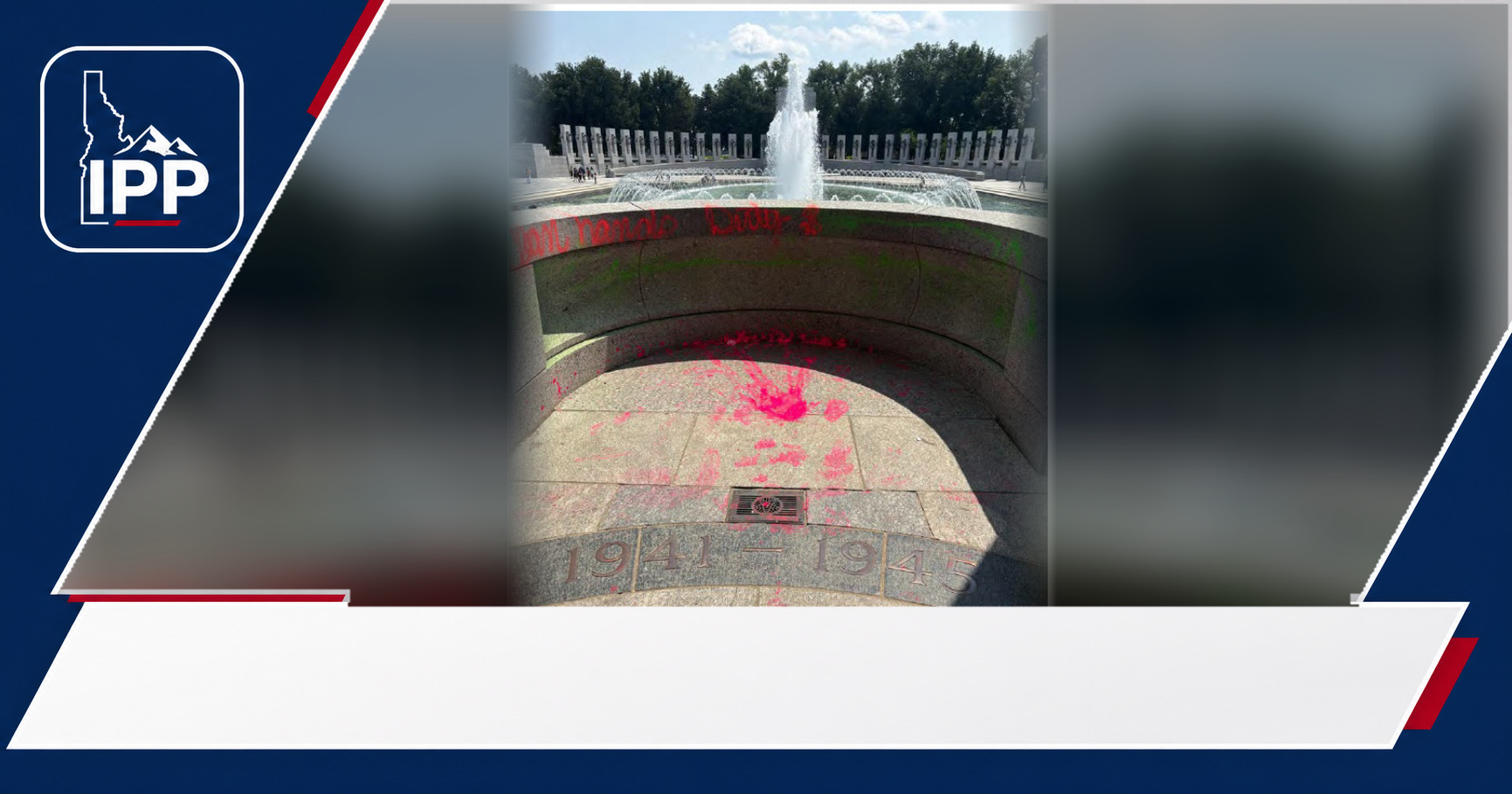
The case centers on paint and bubbles discovered at the World War II Memorial on the National Mall. It also puts renewed focus on how federal authorities handle alleged damage at national memorials.
Melissa L. Farris was arrested in connection with the defacement of the World War II Memorial in Washington, D.C., and U.S. Attorney Jeanine Pirro says her office is filing two felony charges. The case concerns alleged vandalism at the National Mall memorial, where paint and bubbles were discovered Thursday.
Pirro identified the charges as depredation against property of the United States and destruction of veterans’ memorials. The allegations carry potentially serious penalties, but the criminal case is still at its earliest stage and the charges have not been proven in court.
What authorities say happened
According to the arrest warrant described by The Associated Press, the words “Clean hands dirty $” were painted on the monument, while bubbles filled a fountain at the World War II Memorial.
The memorial honors the more than 16 million Americans who served in World War II and the more than 400,000 who died. It sits on the National Mall between the Washington Monument and the Lincoln Memorial, making it both a heavily visited public site and federally protected property.
The Interior Department said U.S. Park Police officers responded after the reported vandalism and opened an investigation. Federal officials have portrayed the alleged damage as an attack on a memorial dedicated to veterans and wartime sacrifice.
Two felonies now alleged
Pirro, the U.S. attorney for the District of Columbia, announced Friday that her office was pursuing two felony counts against Farris: depredation against property of the United States and destruction of veterans’ memorials.
As described by AP, the offenses can carry penalties of up to 10 years in prison. A charging announcement, however, is not a conviction, and sentencing exposure can depend on the facts established in court, applicable statutes and federal sentencing rules.
Pirro called the alleged vandalism a “despicable attack” on a sacred monument. President Donald Trump also condemned the incident, saying it insulted Americans who died in World War II.
Those statements reflect the outrage surrounding the case, but prosecutors will still need to establish the elements of the charges through the legal process. Farris is entitled to the presumption of innocence.
How Farris was identified
The arrest warrant said witnesses photographed the alleged vandalism, and the images were circulated among U.S. Park Police officers. One officer reportedly recognized the person as someone arrested days earlier for allegedly camping unlawfully on federal property nearby.
AP also reported that a woman identifying herself on Facebook as Melissa Lovewell posted video showing a person taking spray-paint cans from a bag and painting the monument. In the recording, the woman said she would wait to be arrested and stated that she was responsible.
The warrant identified the suspect as Melissa L. Farris of Elizabethtown, Kentucky, based on a Kentucky driver’s license. A separate video posted Friday reportedly said she intended to turn herself in.
Online videos and social-media posts can become important evidence, but their meaning, authenticity and connection to a defendant are matters prosecutors may need to establish in court. The available reporting did not describe a detailed defense response from Farris.
Why memorial cases draw scrutiny
Public protest is broadly protected by the First Amendment, but that protection does not generally extend to damaging public property. The central legal question in a case like this is not whether someone held or voiced a political view; it is whether prosecutors can prove unlawful damage to a federally protected site.
The Friends of the National World War II Memorial said memorials honoring those who served and those who never returned should not be used as a canvas for vandalism. The Veterans of Foreign Wars likewise called the alleged conduct profoundly disrespectful to veterans and military families.
That view is likely to resonate beyond partisan lines. National memorials are designed as shared civic spaces, and damage to them can trigger concerns about cost, public access, preservation and the symbolism attached to military service.
At the same time, the case illustrates why officials must separate immediate public anger from the evidence needed for criminal prosecution. A prominent accusation can move quickly; a sustainable case requires proof.
A recent federal setback matters
The new case arrives after a separate dispute over damage to the nearby Lincoln Memorial Reflecting Pool. In that matter, a former Olympian was charged after officials initially blamed vandals for the damage.
The Justice Department later moved to dismiss the case after evidence indicated the damage resulted from unsuccessful repairs connected to renovation work rather than vandalism, according to AP. Pirro’s office said the evidence did not support the earlier theory.
The reversal was politically uncomfortable because Trump had publicly blamed vandals. It also provides a relevant backdrop for the World War II Memorial case: officials can make forceful public statements, but facts established through the investigation remain decisive.
The allegations involving Farris appear materially different because authorities cited witness photographs, a warrant and videos they say connect a suspect to the incident. Still, those claims will be tested through court proceedings rather than settled by public posts or official announcements.
What remains unresolved
Farris was expected to be arraigned Friday, AP reported. At the time of that report, the Public Defender’s office said she had not yet been listed in its system or assigned an attorney.
It remains unclear what evidence prosecutors will present beyond the witness accounts, photographs and social-media videos cited in the initial reporting. Court filings could also clarify the extent and cost of the alleged damage, whether cleanup was required and whether any additional charges are contemplated.
For now, the immediate outcome is an arrest and two announced felony charges tied to a highly visible national memorial. The longer outcome will depend on what federal prosecutors can prove and how Farris responds to the allegations in court.


Leave a Reply