
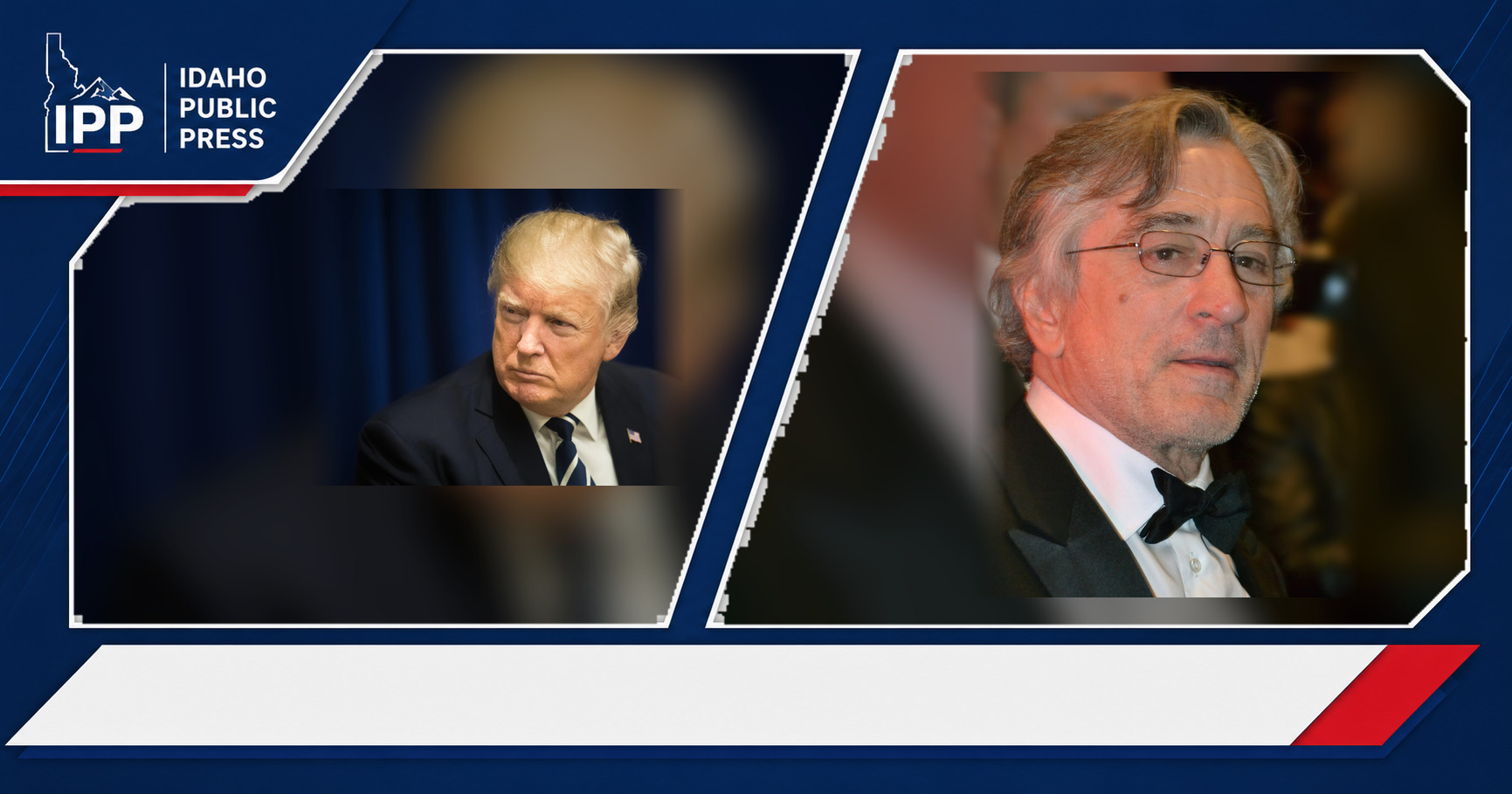
Trump’s post invoked deportation rhetoric while targeting Robert De Niro, but it did not announce a formal immigration action. The episode shows how a familiar celebrity feud became part of a broader political confrontation.
Donald Trump threatened to deport Robert De Niro in rhetoric that followed the actor’s latest criticism of the president, but the exchange needs an important clarification. Robert De Niro did not call Trump “sick and demented”; Trump used those words about De Niro in a Truth Social post and said the actor should “get on a boat.”
The dispute matters because it mixes a long-running celebrity-political feud with language about deportation, a real federal power with serious legal consequences. Trump’s post did not announce a formal action against De Niro, an American-born actor, but it quickly became the latest flashpoint between the president and one of his most outspoken Hollywood critics.
What Trump actually said
Trump’s remarks came in a lengthy Truth Social post that also targeted Democratic Representatives Ilhan Omar and Rashida Tlaib. He criticized the lawmakers after they disrupted his State of the Union address, according to reporting by The Guardian.
In the same post, Trump wrote that Omar and Tlaib should get on a boat with “Trump Deranged Robert De Niro.” He called De Niro “another sick and demented person” and said the actor had an “extremely Low IQ.”
That wording is the basis for headlines describing a deportation threat. It is inflammatory language, particularly in a post that discussed deporting elected officials, but it is not the same as an announced deportation proceeding, a signed order or a stated legal case against De Niro.
The distinction is not a minor technicality. Deportation is a legal process used against noncitizens under immigration law; it is not a punishment a president can simply impose on a U.S.-born citizen after a political disagreement.
De Niro’s criticism preceded it
The immediate trigger was De Niro’s renewed criticism of Trump in a podcast appearance and at a Washington event called State of the Swamp, held as a counterpoint to Trump’s State of the Union.
On The Best People with Nicole Wallace, De Niro called Trump “an idiot” and said, “We gotta get rid of him. He’s gonna ruin the country,” according to The Guardian. He also objected to the idea that Trump supporters alone represented American patriotism.
At the Washington gathering, De Niro reportedly described the president as “failing, flailing and desperate” and said he felt “betrayed by my country.” The actor’s comments were blunt, emotional and in line with years of public criticism of Trump.
There is no support in the available reporting for the claim that De Niro called Trump “sick and demented.” Those words came from Trump’s post about De Niro, not from De Niro’s remarks about Trump.
A feud with a long history
Trump and De Niro have been publicly trading insults for years. De Niro has been one of the president’s most visible celebrity detractors, repeatedly criticizing Trump’s politics, temperament and fitness for office.
Before the 2024 election, De Niro told Chris Wallace that Trump was “a jerk, an idiot … and a clown.” He said Trump did not have the right intentions for the country, while also making clear that his political support for Democratic alternatives was not unqualified.
Trump, for his part, has regularly used the phrase “Trump derangement syndrome” to dismiss critics. His latest post used the phrase against De Niro, turning a familiar political insult into a personal attack on an actor who has made opposition to Trump part of his public profile.
That history helps explain why neither side’s language was restrained. It also explains why the clash travels quickly online: both men are globally recognizable, and each statement feeds a well-established narrative of Hollywood-versus-Trump politics.
Why deportation language lands differently
Political insults are common, but deportation rhetoric carries weight beyond a celebrity argument. It points to an area where the federal government has substantial authority over noncitizens, families and asylum seekers.
For supporters of Trump, his language may read as a sharp response to a celebrity who has repeatedly attacked him. They may see De Niro’s rhetoric as equally personal and regard the president’s post as political counterpunching rather than a literal policy statement.
Critics see a different concern: when a president uses removal language against outspoken opponents, even rhetorically, it can blur the line between political theater and the serious exercise of state power. That concern is heightened when the same message also targets actual members of Congress and discusses deportation.
Both interpretations can coexist with a basic factual point. Nothing in the reported post establishes that De Niro faces a deportation case or that the administration has begun a legal process against him.
What remains unclear after the post
It is not clear whether Trump intended the reference to De Niro getting on a boat as a literal suggestion, a taunt directed at his critics or a deliberately provocative extension of his comments about Omar and Tlaib. The post itself offered no legal rationale, factual allegation or policy step involving De Niro.
Trump also alleged that some of De Niro’s statements were “seriously CRIMINAL,” but the reported post did not specify an alleged offense. Without details, that remains an accusation rather than a documented claim of misconduct.
De Niro’s latest comments, meanwhile, show no retreat from his stance. His criticism has consistently centered on what he views as Trump’s threat to democratic norms and the country’s political direction.
The clearest takeaway is that this was a public escalation, not a deportation announcement. Trump attacked De Niro with “sick and demented” language and suggested he should “get on a boat”; De Niro had called Trump an idiot and warned about his leadership. Their conflict is real, but the legal implication in the viral framing goes further than the reported facts.











Leave a Reply