
Trump's move puts a cornerstone U.S. alliance in Asia at the center of his broader demand for allied support. It also revives difficult questions about North Korea, military deterrence and the purpose of joint drills.
Donald Trump criticized South Korea, a U.S. ally, over its support for the Iran war and said Aug. 17, 2026, that he had directed the Pentagon to scale back joint military exercises with the country. The move makes South Korea the latest U.S. partner to face pressure from Trump over Iran, after he had previously criticized NATO and several European allies.
Trump’s decision matters well beyond a dispute over military spending. Joint U.S.-South Korean exercises are a visible part of deterrence against North Korea, and the president paired the announcement with renewed public overtures toward North Korean leader Kim Jong Un.
Trump links drills to alliance support
Trump said the United States could not keep protecting countries that were not helping America in return. His remarks framed South Korea’s military relationship with Washington as part of a wider argument that allies should bear more of the burden when the United States is involved in a conflict.
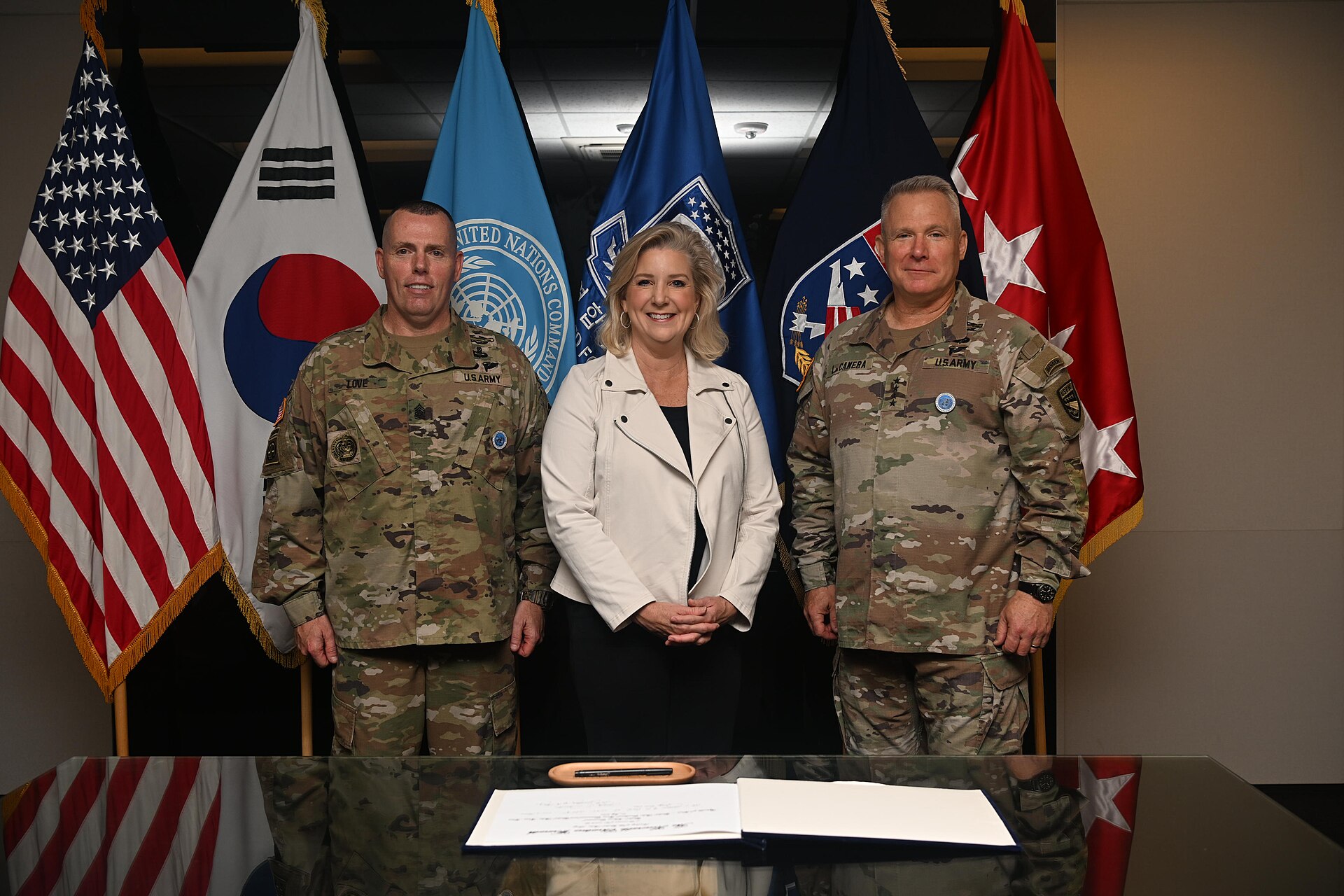
According to USA TODAY, Trump said South Korea had been insufficiently supportive of the Iran war, in which the United States and Israel went to war with Iran earlier this year. The reporting did not specify what support Trump believes Seoul should have provided, or what precise changes the Pentagon will make to the exercise schedule.
That missing detail is significant. Scaling back exercises can mean anything from reducing the size of a drill to changing its timing, scope or public profile. Until the administration defines the adjustment, it is difficult to judge its practical military effect.
South Korea becomes the latest target
The White House pressure on Seoul follows Trump’s criticism of the United Kingdom, Italy and Spain, along with his stated reexamination of the U.S. relationship with NATO. Trump has long argued that NATO members whose defense spending falls short should contribute more.
In this instance, however, the issue is not simply whether a partner spends enough on its own military. Trump is connecting continued U.S. security commitments to political backing for an American conflict involving Iran.
That raises a harder alliance question: whether military commitments that have been built around regional threats can be adjusted in response to disagreements over a separate war. For South Korea, the immediate security concern remains North Korea, not Iran.
The North Korea signal complicates matters
Trump’s comments on the drills came as he again signaled interest in engaging Kim. A day before discussing the exercises, he posted a photograph of himself and Kim at the demilitarized zone that divides North and South Korea.
Trump later wrote that the exercises were costly and sent an inappropriate, hostile signal to a country he described as unthreatening and respectful while he has been president. He said the United States was dialing them down, though it was too late to cancel them outright.
The posture echoes a central feature of Trump’s first-term diplomacy with North Korea. During negotiations in 2018, Kim sought a rollback of joint U.S.-South Korean exercises; in exchange, North Korea was expected to refrain from nuclear and intercontinental ballistic missile tests.
Sydney Seiler, a Korea specialist at the Center for Strategic and International Studies, told USA TODAY that Trump’s recent public messages appeared intended to reopen denuclearization talks. Trump said Kim had responded, but he did not explain when or how, and White House officials did not provide additional details.
Why drills carry unusual weight
Joint exercises are not only training events. They demonstrate the ability of U.S. and South Korean forces to operate together during a crisis, and they signal the durability of the U.S. commitment to defend South Korea.
The Korean Peninsula remains governed by an armistice rather than a peace treaty following the 1950-53 Korean War. The two Koreas are technically still at war. South Korea’s constitution claims the entire peninsula, while North Korea’s amended constitution describes South Korea as a hostile state.
That context is why regional specialists reacted cautiously to Trump’s approach. Retired Rear Adm. Mark Montgomery, a senior fellow at the Foundation for Defense of Democracies, called it befuddling and illogical to reach out to North Korea at least partly as a way to punish South Korea.
Supporters of a diplomatic opening may argue that less provocative exercises could create room for renewed talks with Pyongyang. Critics counter that reducing drills without a clear reciprocal step from North Korea could weaken readiness and unsettle a treaty ally.
Seoul seeks coordination, not rupture
South Korea’s embassy in Washington said it was coordinating closely with the United States on the exercises. It also said it hoped the relationship between Trump and Kim could lead to meaningful dialogue and, eventually, discussions that advance peace and stability on the peninsula.
That response underscores Seoul’s difficult balancing act. Its government has reason to welcome any serious diplomatic path that lowers the risk of conflict, while also relying heavily on the credibility of U.S. military support in the face of North Korea’s nuclear arsenal.
South Korean President Lee Jae Myung had called for talks to end the war on the peninsula over the weekend. Trump then publicly emphasized his rapport with Kim, writing alongside an old photo that the two leaders get along “GREAT!” despite their expressions in that particular image.
What remains unclear after Trump’s order
The central unanswered question is whether the exercise reduction is a limited tactical adjustment or a broader shift in U.S. policy toward South Korea. The Pentagon had not publicly detailed the scope, duration or operational consequences described in the USA TODAY report.
It is also unclear whether Trump is seeking a concrete change from Seoul on Iran, using the decision chiefly as leverage, or positioning the move as part of a new attempt at direct negotiations with Kim. Those objectives could overlap, but they carry very different risks for the alliance.
For now, the episode shows how Trump’s approach to Iran is reaching into other U.S. partnerships. NATO allies have already felt that pressure. South Korea now faces it in a setting where military exercises, diplomacy and deterrence are tightly connected.








Leave a Reply