
Kennedy says Trump asked him to restore confidence in the CDC. That assignment gives him power, but it also makes him the face of every political and public-health consequence.
Robert F. Kennedy Jr. is the latest victim of a classic Trump trap: Donald Trump hands a high-profile ally a sweeping mission, then lets that ally become the public face of the fight. The Trump tactic or maneuver that ensnared him is now visible in Kennedy’s own HHS-published defense of his CDC overhaul.
That is why the Trump-RFK Jr. situation matters now. Kennedy, as secretary of health and human services, says President Trump asked him to restore public trust in the Centers for Disease Control and Prevention. The assignment gives him enormous influence, but it also gives him the blame.
The trap is ownership
The most important line in Kennedy’s op-ed is not a statistic. It is his statement that President Trump asked him to restore trust in the CDC and return it to what Kennedy calls its core mission.
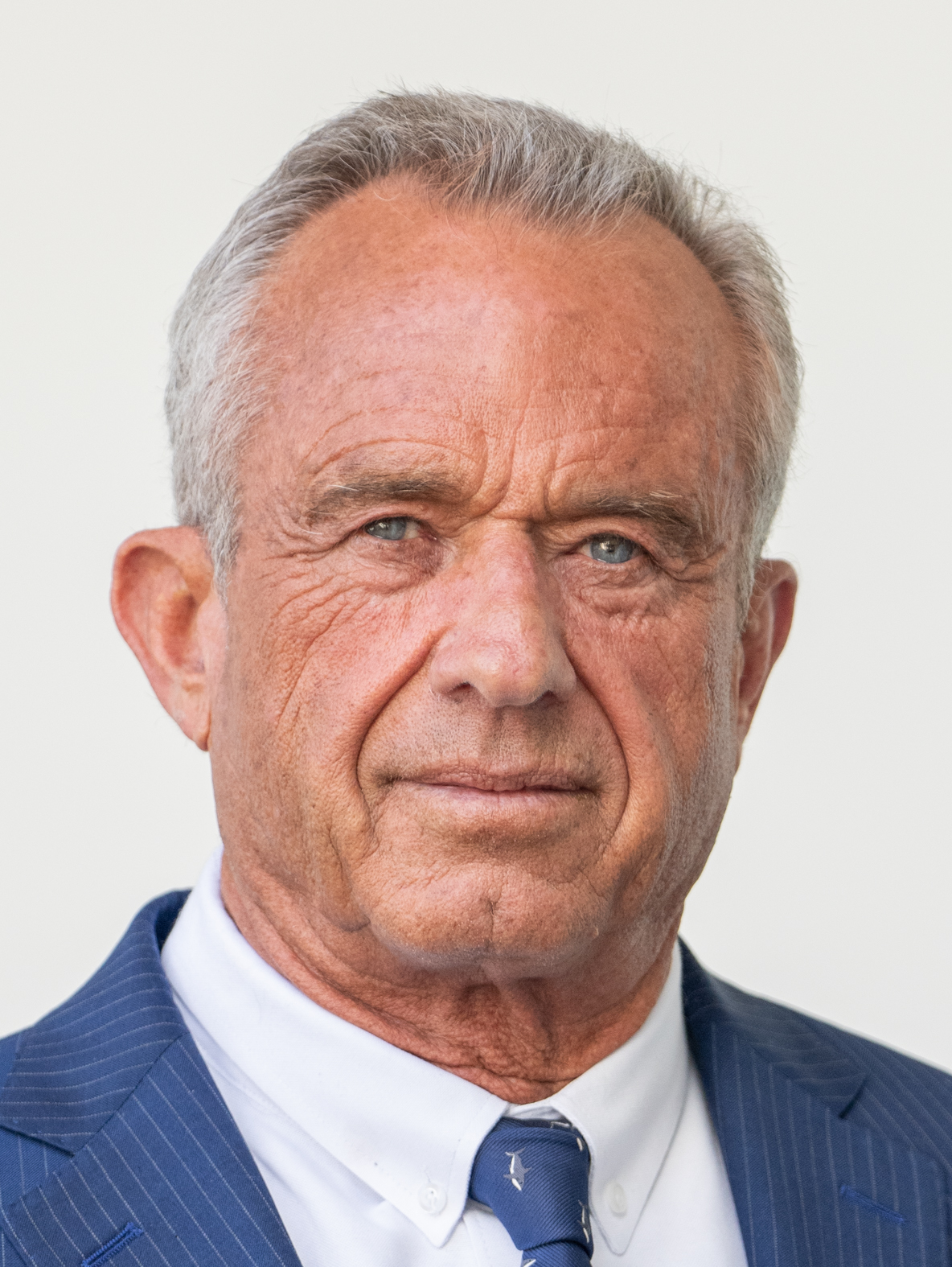
That sentence does two things at once. It ties Kennedy directly to Trump’s mandate, and it makes Kennedy the person responsible for proving the mandate works.
This is the political trap. Trump can elevate an ally by giving him a giant job, especially one that fits the ally’s public identity. But the ally must then defend the details, absorb the institutional resistance, and explain any fallout.
For Kennedy, the issue is especially combustible. He is no longer only an outsider criticizing public-health agencies. He is the Cabinet official saying he can rebuild one of the most visible health institutions in the world.
Kennedy’s case against the CDC
Kennedy’s HHS-posted argument is blunt. He says the CDC was once a trusted guardian of public health but lost its way through politicized science, bureaucracy and mission creep.
He uses the Covid era as the central indictment, citing policies he describes as irrational, including school closures, distancing rules, boosters for healthy children and lockdowns. He also notes that the United States has 4.2% of the world’s population but suffered 19% of Covid deaths.
Kennedy points to trust numbers as evidence of collapse. In his telling, only one-third of health care workers took part in the 2023-24 fall Covid booster program, and fewer than 10% of children under 12 received boosters in 2024-25.
He also argues the agency drifted far beyond infectious disease. According to Kennedy, only half of the CDC’s budget supports its infectious-disease mission, and fewer than 1 in 10 employees are epidemiologists.
The promised CDC reset
Kennedy’s fix is not framed as a modest reorganization. It is a claim that the CDC should be narrowed, hardened and refocused around outbreak response, scientific rigor and state-level support.
His op-ed lists six broad priorities:
- Detect and defeat infectious diseases with stronger respiratory surveillance and a Biothreat Radar.
- Strengthen domestic and global systems for tracking outbreaks and dangerous exposures.
- Upgrade data, laboratories and epidemiology for modern threats.
- Rebuild the workforce of disease detectives.
- Apply what he calls gold-standard science to recommendations, including vaccines.
- Give states and local health departments more direct support.
He also says the CDC operates in 63 countries and should use early-detection tools to spot threats such as H5N1 or MERS before they become crises.
The pitch is designed to sound practical rather than ideological: fewer distractions, faster outbreak response, more transparency. But Kennedy’s own wording keeps the politics close to the surface.
Why this helps Trump
For Trump, Kennedy’s assignment has obvious advantages. Kennedy is a famous name, a longtime critic of public-health orthodoxy and a figure who can speak to Americans who distrust pandemic-era institutions.
That makes him useful as a validator. When Kennedy says the CDC needs radical correction, Trump gets an ally with independent branding to carry a message that fits his broader anti-bureaucracy politics.
It also gives Trump distance from the technical details. If the overhaul produces quick wins, such as a faster outbreak response or clearer guidance, Trump can point to the results as proof that his administration took control of a broken agency.
If the changes create confusion, litigation, staff departures or public backlash, Kennedy is the official who wrote the public brief. He is the one who said the restoration had begun and would not stop.
Why Kennedy is exposed
Kennedy’s challenge is that outsider politics and agency leadership reward different skills. An outsider can attack institutions broadly. A Cabinet secretary has to make decisions that survive scrutiny from scientists, employees, states, doctors and the public.
His op-ed says HHS has shaken up the Advisory Committee on Immunization Practices and replaced leaders who resisted reform. To supporters, that may sound like long-overdue accountability. To skeptics, it may look like a purge dressed up as reform.
That tension is exactly what makes the Trump trap dangerous for Kennedy. He has to prove that disruption produces better health outcomes, not just louder politics.
He also has to manage the word trust. Public trust is not rebuilt simply by saying an agency was politicized before and is now honest. It depends on whether people believe the new leadership is applying the same standards to itself.
The real fight is trust
The CDC debate is often presented as a fight over size, mission and bureaucracy. Underneath that is a deeper fight over who gets to define credible science after Covid.
Kennedy’s supporters will see his argument as a correction to an agency that lost the public and expanded beyond its lane. They will point to his emphasis on infectious disease, outbreak response and transparency as the return to basics Trump promised.
His critics will focus on a different risk: that replacing one political frame with another does not depoliticize public health. If Kennedy’s CDC becomes defined mainly by loyalty to Trump’s mandate, the trust problem may simply change sides.
What remains unclear is how the reset will be judged. Faster outbreak detection is measurable. Workforce rebuilding is measurable. Public confidence is harder, especially when Kennedy’s own diagnosis begins from a highly charged account of Covid policy.
What to watch next
The key question is not whether Kennedy can win a messaging fight. It is whether he can turn a sweeping critique into a functioning agency strategy.
Watch for concrete moves: changes to vaccine guidance, the role of the advisory committee, CDC staffing decisions, state health department support, outbreak response times and the future of programs Kennedy says drifted beyond the agency’s core mission.
Also watch how Trump talks about the project. If he keeps praising the mission while Kennedy handles the details, the political structure stays intact.
That is why the phrase classic Trump trap fits the moment. Kennedy has been handed the power he wanted over public health. Now he owns the consequences, too.





Leave a Reply