

Israel and Hamas appear divided less over the stated goal of disarmament than over who must act first. Netanyahu’s public break with the U.S.-backed framework could complicate President Donald Trump’s effort to turn a proposed roadmap into a durable Gaza deal.
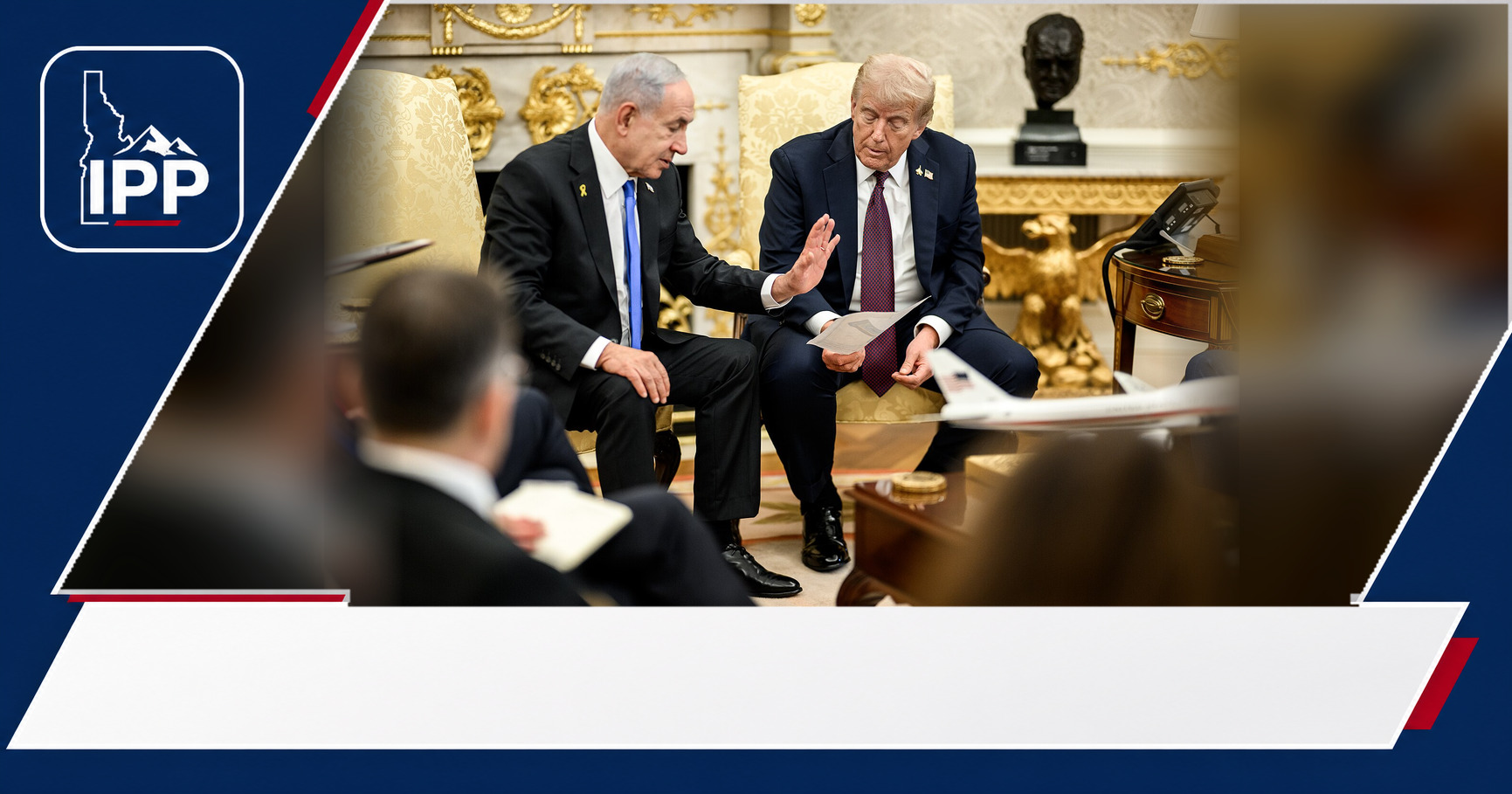
Israel rejected a plan backed by President Donald Trump for Hamas to disarm, with Prime Minister Benjamin Netanyahu publicly rejecting the 15-point document on Sunday. The proposal linked Hamas disarmament to Israel’s withdrawal from Gaza, but Netanyahu said Israel would leave only after what he called genuine, complete disarmament.
The dispute matters because Trump had presented the framework as a route toward ending the Gaza conflict. Netanyahu’s rejection puts the focus on a fundamental unresolved question: can a deal move forward when Israel and Hamas disagree over whether withdrawal or disarmament comes first?
Netanyahu rejects the 15-point framework
At the start of a government meeting, Netanyahu said, “Israel does not accept the 15-point document,” according to reporting by The Washington Post. He said an Israeli withdrawal from Gaza could occur only after Hamas had undergone “genuine disarmament, not fictitious disarmament.”
His position was emphatic: Hamas must surrender all weapons, from heavy arms to lighter weapons. That language suggests Israel is not treating a partial weapons handover, a political declaration or an internationally supervised pledge as enough to satisfy its security demands.
Netanyahu also said Israel was discussing the issue with U.S. officials, describing some American ideas as acceptable and others as unacceptable. He framed the disagreement as one in which Israel would defend its interests even when that meant resisting pressure from close allies.
The argument is about who moves first
The framework released by Trump’s Board of Peace on July 30 gave Israel and Hamas two weeks to agree on a timetable and implementation mechanisms for Hamas’s disarmament and Israel’s withdrawal from Gaza.
On paper, those goals can appear linked: Hamas gives up its arsenal, and Israeli forces depart. In practice, the order of operations is the deal’s central fault line.
Israel’s position is that Hamas must first be fully disarmed and weapons removed from Gaza. Hamas has said Israel must first end its military campaign and withdraw. Each side is being asked to make a concession it views as potentially irreversible while the other side still retains leverage.
That creates a familiar credibility problem in cease-fire and demobilization negotiations. Israel fears that withdrawing before verifiable disarmament could leave Hamas able to rearm or maintain operational capacity. Hamas, meanwhile, has reason to view disarmament before a withdrawal as surrendering its principal bargaining tool without certainty that Israel will leave.
Hamas says it still backs plan
Hamas said Sunday that it remained committed to the 15-point plan it agreed with the Board of Peace and called for its implementation. That statement does not erase the underlying conflict over sequencing, but it leaves open the possibility that talks could continue around timelines, inspections and guarantees.
The proposal reportedly envisioned weapons surrendered by Hamas being held by the National Committee for the Administration of Gaza, a body run by Palestinian technocrats. Yet the available details leave major questions unanswered: who would verify that every weapon was turned over, who would secure stockpiles and what would happen if either side alleged noncompliance?
Those are not technical afterthoughts. A disarmament agreement depends on monitoring, enforcement and a shared definition of compliance. Netanyahu’s use of the phrase “fictitious disarmament” signals that Israel doubts a process without stringent verification would materially improve its security.
Trump’s peace claim faces a test
Trump had described the Board of Peace agreement as a “historic” step toward the complete disarmament of Hamas and other armed groups in Gaza. The plan emerged after a 2025 agreement to release remaining hostages taken during Hamas’s Oct. 7, 2023, attack on Israel, according to the reporting.
Netanyahu’s public rejection is significant because it exposes a gap between Washington’s presentation of a breakthrough and the Israeli government’s conditions for accepting it. The White House, State Department and Board of Peace did not immediately respond to requests for comment, the Post reported.
The episode does not necessarily mean Trump and Netanyahu have exhausted their ability to negotiate. Netanyahu said talks with the Americans were continuing. But it does make clear that a broad statement of support for Hamas disarmament is not the same as agreement on a plan to carry it out.
For Trump, the challenge is diplomatic as well as political. A plan that Hamas accepts but Israel rejects cannot become an operative settlement; nor can a plan Israel supports but Hamas regards as a demand for unilateral capitulation.
Israeli politics hardens the stance
Netanyahu’s position is reinforced by members of his government who oppose any withdrawal before Hamas is disarmed. Finance Minister Bezalel Smotrich said the Israel Defense Forces could not withdraw “a single millimeter” from Gaza before Hamas disarmament, according to the report.
The 15-point framework also included language about creating conditions for a credible path toward Palestinian self-determination and statehood. Netanyahu said Sunday that no Palestinian state would be established while he is prime minister.
That adds another obstacle beyond military sequencing. Even if negotiators found a formula for weapons inspections and phased withdrawals, they would still have to confront the political meaning of Gaza’s future administration and any longer-term path toward Palestinian statehood.
What could happen next in Gaza
The immediate issue is whether U.S. and regional mediators can redesign the plan without abandoning its central trade-off. One possible approach would be phased implementation: limited, independently verified disarmament steps paired with staged Israeli redeployments rather than a single all-or-nothing exchange.
But phased arrangements come with their own risks. Israel could argue that partial disarmament leaves too much room for Hamas to retain weapons, while Hamas could argue that limited redeployments do not amount to a reliable end to Israeli military operations.
Netanyahu’s rejection therefore clarifies the real stakes of the Trump-backed proposal. The disagreement is not over whether Gaza needs a postwar security arrangement. It is over the threshold of proof Israel requires before withdrawing, the guarantees Hamas seeks before disarming, and whether U.S. diplomacy can bridge those demands.








Leave a Reply