
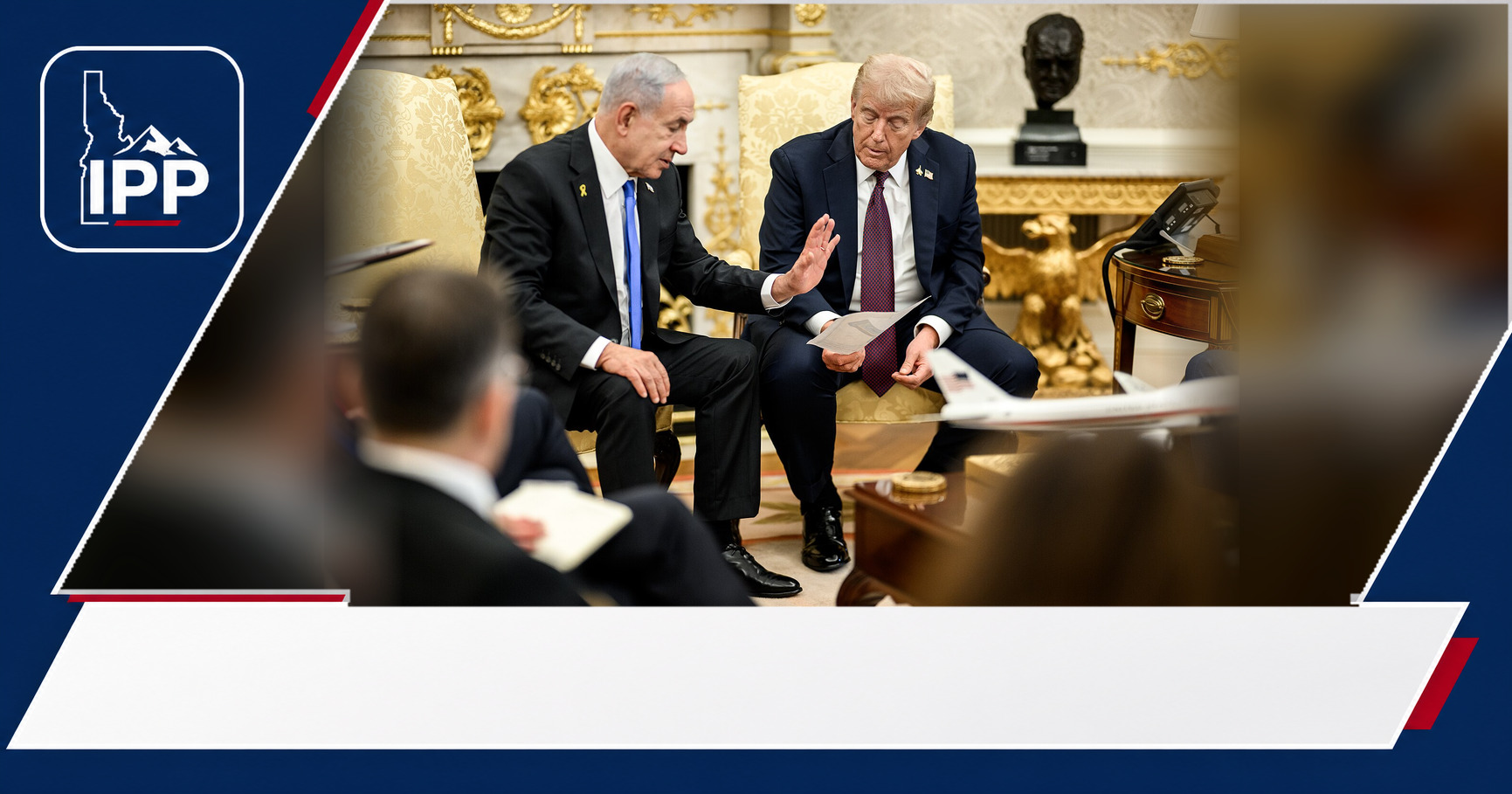
A planned International Stabilization Force base in Rafah is the practical signal to watch after Israel’s prime minister said there would be no withdrawal before Hamas disarms.
The next test of Donald Trump’s 15-point Gaza plan may come at Rafah, where preparations for an International Stabilization Force base were reported to be continuing, even after Benjamin Netanyahu publicly rejected the document.
Netanyahu’s position is clear: Israel will not withdraw from Gaza until Hamas is genuinely disarmed. The less clear question is whether the rejection stops the U.S.-backed roadmap, or whether Washington and Israel continue working around the dispute over sequencing.
The Rafah signal now matters
Israeli public radio Kan News, cited by the BBC, reported that construction of the first International Stabilization Force base in Rafah was still expected to begin by the end of the month. The base would be in southern Gaza, amid the ruins of Rafah.

The BBC also reported an apparent pause in Israeli strikes on Gaza in recent days. Hamas had demanded such a pause when it signed on to the U.S.-backed roadmap.
Those reported developments do not resolve the political dispute. They do, however, give diplomats and observers concrete steps to watch while public statements from the Israeli government and the White House remain limited.
What the 15-point roadmap would create
As described by the BBC, the Board of Peace roadmap would set up a phased process for Gaza. Weapons held by Hamas and other Palestinian armed groups would be decommissioned and stored by a new Palestinian administration reporting to the Board of Peace.
The plan also envisages an International Stabilization Force working with a new Palestinian police force to secure the territory. Israeli forces would withdraw from areas they control in Gaza as part of the arrangement.
That structure puts the hardest issue at the center of the plan: how disarmament, withdrawal, policing and administration would be sequenced so that the process is seen as credible by the parties involved.
- Israel’s stated condition: no withdrawal before Hamas is genuinely and completely disarmed.
- The roadmap’s core challenge: linking disarmament to a phased Israeli withdrawal.
- The unresolved test: who verifies compliance if either side says the other has failed.
Where Netanyahu drew his line
Netanyahu told his cabinet that Israel did not accept the 15-point document. He said the Israel Defense Forces would not withdraw until Hamas had been disarmed.
He defined disarmament broadly, saying it meant heavy weapons, lighter weapons and all weapons. His statement left little room for Israel to accept a withdrawal based only on a partial or symbolic process.
At the same time, Netanyahu described Trump as “the greatest of our friends in the White House.” The contrast underscored the divide between his praise for the U.S. president and his refusal to accept the U.S.-backed document as written.
Washington has kept its response limited
The White House had not officially commented on Netanyahu’s statement, according to the BBC. The BBC, citing Israeli journalist Barak Ravid, reported that a senior U.S. official viewed Netanyahu’s stance through the lens of Israeli politics and was focused on whether Israel continued meeting U.S. expectations, especially on restraining attacks in Gaza.
That account is not the same as a formal U.S. policy statement. It also does not answer whether Washington would accept an extended Israeli military presence in Gaza.
Still, the reported U.S. view suggests the administration may be leaving space for practical steps to continue even while Netanyahu rejects the roadmap publicly.
Israeli politics and security fears complicate concessions
Netanyahu is facing a general election scheduled for October 27, his first since the Hamas-led attacks of October 7, 2023. The BBC described the contest as uphill for the prime minister.
Israeli skepticism toward the plan is also shaped by the security trauma of those attacks and the war that followed. Fleur Hassan-Nahoum, a former deputy mayor of Jerusalem, told the BBC that Israel could not agree to retreat while the group behind the October 7 attacks remained in control of the Strip.
Former U.S. diplomat Aaron David Miller told the BBC that Netanyahu is navigating between keeping his political base satisfied and avoiding a break with Trump. He said serious movement could be difficult before Israel has another government.
What remains unresolved
The central question is verification. Hamas’s conditional willingness to accept a framework is not proof that every weapon would be surrendered or that the group could not try to reassert control.
Israel’s government, including critics beyond Netanyahu’s coalition, has raised doubts about whether disarmament could be verified and whether small arms would truly be removed.
For now, the plan’s status is best judged by implementation: whether the reported Rafah base preparations proceed, whether restraint in Gaza continues and whether Hamas accepts verifiable terms for decommissioning weapons. None of those issues is settled.







Leave a Reply