
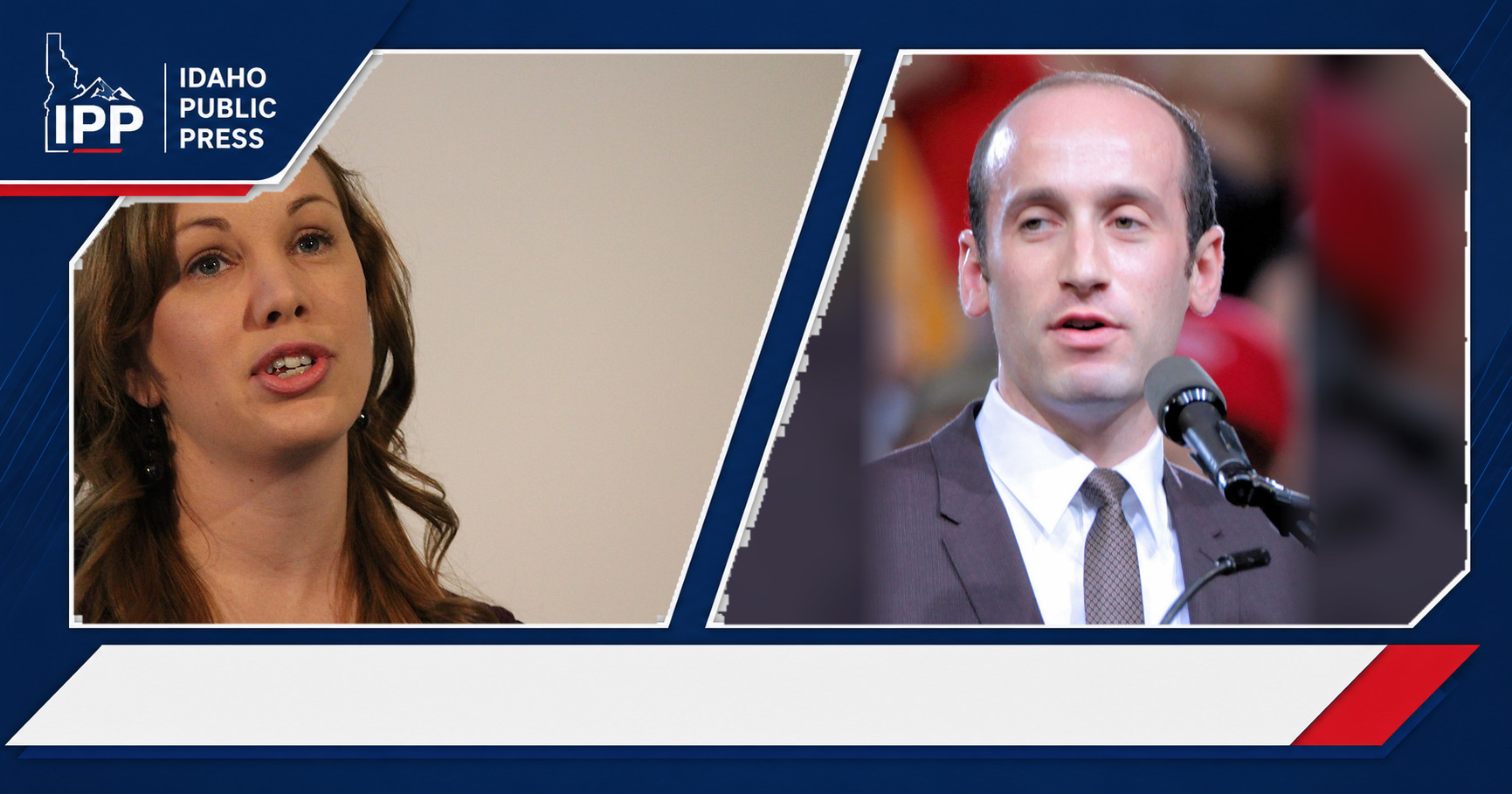
The available material confirms key facts about Katie and Stephen Miller’s political careers and marriage. It does not provide enough evidence to establish the claim suggested by the headline.
Stephen Miller’s wife, Katie Miller, is the subject of a claim that she had a relationship with a “disgraced Democrat” and that the relationship was exposed. But the research available here does not identify that Democrat, define what kind of relationship is being alleged, or provide evidence establishing the claim.
What can be verified is that Katie Miller, previously known as Katie Waldman, met Stephen Miller while both worked in the Trump administration, and that they married in 2020. That distinction matters because political headlines can turn an undefined association into a much broader allegation without showing readers the underlying facts.
The central claim lacks specifics
The phrase “relationship with disgraced Dem” carries a strong implication, but it leaves out the details needed to evaluate it. No name is provided in the available source material, and there is no document, direct statement, reporting excerpt, timeline or independently corroborated account attached to the assertion.
“Relationship” is also an unusually elastic word in political coverage. It could refer to a personal friendship, a former workplace connection, a professional exchange, a political alliance, a family tie or something else entirely. Without a named person and a description supported by evidence, readers cannot reliably determine what is being claimed.
Calling someone “disgraced” raises a separate problem. That label might refer to an ethics finding, criminal conviction, resignation, scandal allegation, electoral defeat or simply partisan criticism. The available research does not say which person is meant or what conduct supports that characterization.
What reporting does establish
Reporting from the Chicago Tribune in February 2020 described Stephen Miller and Katie Waldman as a Trump administration couple who met while working in government. The report said Stephen Miller was developing the administration’s restrictive immigration policies while Waldman worked as a spokeswoman for the Department of Homeland Security.
The pair married at President Donald Trump’s Washington hotel that month. The wedding was attended by administration figures, according to the Tribune’s account, including then-President Trump and then-Vice President Mike Pence.
Those facts place the Millers’ relationship firmly within the political world of the first Trump administration. They do not, on their own, establish a connection between Katie Miller and an unnamed Democratic figure.
A 2025 New York Times item about Katie Miller’s Washington career referred to her as Stephen Miller’s wife and focused on her public profile. The research excerpt available from that report likewise does not identify a “disgraced Democrat” or substantiate the more pointed allegation suggested by the headline.
Why political labels travel fast
Political stories often gain traction because familiar names make a vague allegation feel concrete. Stephen Miller is one of the most recognizable figures associated with Trump’s immigration agenda, while Katie Miller has held high-profile communications roles in Republican political circles. Their visibility creates immediate interest around any claim involving their personal or professional connections.
That visibility can also make precision more important, not less. A headline may invite readers to assume that a claim has been reported out in detail when the publicly available support is thin, incomplete or absent.
The result is a familiar online dynamic: a charge becomes the story before its basic terms have been pinned down. Readers may come away believing they know who was involved, what happened and why it matters, even though the name, conduct and evidence are not supplied.
There is a legitimate public-interest question whenever senior political figures or their close associates have relevant professional, financial or political ties. But public interest does not remove the need for clear sourcing. The greater the reputational damage a claim could cause, the more important it is to distinguish evidence from insinuation.
The difference between fact and inference
Verified reporting supports several straightforward conclusions: Stephen and Katie Miller met in the Trump administration; Katie Miller worked at the Department of Homeland Security; and they married in 2020. These are documented biographical facts.
The available material does not support a definitive conclusion that Katie Miller had the alleged relationship with a specific Democratic politician, much less that such a connection was newly uncovered. It also does not establish whether the purported relationship was personal, professional or political.
This is not a judgment that no additional reporting or evidence exists elsewhere. It is a judgment about the record provided for this article: it is not enough to responsibly state the allegation as fact.
That is especially relevant in stories built around emotionally loaded labels. “Exposed” suggests disclosure of verified hidden information. “Disgraced” suggests a settled assessment of a person’s conduct. Both terms require readers to know who is being discussed and why those descriptions are justified.
What would clarify the story
A substantiated account would need to identify the Democratic figure at the center of the claim and explain the nature and dates of the connection. It would also need to show how the information emerged, whether through public records, contemporaneous communications, on-the-record interviews, official disclosures or credible reporting.
It should further explain the basis for describing that person as “disgraced,” including the relevant event and whether the description reflects a legal, ethical, political or reputational outcome. Those are not cosmetic details; they determine whether a headline accurately represents the underlying story.
Until that information is available, the most accurate takeaway is narrow. Katie Miller’s documented history includes a Trump administration career and her marriage to Stephen Miller. The asserted connection to an unnamed “disgraced Democrat” remains unverified in the research provided.
For readers, the practical lesson is simple: when a political headline supplies a dramatic conclusion but withholds the name, evidence and context, the missing details are often the most important part of the story.







Leave a Reply