

Kim’s call for compassion came after Trump labeled U.S. freestyle skier Hunter Hess a “real loser” over remarks about representing the country. The exchange drew amused online reactions, but it also exposed the political pressure facing athletes at the Winter Olympics.
Chloe Kim responded to Donald Trump after Trump criticized Olympic skier Hunter Hess, and the snowboarder’s comments prompted an amused reaction online. Kim said athletes can be proud to represent the United States while still voicing their views, a pointed message after Trump called Hess a “real loser” over his remarks about the country.
The “hold your breath girl” reaction circulating online captured the expectation that Kim might draw Trump’s attention, too. But the larger story is not just a social-media punchline: it is about what Hess actually said, what Trump claimed he said, and how Olympic athletes are navigating a politically charged Games.
Trump’s criticism of Hunter Hess
The dispute began after Hess, a U.S. freestyle skier and halfpipe specialist, was asked what it meant to represent the United States during a tense political moment at home and abroad.
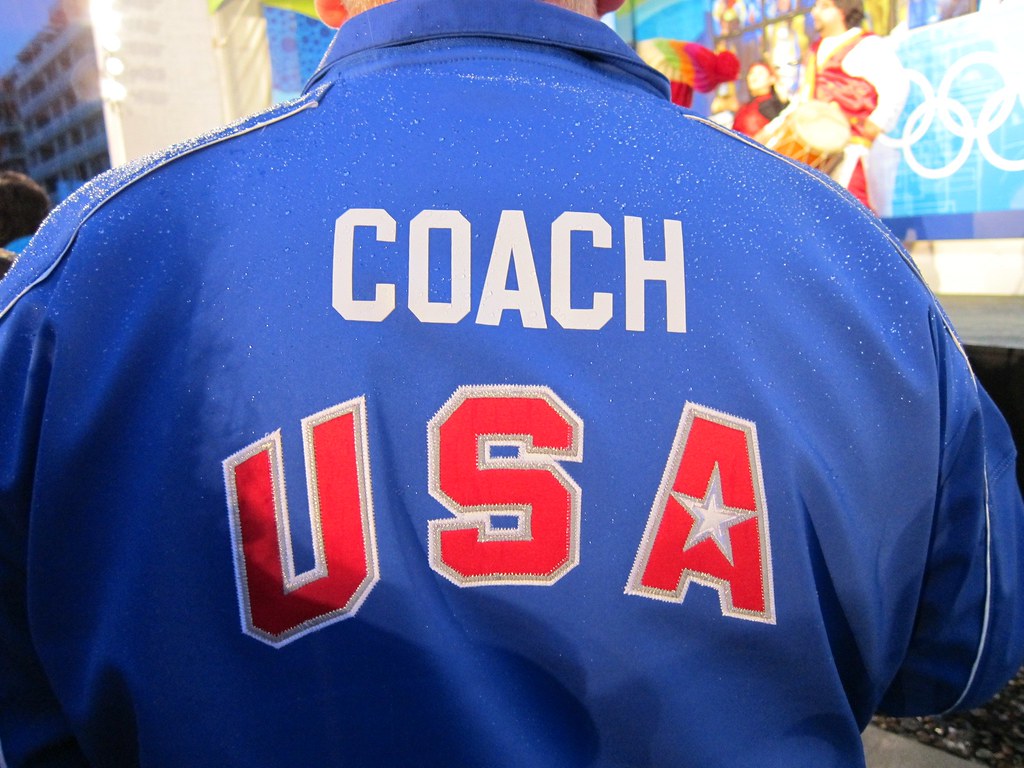
According to reporting from The Athletic, Hess said wearing the U.S. flag brought “mixed emotions.” He said there was “a lot going on” that he did not support, while also stressing that he was proud to represent his friends, family and the parts of the country he believes are good.
That distinction became central to the fallout. Hess did not say he refused to represent the United States, or that he did not represent the country at all.
Trump nevertheless characterized Hess’s comments on Truth Social as saying that he did not represent his country. Trump wrote that Hess was “a real Loser,” said it was “very hard to root for someone like this,” and suggested he should not have tried out for the team if that was his position.
Kim’s answer stayed measured
Kim, a two-time Olympic gold medalist in snowboard halfpipe, was asked about Trump’s post while appearing with Team USA snowboarding teammates in Livigno, Italy. Her answer did not mirror Trump’s language.
She said she was proud to represent the United States and recognized the opportunities the country has given her family. Kim’s parents emigrated from South Korea, and she said the subject was personally meaningful to her.
At the same time, Kim said athletes are allowed to express opinions about what is happening around them. “We need to lead with love and compassion, and I’d love to see more of that,” she said, according to The Athletic.
That is why her response landed differently from a typical sports feud. Kim did not frame patriotism and criticism as opposites. She framed both national pride and the freedom to speak as compatible parts of representing the United States.
Why the online reaction took off
Online attention naturally focused on the contrast: Trump’s blunt attack on Hess versus Kim’s restrained appeal for compassion. The “hold your breath girl” line reflected a joking prediction that any athlete who publicly defended the right to dissent could become the next target.
There is a real limitation to reading too much into viral posts. They can reward the sharpest joke rather than the full exchange, and they do not establish how athletes, officials or the broader public view the dispute.
Still, the reaction points to a broader familiarity with Trump’s confrontational online style. For many observers, the question was not simply whether Kim disagreed with him. It was whether a star athlete’s carefully worded defense of Hess would intensify a dispute that had already moved beyond skiing.
Other Olympians made a similar case
Kim was not alone in urging a wider view of the moment. Eileen Gu, the freestyle skier who won silver in slopestyle and has faced intense scrutiny over her own decision to compete for China, said the political conflict was eclipsing the spirit of the Olympics.
Gu said sport should bring people together and expressed sympathy for athletes caught in the crossfire. Her comments did not erase the complicated politics surrounding her own Olympic career, but they underscored how familiar many athletes are with being asked to carry national arguments alongside competitive expectations.
Kim’s teammates also described a balance between pride and concern. Maddie Mastro said she was proud to represent Team USA but saddened by events at home. Bea Kim said diversity is among the country’s strengths, while Maddy Schaffrick described the Games as a celebration of countries and cultures coming together.
Those statements matter because they complicate the easy read of the controversy. The athletes were not rejecting the flag, their teams or the Olympic stage. They were arguing that representing a country can include acknowledging its divisions.
The Olympics are not a political vacuum
Olympic athletes are often asked to embody national identity, particularly when they compete in uniforms marked with a flag and accept public support tied to their country. That expectation can make any criticism of government, policy or political culture feel larger than an ordinary personal opinion.
Hess’s original answer illustrates the tension. He said he had mixed emotions, not that he lacked pride. His position was that representing the United States meant representing people and values he supports, even when he disagrees with parts of the national climate.
Trump’s response treated that nuance as disloyalty. Kim’s response pushed in the other direction, suggesting that compassion and room for differing views are necessary when athletes are placed under such a large public microscope.
Neither Hess nor Kim can control how every remark is clipped, reposted or turned into a political symbol. What remains clear is that the dispute has added another layer of pressure before competition: athletes are being evaluated not only for performance, but also for how they articulate belonging, pride and dissent.
What comes next for Hess and Kim
Hess’s Olympic debut in men’s freeski halfpipe is scheduled later in the Games, while Kim is pursuing a third consecutive Olympic halfpipe gold medal. Their results will be judged in competition, but the controversy shows how difficult it can be to keep sports and politics in separate lanes.
For now, Kim’s comments stand as a concise rebuttal to the premise behind the attack on Hess. An athlete can be proud to wear a national uniform, grateful for the opportunities it represents and candid about the country’s faults at the same time.
That may be the reason the exchange traveled so far online. The viral joke was quick. The underlying argument about who gets to define patriotism is not.




Leave a Reply