
The dispute pits Trump’s declassification push against intelligence veterans who say the material is being used selectively to rewrite the Russia investigation and foreign interference record.
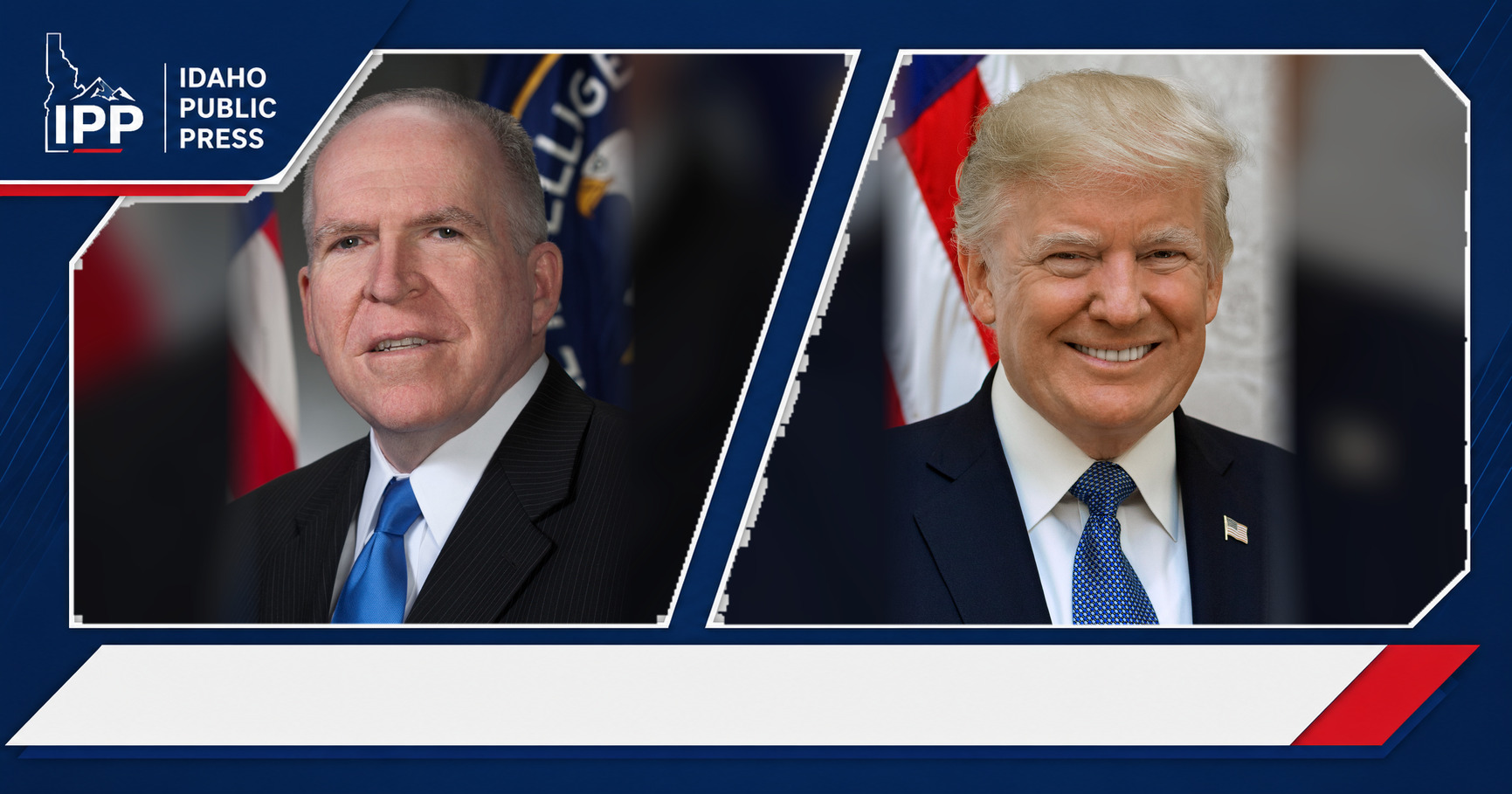
Former CIA Director John Brennan criticized Donald Trump after Trump promoted a claim that foreign adversaries, led by China, had compromised U.S. voter data on a massive scale. Brennan said the release and framing of the declassified material amounted to a deliberate cover-up and a selective attempt to rewrite the record on election interference and the Russia probe. The dispute centers on Trump’s 220 million voter data claim and whether the White House is using newly declassified intelligence to validate its own narrative while discrediting officials who challenged it. Brennan’s rebuke, made publicly on Thursday, goes to the heart of that fight: Trump says the documents expose suppressed intelligence, while critics say they are being used to blur what the intelligence actually showed.
The fight behind the accusation
The dispute centers on how Trump and his allies are using intelligence about foreign election interference. A White House release in July said Trump had declassified information on foreign election threats and what it called a Deep State coverup, arguing that intelligence about vulnerabilities and foreign adversaries had been hidden from the public, Congress and even Trump.

That release claimed foreign adversaries, led by China, compromised U.S. voter data on a massive scale during the 2020 cycle. It also said intelligence agencies knew about a breach affecting 220 million American voters and at least 18 states, while officials allegedly kept key material out of the President’s Daily Brief.
For Trump’s side, the declassification is presented as proof that entrenched officials suppressed damaging information and misled the country about election threats. For critics, including former senior intelligence figures, the same move looks like an attempt to bury the central findings of the Russia-era intelligence debate under a broader, politically useful claim about hidden information.
Why Brennan is back in it
The former CIA director most closely associated with this long-running fight is John Brennan, who led the agency during the Obama administration and became one of Trump’s sharpest national security critics. Reuters reported in 2018 that Brennan said he would not be scared into silence after Trump revoked his security clearance.
That history matters because Brennan is not a detached commentator in Trump’s telling. He has been cast by Trump and his allies as part of the intelligence establishment that damaged Trump during and after the 2016 campaign. Brennan, in turn, has argued for years that Trump’s attacks on intelligence officials are meant to intimidate critics and rewrite the record.
The latest criticism fits that pattern. When a former CIA director publicly attacks Trump over an alleged cover-up, the point is not just the newly released documents. It is the broader allegation that Trump is using declassification to create a counter-narrative: that the real scandal was not Russian interference or Trump’s response to it, but misconduct by officials who investigated or briefed on election threats.
What Trump’s side says
The White House position is explicit. Its July release said Trump had put out a substantial body of newly declassified intelligence that had never been made public, including assessments involving China, Russia, Iran, North Korea and other foreign actors.
It also said Trump directed the Director of National Intelligence, Justice Department, FBI and CIA to investigate how the intelligence was handled. The release accused political opponents and media outlets of downplaying the disclosures and insisted the documents showed deliberate suppression by government officials.
Those claims are serious, but they are also politically loaded. They ask the public to accept that intelligence officials withheld major election-security information while Trump was president, and that the new disclosures expose a coordinated effort to keep him and Congress in the dark.
- Trump’s argument: declassification reveals suppressed evidence about foreign election threats.
- Critics’ argument: the release reframes old disputes and distracts from intelligence findings Trump dislikes.
- The unresolved issue: whether the underlying records support the sweeping political claims being made about them.
The Russia-probe shadow
This fight cannot be separated from the 2016 intelligence assessment on Russian election interference. A CIA tradecraft review of that assessment focused on one of its most debated judgments: that Russian President Vladimir Putin aspired to help Trump. That finding has been a political flashpoint for years.
Trump has repeatedly rejected or minimized the idea that Russia’s interference reflected a preference for him, while former intelligence officials have defended the basic conclusion that Russia intervened in the election. PBS recently framed a related segment around an ex-CIA analyst criticizing Trump’s effort to deny the Russia probe, underscoring that the argument remains alive well after the original investigation.
The new cover-up language gives that old dispute a new shape. Instead of arguing only about whether Russia helped Trump, the fight now includes whether other foreign-threat intelligence was suppressed, whether China-related information was underplayed, and whether Trump is using those claims to weaken the credibility of the Russia findings.
Declassification as political weapon
Declassification can serve the public interest when it helps voters understand what the government knew and when it knew it. It can also become a political tool when documents are released selectively, stripped of context or framed before independent experts can assess their meaning.
That is why the former CIA director’s criticism lands in a sensitive place. Intelligence agencies operate on secrecy, but public trust depends on credible explanation. If Trump’s release proves officials hid major election-security information, that would raise legitimate oversight questions. If the release cherry-picks material to attack old enemies, it risks turning intelligence into campaign-style messaging.
There is also a practical problem: most readers cannot evaluate raw intelligence excerpts on their own. They rely on agencies, inspectors general, congressional committees, courts and credible news organizations to sort claims from evidence. When every side says the other is covering something up, the burden shifts to documents, timelines and corroboration.
What remains unclear
Several key questions are still open. It is not clear from the public claims alone whether the newly declassified material changes the established understanding of Russia’s 2016 interference. It is also unclear how much of the China-related voter-data claim was previously known inside government, who saw it, and why it was handled the way it was.
Reuters reported separately in July that Brennan, described as a Trump target, sought to force the Justice Department to preserve records related to federal activity involving him. That legal move points to another layer of the conflict: former officials are not only arguing on television or in statements; they are trying to lock down government records before narratives harden.
The clean takeaway is this: the latest attack is not simply an ex-CIA director insulting Trump. It is a battle over who gets to define the intelligence record — Trump, the agencies he accuses, or the evidence once it is tested outside a partisan frame.






Leave a Reply