
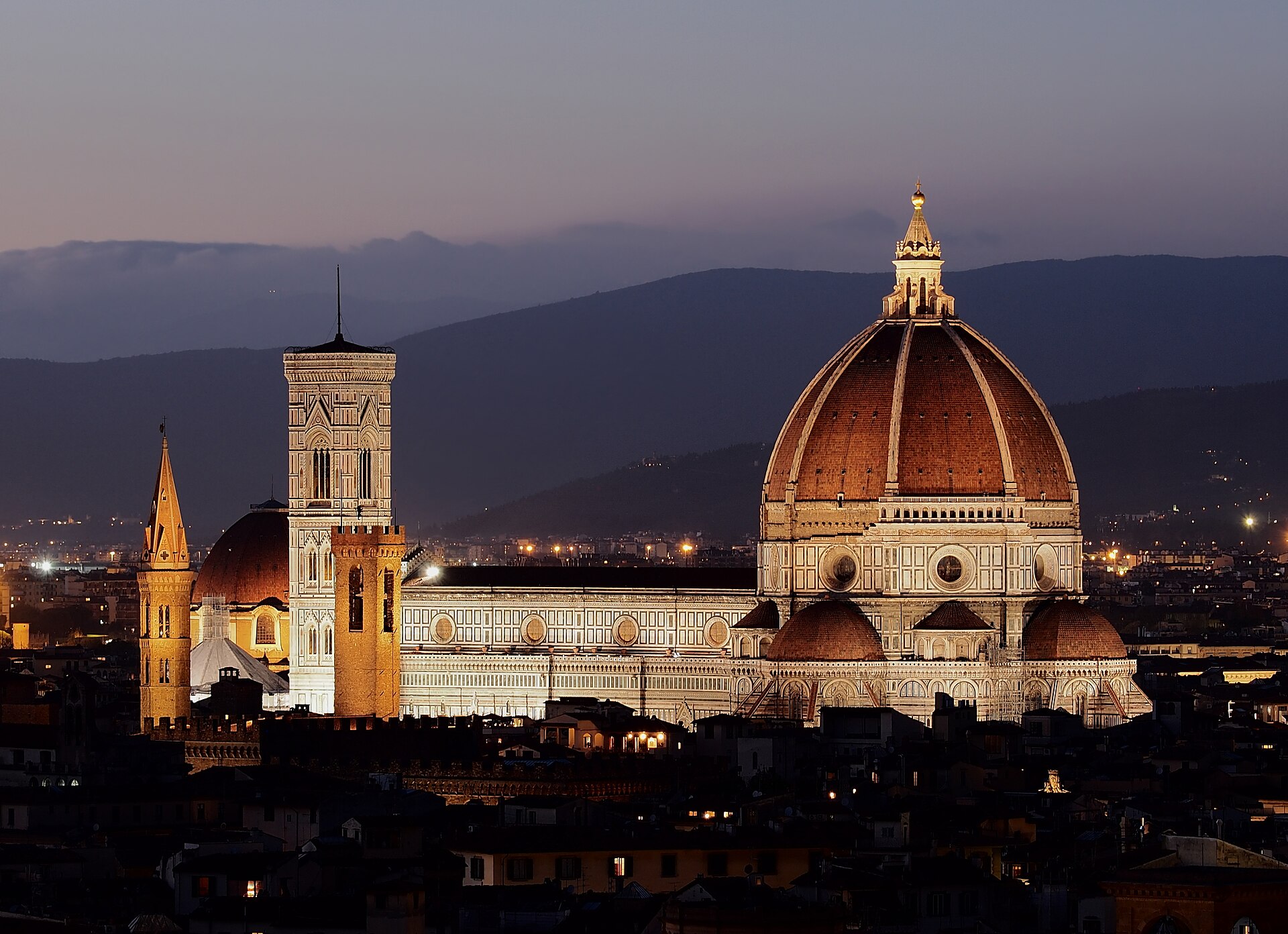
The Renaissance city is trying to curb the everyday tools that make mass tourism feel unavoidable to people who live there. The fight also exposes a bigger tension for Italy: protecting local life while still chasing tourism growth.
A major city is cracking down on overtourism: Florence, Italy, has approved new tourist restrictions after local residents grew upset about massive crowds in the historic center. The major city launches its clampdown by targeting two everyday tourist tools — key boxes used by short-term rentals and loudspeakers used by tour guides — according to AP reporting on City Hall’s 10-point plan.
Why it matters now is bigger than one Renaissance city. Residents say tourist crowds and rentals are changing who can live and work in Florence, while Italy’s national tourism leaders still want more visitors.
Florence targets tourist conveniences
Mayor Sara Funaro’s Cabinet approved the 10-point plan in November 2024, as Italy prepared to host Group of Seven tourism ministers in Florence. The timing made the local dispute hard to miss: the same city showcasing Italy’s cultural power was also trying to limit the side effects of its own popularity.

The most visible proposals would ban key boxes on buildings in Florence’s historic center and stop tour guides from using loudspeakers there, AP reported, citing a City Hall statement.
Those measures may sound small compared with a hotel cap or a visitor tax. But they go directly at the texture of daily life in an old city center: the metal boxes mounted at doorways, the rolling groups around monuments, the amplified commentary echoing through narrow streets.
For visitors, the changes could mean less frictionless check-in and quieter group tours. For residents, that is the point.
Why key boxes became symbols
Key boxes are used by many short-term rental hosts to let guests enter apartments without meeting anyone in person. They are practical for travelers arriving late and efficient for landlords managing multiple units.
In Florence, they have also become a public marker of how many homes are no longer functioning like homes. AP reported that Florentines recently taped red Xs over key boxes during a protest, angry that palazzi, stairwells and residential streets had become part of a vacation-rental network.
The anger is not only about noise or suitcase wheels. Residents argue that short-term rentals have helped push out locals and the neighborhood businesses that served them. When apartments become tourist inventory, the complaint goes, the city center starts to lose the routines that made it a real place rather than a stage set.
That is why a key box can carry more meaning than its size suggests. It is a lockbox, but it is also a sign: another apartment optimized for the visitor economy.
Italy wants growth, not retreat
The Florence crackdown sits inside a national contradiction. Italy is one of the world’s most powerful tourism brands, and the central government sees more room to grow.
According to Italy’s national statistics bureau ISTAT, AP reported, the country recorded 134 million arrivals in 2023 and 451 million people staying in hotels or other registered lodging. Non-hotel lodging grew nearly 17% from 2022, a figure that helps explain why apartment rentals are at the center of the dispute.
Tourism is also a major economic engine. AP cited Statista research estimating the industry contributed about 10.5% of Italy’s gross domestic product in 2023.
Tourism Minister Daniela Santanche acknowledged that some art cities were suffering from too many visitors, but she argued Italy still needed 50 million more visitors a year. Her message was not to shrink tourism, but to make it grow in a more sustainable and higher-quality way.
The local-national split
Florence’s leaders have been pushing for more control over short-term rentals. The city previously announced a ban on new short-term private rentals in the center, hoping to slow the exodus of residents from the historic core.
City officials have also pressed the national government for special authority to cap the number of days a property can be rented out at 120. AP reported that, so far, only Venice has been permitted to limit short-term rentals.
That matters because cities can announce restrictions, but their power depends on national rules, enforcement capacity and the courts. The political divide is also clear: Florence has long been governed by the center-left, while Premier Giorgia Meloni’s national government is on the right.
The clash is not simply anti-tourist versus pro-tourist. It is a fight over who gets to decide the carrying capacity of places whose streets, buildings and public services were not designed for modern tourism volumes.
Travelers may feel the squeeze
Visitors should not read Florence’s plan as a warning to stay away. The city still depends heavily on tourism, and Italy’s national policy is not moving toward fewer travelers overall.
But the direction of travel in Europe’s most crowded destinations is clear: cities are getting more willing to regulate the mechanics of mass tourism. That includes limits on tour groups, restrictions on short-term rentals, day-tripper fees and rules aimed at reducing noise and crowding in historic areas.
Venice has already tested a day-tripper tax to manage tourist flows, and Florence is now focusing on the infrastructure around short stays and guided tours. Other cities watching housing pressure and resident frustration may see these tools as politically easier than telling tourists not to come.
For travelers, the practical takeaway is simple: expect fewer anonymous self-check-in systems in some historic centers, tighter rules around guided groups and a growing distinction between staying in a city and consuming it.
What remains unclear
The biggest unanswered question is whether Florence’s new plan will meaningfully change the rental market or mostly remove the most visible symbols of it. Banning key boxes may make short-term rentals less convenient, but it does not automatically return apartments to local families.
Enforcement will also matter. A rule on loudspeakers is easier to understand than a citywide housing strategy, but both require monitoring, penalties and political will. If the measures are weakly enforced, residents may see them as cosmetic.
There is also a risk for city officials: make tourism too difficult and businesses that rely on visitors push back; do too little and residents keep leaving the center. Florence is trying to occupy the narrow space between those outcomes.
The sharper lesson is that overtourism is no longer just a seasonal crowd problem. In Florence, it has become a housing problem, a street-level quality-of-life problem and a test of whether world-famous cities can remain livable for the people who make them more than a destination.











Leave a Reply