
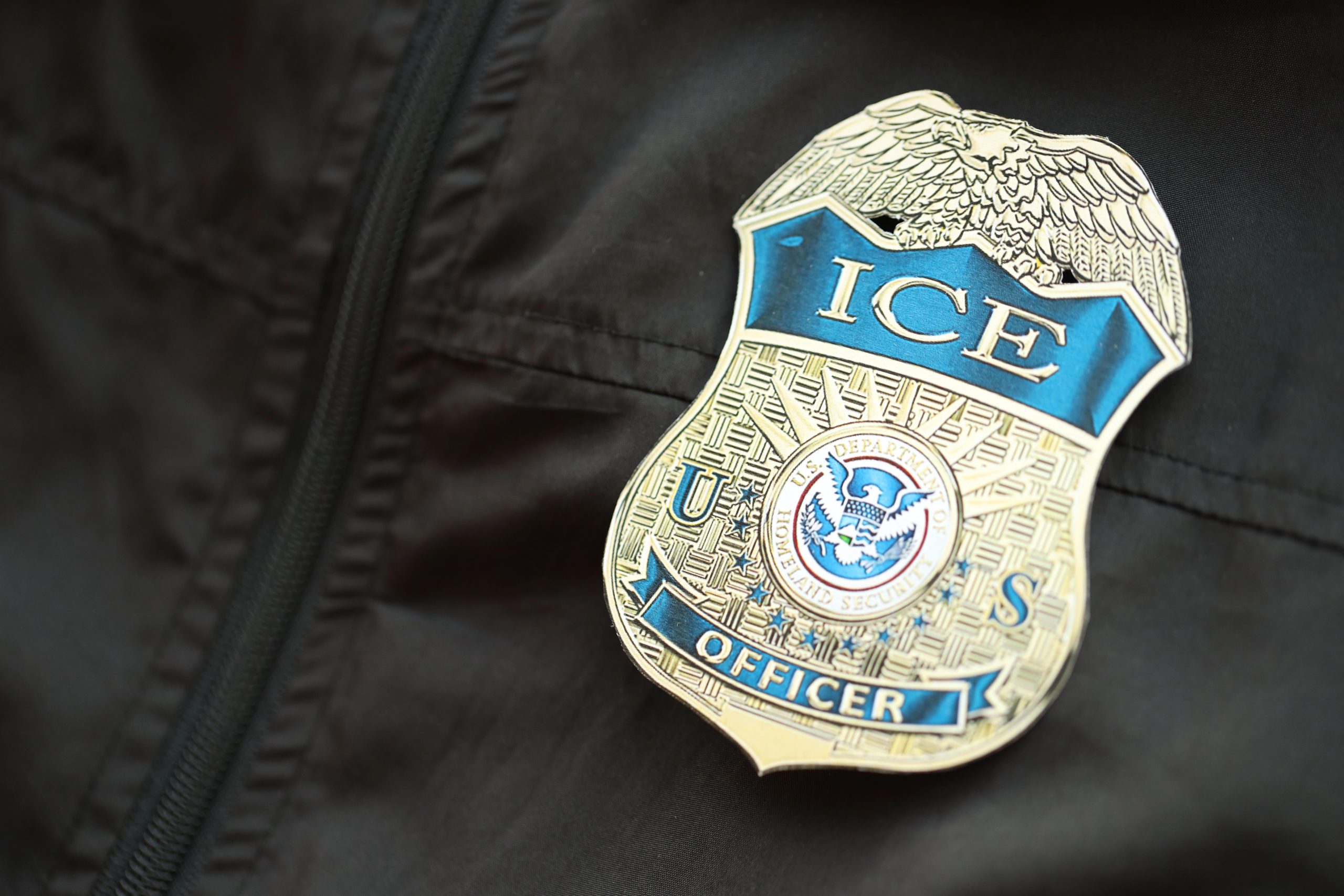
The airport arrests point to a broader enforcement strategy aimed at people accused of staying beyond temporary visas. The shift raises practical questions for travelers, families and employers who rely on time-limited immigration status.
ICE is arresting visa overstayers at airports across the United States, with reports describing ICE arresting visa overstayers at airports coast to coast as part of the airport-based deportation enforcement effort. The campaign targets people accused of remaining in the country after temporary visas expired, expanding enforcement at airports and opening a new front in deportation efforts.
It matters now because airports have long been associated with screening people entering the country. Using them as an enforcement point for visa overstays signals a wider posture by ICE, and it could affect travelers, families, students, workers and visitors whose legal status depends on strict admission dates.
Airports become an enforcement point
The reported arrests, first surfaced through national coverage and amplified by the Washington Examiner, describe ICE activity at airports across the country aimed at visa overstayers. The New York Times framed the development as a surge in airport arrests and a new front in the deportation drive.
The key shift is location. ICE has long had authority to pursue people accused of immigration violations, and the Department of Homeland Security has said ICE is the lead component for overstay enforcement actions, including initiating removal proceedings. But airports are high-visibility spaces where many people assume immigration scrutiny is focused mainly on international arrivals.
That assumption is now less safe. An airport can be more than a travel checkpoint; it can also be a place where database records, identity documents and immigration status concerns converge.
The available reporting does not provide a complete public list of airports, the number of arrests, or a detailed breakdown of how cases were selected. That leaves the scale of the operation unclear, even as the direction of enforcement is plain.
What counts as overstaying
A visa overstay generally refers to someone who remains in the United States beyond the period of admission authorized by the government. That period is not always the same as the expiration date printed on a visa stamp. For many travelers, the controlling date is tied to admission records, such as the I-94 system.
That distinction can be confusing. A person may have a visa document that appears valid for travel, while their permitted stay inside the United States has already ended. Others may have pending applications, extensions or status changes that complicate whether they are unlawfully present or removable.
Customs and Border Protection operates traveler-compliance resources for people who may have overstayed their period of admission or have questions about a potential overstay violation. That is one sign of how much overstay enforcement depends on records, timelines and individual case history.
For ICE, suspected overstays are not a new category. DHS strategy documents describe overstay enforcement as part of the agency’s mission. What is new in the current reports is the apparent emphasis on airport arrests as a visible enforcement tactic.
The data behind the concern
DHS has tracked visa overstays for years because they represent a different immigration challenge than illegal border crossings. Many people who overstay initially enter through lawful channels, including tourism, business, student or exchange programs.
In its fiscal year 2023 Entry/Exit Overstay Report, DHS said that for non-Visa Waiver Program countries, the suspected in-country overstay rate was 3.2 percent of 9,810,543 expected departures. That figure does not describe the current airport operation, but it shows why federal agencies treat overstays as a recurring enforcement issue.
The overstay system is also imperfect by nature. It depends on entry and exit records, airline data, immigration filings, status changes and later corrections. Some people initially flagged as possible overstays may later be resolved through updated records or lawful filings.
That complexity is why airport arrests can be controversial. Enforcement officials may view airports as efficient places to identify people with unresolved status issues. Critics may worry about errors, limited access to counsel and the pressure placed on travelers who are suddenly detained in transit.
Why the airport setting matters
Airports are unusually sensitive places for enforcement. People may be traveling for work, family emergencies, school, medical care or a planned departure from the United States. An arrest in that setting can immediately disrupt flights, separate families and trigger detention or removal proceedings.
For the government, airports also offer logistical advantages. Travelers present identification, move through security systems and often generate fresh location data. If enforcement teams are acting on existing records, an airport encounter can be a moment when a person is easier to locate than at a home or workplace.
That creates the central tension. Supporters of tougher immigration enforcement argue that visa rules mean little if overstays are rarely pursued. They see airport arrests as a lawful way to enforce deadlines that visitors agreed to when admitted.
Immigrant advocates and civil-liberties groups often see a different risk: an enforcement dragnet that may catch people with complicated pending cases, limited English proficiency, old paperwork problems or legitimate misunderstandings about admission dates.
What remains unclear
The biggest unanswered question is scope. The public reporting reviewed here confirms the subject of ICE arrests involving visa overstayers at airports across the United States, but it does not establish how many people have been arrested, whether the activity is concentrated at specific airports, or how long the effort has been underway.
It is also not clear what criteria ICE is using to prioritize cases. Overstay cases can range from short-term administrative violations to long-running status problems. Some may involve people with final removal orders; others may involve people who believe they have pending relief or extensions.
Another open question is coordination. Airport environments involve multiple federal and local actors, including TSA, CBP, airport police and airline systems. The reports center on ICE, but the operational details of how people are identified and approached have not been fully laid out publicly.
Those details matter because they shape how the policy is experienced on the ground. A targeted operation based on final orders is different from broad screening of suspected overstayers. The distinction is essential, and it remains underdeveloped in the public record.
Practical stakes for travelers
The immediate takeaway is not that every international traveler should expect an ICE encounter. It is that people with time-limited immigration status have a stronger reason to verify their records before traveling through U.S. airports.
That includes checking the authorized stay date, keeping copies of immigration filings, saving notices for pending applications and making sure travel plans do not conflict with status restrictions. Students, exchange visitors, tourists, business travelers and temporary workers can all face different rules.
Families and employers should also understand that a valid-looking visa document does not always answer the overstay question. The permitted period of stay, any extensions, and any pending immigration benefits may matter more than the visa stamp itself.
The airport arrests show how deportation enforcement can move into ordinary travel routines. Until ICE or DHS releases more detailed figures and criteria, the public is left with a clear signal but an incomplete map: visa overstay enforcement is no longer just a paperwork issue handled quietly in the background.










Leave a Reply