
A failed effort to buy oil when prices were near $20 a barrel is back in focus after the U.S. emergency reserve fell to its lowest level since 1983. The episode highlights the difficult tradeoff between fiscal restraint, energy security and timing the oil market.
Democrats blocked Donald Trump’s 2020 plan to replenish the Strategic Petroleum Reserve with $3 billion for oil purchases when crude was near $20 a barrel. The proposal did not survive congressional negotiations, and the U.S. Department of Energy’s emergency stockpile has since fallen to 311.4 million barrels after a 5.1 million-barrel drop—its lowest level since March 1983.
The numbers have revived a familiar Washington argument: did Congress pass up an unusually cheap chance to strengthen the reserve, or was it right to reject a major purchase during the first frantic weeks of the COVID-19 economic crisis? The answer matters because the reserve is designed for supply emergencies, not as a simple investment account.
A cheap-oil proposal in 2020
In March 2020, as the pandemic hammered demand and a price war flooded the market with supply, oil prices collapsed. Trump’s administration asked Congress for $3 billion to buy crude for the Strategic Petroleum Reserve, or SPR, taking advantage of unusually low prices.
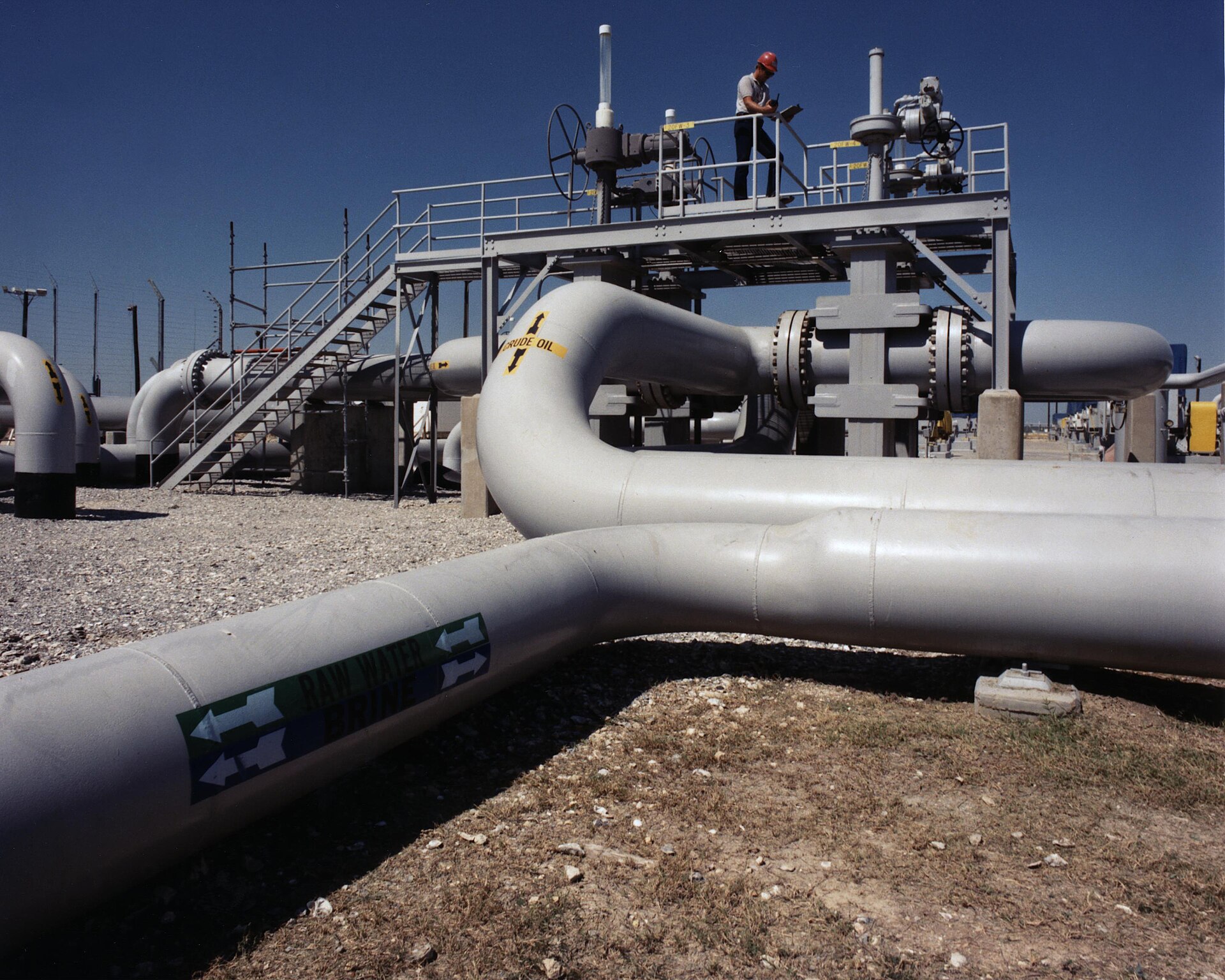
The administration’s basic argument was straightforward: the government could acquire oil near $20 a barrel, support domestic producers facing a sudden crash in revenue and put more crude into salt-cavern storage for a future disruption. The SPR had substantial unused capacity at the time, so the proposal was presented as both an energy-security move and a low-price purchase opportunity.
But the request became entangled in the broader negotiations over pandemic relief. Democratic lawmakers opposed including the funding in the emergency legislation, and the money was left out of the final package. Calling it simply a purchase at a fixed $20 price can overstate the precision of the plan; oil prices were moving sharply, and the administration was seeking funding authority rather than completing a settled transaction at one guaranteed price.
Still, the larger point is clear: the government sought authority to buy a large quantity of crude during one of the cheapest stretches in the modern oil market, and Congress did not provide it.
Why Democrats opposed the funding
The opposition was not only about whether cheap oil might eventually rise in value. In the early pandemic emergency, lawmakers were being asked to approve enormous spending packages for hospitals, households, workers, state governments and businesses. Many Democrats argued that directing billions toward oil purchases was not the immediate priority.
There was also political resistance to treating the SPR proposal as aid to the oil industry. Critics said an emergency stockpile purchase could amount to a government-backed rescue for producers at a time when other sectors and vulnerable households were seeking help.
Supporters of the request saw the decision differently. They argued that the government was not handing out a subsidy but acquiring a strategic asset at a depressed price. If the reserve was going to be refilled eventually, their view was that buying when oil was exceptionally cheap would reduce the cost to taxpayers.
Both positions contained a real tension. The SPR is public infrastructure for national security, yet it is funded through a political process in which timing, budget priorities and the perception of helping a particular industry all matter.
The reserve is now much smaller
Reuters reported that SPR stocks fell by about 5.1 million barrels to 311.4 million barrels in the latest cited weekly decline. That level was described as the lowest since March 1983, a period when the reserve was still being built up after its creation in the wake of the 1970s oil crises.
The Energy Information Administration’s historical inventory series shows why the 1983 comparison stands out. SPR stockpiles were rising through that year, moving above roughly 310 million barrels in late March and continuing upward afterward. For decades, the reserve generally held far more crude than it does now.
At its peak, the SPR held more than 700 million barrels. Its lower current level reflects far more than the failed 2020 proposal. The reserve was drawn down substantially in 2022 following Russia’s invasion of Ukraine, when the Biden administration released crude in response to high fuel prices and supply disruption concerns. Congress has also directed sales from the reserve in other years.
That context is essential. The 2020 rejection did not, by itself, create today’s inventory level. But it meant the government did not add a large block of low-priced oil before later releases reduced the cushion.
The math behind the missed purchase
At roughly $20 per barrel, $3 billion could theoretically buy about 150 million barrels before accounting for the actual oil grades purchased, delivery schedules, transportation and other contract details. That is a meaningful quantity, though it should not be confused with a guarantee that every dollar would have bought crude at that exact price.
For perspective, 150 million barrels would be close to half of the 311.4 million barrels cited in the recent inventory report. It also would have been well below the SPR’s historical maximum capacity, meaning storage space was part of the administration’s case for acting in 2020.
Yet hindsight can make the decision seem simpler than it was. Policymakers in March 2020 were confronting a public-health crisis, severe unemployment fears and extraordinary uncertainty about how long demand would remain depressed. Buying oil may look financially attractive when judged against subsequent prices, but Congress was deciding how to allocate emergency funds without knowing the path of the pandemic or oil market.
There is another caveat: a reserve is not judged only by the price paid for each barrel. The federal government must also decide what volume is sufficient for emergencies, how fast it can move oil out of storage and whether replenishment should occur gradually to avoid pushing up market prices.
Refilling the SPR is not instant
The Department of Energy can refill the reserve through direct purchases, exchanges in which companies return more oil later, and returned barrels connected to prior transactions. Those tools allow replenishment to be spread over time, but they also mean restoring a large stockpile can take years rather than months.
Buying too quickly can carry its own costs. A large federal purchase can increase demand for certain crude grades, potentially lifting prices. Waiting, however, leaves the country with less stored oil if a war, hurricane, shipping disruption or other supply shock hits before inventories are rebuilt.
That is why the 2020 argument has not faded. It has become a case study in the challenge of managing a strategic reserve: leaders are expected to buy when oil is cheap, sell or release when supply is tight, and do both without turning each move into a partisan fight.
The larger lesson is timing
The current 311.4 million-barrel level gives Trump’s 2020 proposal new political force, particularly for critics who believe Congress missed a rare bargain. Democrats who resisted the plan can point to the emergency conditions at the time and argue that pandemic relief had more urgent uses than an oil purchase.
What remains unclear is how much different the SPR’s present inventory would be if the money had been approved. Later administrations could still have released some or all of those barrels, and market conditions would have influenced every later decision.
The more durable takeaway is less partisan than the headline battle suggests. The Strategic Petroleum Reserve is a long-term insurance policy. Once it becomes depleted, refilling it requires money, storage capacity, market patience and political agreement—the same ingredients that were missing when oil was cheap in 2020.






Leave a Reply