
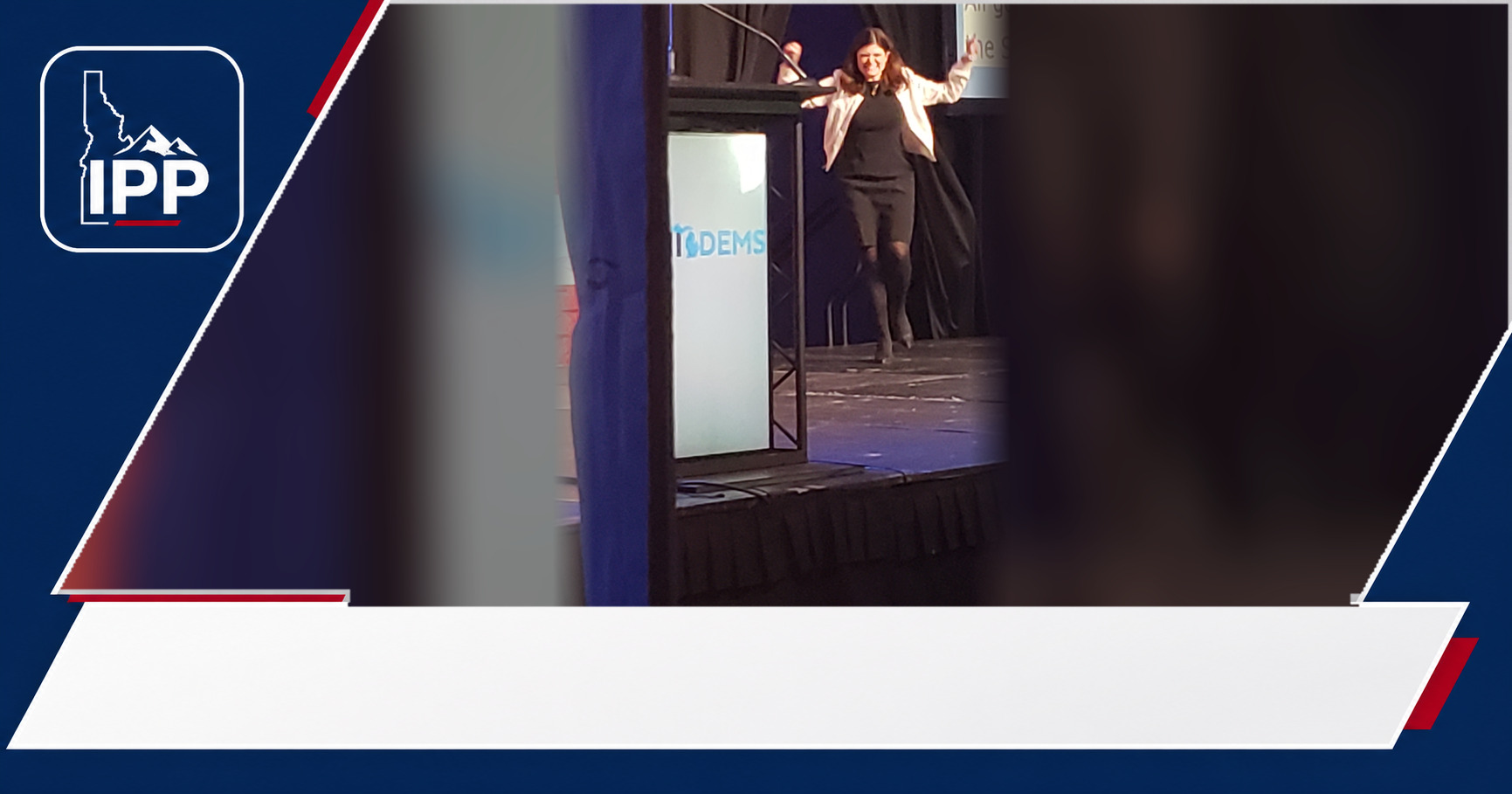
The fight is about more than one foreign-policy vote. In Michigan’s Senate race, Israel aid has become a test of donor power, progressive pressure and electability arguments inside the Democratic Party.
Haley Stevens supports continued U.S. military aid to Israel, and on August 4, 2026, that stance sat at the center of the Michigan Senate campaign. In Grand Rapids on Monday, one day before Tuesday’s Democratic primary, protesters objected to pro-Israel spending backing Stevens, while her rival Abdul El-Sayed sharpened the Israel aid debate from the other direction. Stevens is standing firm, defending Israel’s right to exist while saying she wants a two-state solution, long-term peace and dignity for Palestinians and Israelis.
That combination is now one of the clearest divides in the race: Stevens is arguing that her position is rooted in security and peace, while critics see her support for aid and outside spending by pro-Israel groups as a sign that powerful donors are shaping the contest.
A primary shaped by Israel
The exchange unfolded as Michigan voters prepared to choose the Democratic nominee for an open Senate contest that has become one of the country’s costliest races. CBS News reported that protesters outside Stevens’ Grand Rapids event were focused on the tens of millions of dollars spent on her behalf by the American Israel Public Affairs Committee, known as AIPAC, and affiliated groups.

Stevens did not back away from her record when asked why she continues to support military aid to Israel at a moment when that position has become less politically comfortable for many Democrats. Instead, she drew a contrast with El-Sayed, a progressive populist whose criticism of U.S. aid to Israel has made the issue a central point of separation between the candidates.
Stevens told CBS News that there are two different views in the primary. She said she supports a two-state solution and long-term peace, and she said she has called out Israeli Prime Minister Benjamin Netanyahu. She also argued that Netanyahu has failed to move toward long-term peace.
Her answer tried to occupy a narrow lane: keep backing Israel militarily while distancing herself from Netanyahu’s leadership and acknowledging Palestinian dignity. In this race, that lane is not just policy. It is politics, money and identity inside the Democratic coalition.
Money is driving the scrutiny
The spending numbers explain why the issue has become so combustible. According to CBS News, about $80 million has been spent so far on the Michigan Senate race, with $60 million spent on Stevens’ behalf. That scale has made the contest one of the most expensive Senate races in the country.
AIPAC is one of the major pro-Israel groups spending in support of Stevens, CBS News reported. For critics, that spending turns her Israel position into a broader question about campaign influence. For Stevens, the support is part of a larger argument that she is the Democrat best positioned to win the general election.
When CBS News’ Ed O’Keefe pressed Stevens on being the beneficiary of dark money while saying the system should change, Stevens said the political system needs to evolve and that she wants to end dark money in politics. She also shifted attention to Republican Mike Rogers, who is running unopposed for the GOP nomination.
Stevens argued that Rogers has a $45 million PAC waiting for him, supported by Donald Trump. Her point was clear: Democrats, in her view, should not disarm financially before a high-stakes general election. Her critics see a contradiction. She says she wants to end dark money, while benefiting from massive outside spending now.
El-Sayed presses from the left
Abdul El-Sayed has attacked Stevens over both the aid issue and the pro-Israel money supporting her campaign. CBS News reported that El-Sayed has criticized U.S. aid to Israel and has described Israel’s actions in Gaza as genocide.
Stevens responded by making a sharper claim about El-Sayed’s position. She asserted that he equivocates and said he will not recognize Israel’s right to exist as a state. That is Stevens’ characterization, and it is politically loaded. It places the argument not only over military funding, but over recognition, legitimacy and the boundaries of acceptable Democratic debate on Israel.
El-Sayed’s critique speaks to a wing of the party that views continued U.S. military support for Israel as morally indefensible amid the war in Gaza. Stevens’ response speaks to Democrats who believe the U.S. should maintain Israel’s security relationship while pushing for a negotiated peace and criticizing Netanyahu.
The tension is not easily reduced to pro-Israel versus pro-Palestinian labels. Stevens says she wants dignity for people in Palestine and Israel. El-Sayed’s position, as described by CBS News, challenges the use of U.S. aid and the role of AIPAC money. Voters are being asked to weigh policy, values and political viability all at once.
Electability is Stevens’ counterargument
Stevens’ broader case is that she can beat Rogers in November. She told CBS News that every poll shows she is the best candidate to defeat him, though the report also noted that El-Sayed had been leading Stevens by double digits in polling over the previous two weeks.
That creates a striking split-screen. Stevens is presenting herself as the proven general-election fighter, while also acknowledging she may be the underdog in the primary. El-Sayed, meanwhile, appears to be channeling dissatisfaction among voters who want a more confrontational break with establishment Democratic foreign policy and donor networks.
Stevens also tried to frame the Senate job as a long-term commitment. She described the role as six years of hard, unglamorous work and called herself Michigan’s workhorse. She then suggested El-Sayed might be looking beyond the Senate, pointing to his presidential website.
That line of attack is familiar in primaries: one candidate argues experience and durability; the other represents movement energy and ideological urgency. In Michigan, the overlay of Gaza, Israel and AIPAC money has made the contrast sharper than a routine establishment-versus-progressive contest.
Why Michigan matters nationally
Michigan is not just another Senate race. It is a state where Democratic candidates often need to hold together urban, suburban, labor, Arab American, Jewish, Black and progressive voters while also competing for persuadable general-election voters. The Israel aid debate cuts across those constituencies in complicated ways.
For national Democrats, the race is a warning about how foreign policy can become a domestic campaign fault line. Support for Israel was once a relatively safe bipartisan position. Since the war in Gaza, Democratic voters have grown more divided over U.S. military assistance, human rights concerns and whether criticism of Israel should also extend to restricting aid.
AIPAC’s spending adds another layer. Supporters of the group’s involvement argue that backing candidates who support the U.S.-Israel relationship is legitimate political participation. Opponents argue that the scale of spending can drown out local concerns and punish candidates who dissent from pro-Israel orthodoxy.
Stevens is betting that voters will accept her distinction between supporting Israel’s security and criticizing Netanyahu. El-Sayed is betting that many Democratic primary voters see continued aid as inseparable from the suffering in Gaza and from a campaign finance system they distrust.
What remains unresolved
The immediate question is whether Stevens’ position helps her survive Tuesday’s primary or reinforces the very doubts her opponents are trying to exploit. CBS News reported that El-Sayed had been leading by double digits in recent polling, while Stevens cast herself as a fighter who can still meet the moment.
There are also unanswered questions that will last beyond the primary. If Stevens wins, Democrats will have to see whether the outside spending and Israel debate leave scars among progressive voters. If El-Sayed wins, the party will test whether a sharper critique of Israel aid can hold up in a general election against Rogers.
For now, Stevens has chosen not to blur her position. She supports continued U.S. military aid to Israel, says she wants peace and a two-state solution, and argues that she is the Democrat who can beat the Republican nominee. In a primary defined by money, Gaza and party identity, that is both her pitch and her vulnerability.






Leave a Reply