

The changes are being welcomed by some shop owners because they go after the small frictions that can become expensive delays. They also complicate the easy political labels around Mamdani’s City Hall.
Zohran Mamdani is cutting red tape for New York small businesses, announcing more than 50 regulatory reforms in New York aimed at permits, fines, fees and inspections. Small business owners are reacting positively to the reforms because the package targets everyday delays that can decide whether a bodega, cafe, barbershop or restaurant opens smoothly or spends weeks fighting City Hall.
For New York’s small business owners, the appeal is practical, not ideological: fewer duplicate permits, cheaper vendor fees, faster inspections and more help navigating city agencies.
The rules being loosened
Mamdani unveiled the package this week with a simple visual message: paper labeled “RED TAPE” going into a shredder. The policy behind the stunt is more detailed. The mayor said the city would remove or reduce a set of requirements that small operators have long described as confusing, costly or redundant.
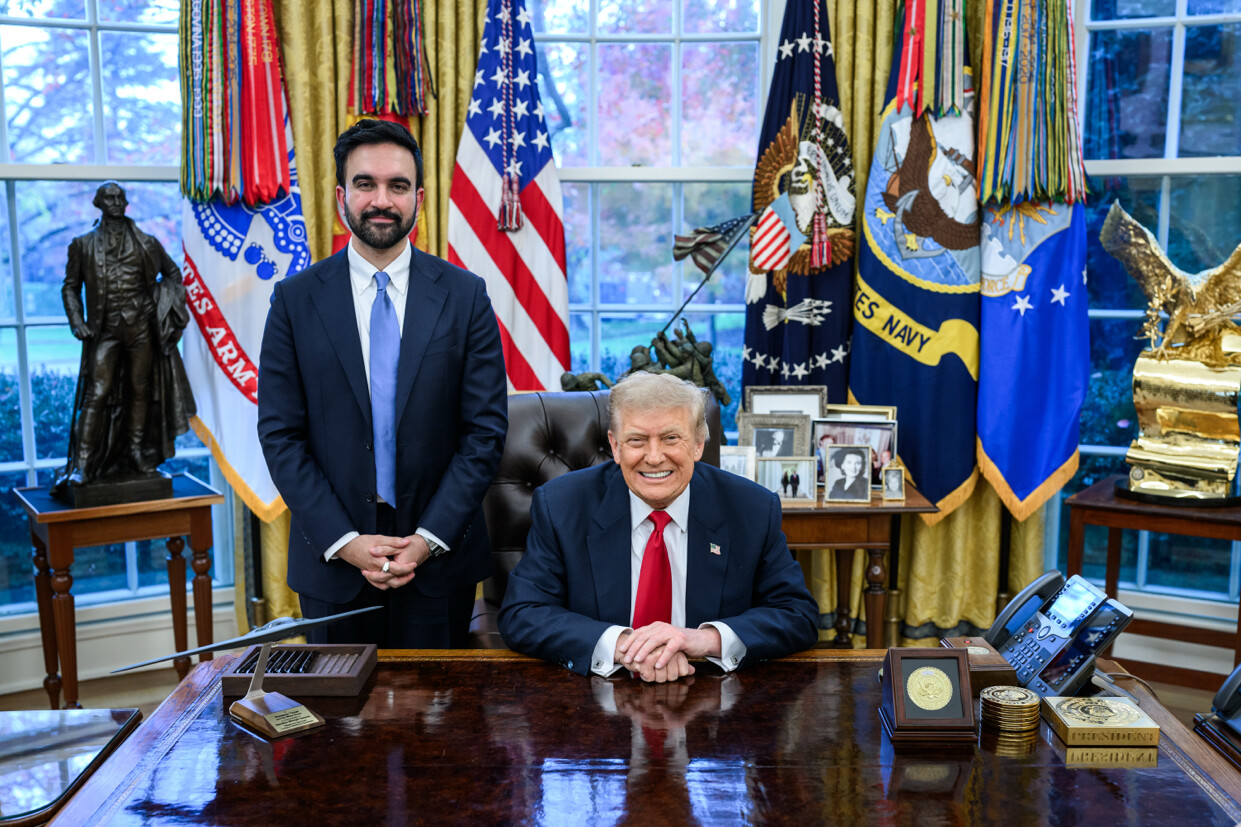
Among the examples cited: bodega owners would no longer need a separate license to sell goods outside the store, such as fruit or flowers, when those same products are already sold inside. Restaurants would no longer need an extra frozen dessert permit just to serve ice cream on top of an existing food-service permit.
Barber shops would be allowed to renew permits every three years rather than every year. Street fair vendor permit fees are set to be reduced. Restaurant inspections are supposed to move faster. Equipment registration fees will be eliminated for a year.
None of those changes alone sounds like an economic revolution. Together, they speak to a basic complaint heard across the five boroughs: the city can be hardest on the smallest operators, the people least able to absorb delays, consultant costs, fines or repeated trips through paperwork.
A case worker for every business
The most consequential piece may not be any single permit change. Mamdani also signed an executive order expanding NYC Best, a program designed to help businesses deal with city government.
Under the expansion, each of the city’s roughly 180,000 small businesses would be assigned a case worker. Those businesses employ an estimated 1 million people, making the program more than a customer-service upgrade. If it works, it could become a pressure valve for one of the city’s largest employment engines.
The idea is straightforward: instead of owners trying to decipher which agency controls which approval, a designated person helps them move through the system. For a new cafe, corner store, salon or restaurant, that kind of navigation can matter as much as a tax break.
Dawn Kelly, owner of Nourish Cafe in Jamaica, Queens, gave the reforms one of the week’s clearest endorsements. She said she was “over the moon” about the changes and credited NYC Best with helping her get her own business from idea to ribbon-cutting after launching in 2016.
Why owners feel relief
Small-business frustration in New York often comes from accumulation. A fee here, a renewal there, a required course across town, an inspection that takes too long, a license that seems to duplicate another one. For a large company, those costs can be routed to legal, compliance or operations teams. For a tiny shop, the owner may be the compliance department.
Kelly’s example captures the point. She said staff had to travel from far out in Queens to the Upper West Side for a three-day food-handling certificate course because it was offered in only one location. After the issue was raised through the city’s Small Business Advisory Commission, officials said the course would be offered at multiple locations.
That kind of change is not flashy, but it can save workers time and businesses money. It also signals that the administration is listening to operational problems rather than only talking about broad economic themes.
The timing is not incidental. A recent city study found that 3,540 businesses opened in the second quarter of 2025, while 8,400 similar-sized businesses closed. That marked the weakest level of new business formation in five years. In that environment, even modest procedural relief can feel urgent.
A socialist mayor using deregulation
The package also lands in the middle of a political fight over Mamdani’s identity as a democratic socialist. Critics on the right have often cast him and allied left-wing officials as hostile to business. The small-business agenda complicates that picture because many of the changes fit a word more often used by conservatives: deregulation.
That does not make Mamdani a free-market convert. He has supported other ideas, including government-run grocery stores, rent freezes and higher taxes on top contributors, that free-market critics strongly oppose. Libertarian commentators have still argued that opponents should welcome the small-business reforms if they are consistent about reducing burdens on entrepreneurs.
There is another way to read the same move. JW Mason, an economics professor at John Jay College at the City University of New York, argued that making government work better for smaller firms can be consistent with democratic socialist governance. His point is that “pro-business” policy often ends up benefiting large, connected companies rather than the local shops that define neighborhood life.
That tension is the heart of the story. Mamdani is not abandoning his politics. He is making a bet that a left-led City Hall can be friendlier to small businesses by cutting needless bureaucracy while still defending regulation where it protects workers, consumers and public safety.
The execution test ahead
The reforms will now be judged less by the press conference than by the counter line, the inspection schedule and the inbox. Small-business owners will want to know whether agencies actually change their behavior, whether case workers have authority to solve problems and whether faster approvals still come with clear standards.
There are also real caveats. Some rules that feel annoying to business owners exist for safety, sanitation, labor standards or neighborhood order. Cutting red tape can be popular; deciding which tape is useless and which tape protects the public is harder.
The administration will need to show that it can simplify without creating confusion. If one permit disappears, owners need clear guidance on what remains. If fees are reduced, the city must explain how programs tied to those fees are funded. If inspections are sped up, restaurants and customers alike need confidence that speed does not mean weaker oversight.
For now, the political message is unusually broad. Mamdani gets to argue that his government is helping mom-and-pop shops. Owners get relief from some of the city’s most irritating procedural burdens. Even some ideological opponents have reason to applaud parts of the package.
What it means for Main Street
The most important measure will be whether the reforms are felt by people who do not follow City Hall closely: the bodega owner selling flowers outside, the barber trying to avoid annual renewal hassles, the restaurant adding ice cream to the menu, the vendor paying less to work a street fair.
If the changes make those interactions simpler, Mamdani will have turned a symbolic shredder video into a tangible service improvement. If they stall inside agencies, the package risks becoming another promise that small businesses have heard before.
Still, the reaction from owners such as Kelly shows why this issue has political power. New York’s small businesses do not need City Hall to solve every problem. Many are asking for something more basic: fewer unnecessary obstacles, clearer answers and a government that does not make survival harder than it already is.










Leave a Reply