
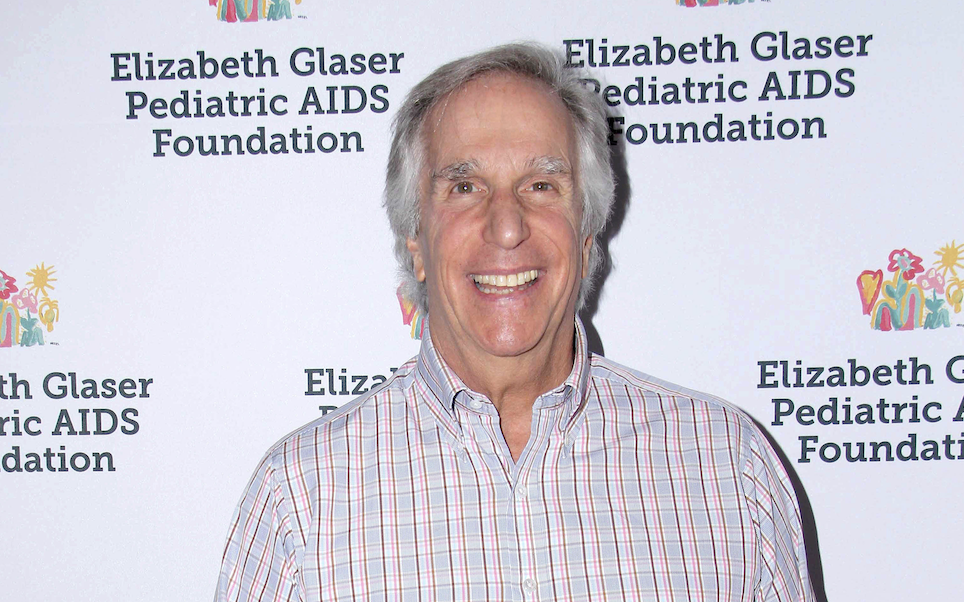
Winkler’s fan-expo story was less about old Hollywood gossip than a rule he says guided the long-running sitcom: nobody was supposed to act bigger than the group. The actor did not name the recurring guest, though reporting has linked the description to Denis Mandel.
Henry Winkler recalls a Happy Days guest star who tested his patience on set by repeatedly bragging about fan mail. At a recent fan expo in Tennessee, Winkler said the recurring actor, whom he identified only as the performer who played Eugene, kept raising the subject even after Winkler responded that he received 50,000 letters a week and told him the cast did not discuss that kind of status at work.
The guest star was not named by Winkler. People and Parade have reported that Denis Mandel played Eugene Belvin during seasons 8 and 9 of Happy Days, but Winkler’s story was framed as a complaint about behavior, not a formal identification or a detailed account of their relationship.
Winkler’s rule for the set
Winkler shared the anecdote while appearing with fellow Happy Days actors Anson Williams and Don Most. His larger point was that the ensemble did not operate as though any one person outranked the others.
“The truth of the matter is really on our set there was no stardom,” Winkler said, according to People. That is a notable sentiment coming from the actor who played Arthur “Fonzie” Fonzarelli, the character whose popularity became one of television’s defining pop-culture phenomena of the 1970s.
His recollection did include one exception: a guest performer who appeared once and was then invited back several times. In Winkler’s telling, the actor repeatedly mentioned the fan mail he was receiving.
The irritation was not simply that a working actor enjoyed recognition. Winkler presented it as a breach of the culture the regular cast had tried to maintain: show up, do the work and avoid turning the set into a contest over fame.
The fan-mail exchange
Winkler said he answered the guest star’s boasting with a pointed comparison. “You don’t want to talk to me about fan mail, I get 50,000 letters a week,” he recalled saying.
That figure underscored the imbalance in the exchange. Fonzie had become so popular that Winkler was well aware of the scale of his public following, yet he said that was exactly why fan mail was not a subject the cast treated as social currency.
Winkler said he then made the boundary explicit: “We don’t talk about that on the set. We are all here as one.” According to his account, the guest star continued anyway.
His blunt punch line has drawn attention because it is unusually sharp for an entertainer with a public reputation for warmth. Still, the substance of the story is less a score-settling revelation than a memory about an unwritten workplace rule being ignored.
Who played Eugene on the series
Winkler did not provide a name. He said only that the person “played Eugene,” an important limitation when interpreting the anecdote.
Parade identified Denis Mandel as the actor who played Eugene Belvin, a character seen in seasons 8 and 9. People noted that connection in its report while making clear that Winkler himself did not name Mandel.
That distinction matters. A recollection told decades later at a public event is one person’s account, and the available reporting does not include a response from Mandel or independent detail about every interaction Winkler described.
Mandel later stepped away from acting, according to the reports. The available material does not establish whether he has addressed Winkler’s comments.
Why the story lands differently
Behind-the-scenes stories often trade on the idea that a beloved show must have been filled with friction. Winkler’s version instead draws a contrast: he said this one recurring guest stood out because most of the cast worked in a more collaborative way.
That view is supported, at least in part, by Ron Howard’s separate description of his bond with Winkler. Howard, who played Richie Cunningham from 1974 to 1980, told People in 2025 that the pair clicked immediately both professionally and personally.
Howard said he looked up to Winkler’s approach to acting, describing it as more theater-based and less conventionally Hollywood. His comments do not prove that every day on the sitcom was conflict-free, but they offer a counterweight to the one tense anecdote.
The contrast also helps explain why Winkler’s story has resonated. Fans often remember Happy Days through its ease and familiarity; Winkler is describing the work required to preserve that atmosphere when celebrity could have disrupted it.
Fonzie’s fame is part of context
Winkler played Fonzie throughout Happy Days, which ran from 1974 to 1984. The character began as a leather-jacketed neighborhood figure and became a central force in the show’s cultural identity.
That history gives the fan-mail number added meaning. Winkler was not speaking as someone untouched by the pressures of sudden television fame. He was describing a decision, at least as he remembers it, not to make personal popularity the governing hierarchy on set.
There is also an obvious competing reading. Some may see the exchange as ordinary ego and friction on a high-profile production, rather than evidence of a larger problem. Winkler’s comments offer no claim of a major feud, only a clear memory of a colleague who got under his skin.
What remains unclear is how the guest star viewed the exchange and whether other cast members experienced it the same way. Winkler’s central message, though, was uncomplicated: in a successful ensemble, even real fame was supposed to stay outside the working dynamic.
A small story about ensemble chemistry
The strongest takeaway from Winkler’s recollection is not the insult or the mystery around the guest actor’s name. It is his insistence that a show with enormous stars could still depend on collective discipline.
For viewers revisiting Happy Days, the anecdote adds a more human layer to its polished nostalgia. The cast’s chemistry, Winkler suggests, was not only luck; it was reinforced by a shared expectation that no one’s mailbag mattered more than the job.





Leave a Reply