
The flare-ups are not isolated. They point to a bigger problem for Trump: pressure still works for him, but not always when courts, senators, markets and public opinion push back.
Donald Trump is reacting angrily to a series of political setbacks and losses, and the recent losses piling up against Trump are testing how far his influence still reaches over Republicans, political opponents and even loyal appointees. In the Oval Office on Monday, according to CNN, President Trump lashed out at oil companies, singled out Chevron over gasoline prices and criticized Jeanine Pirro, his own U.S. attorney for Washington, D.C., after court filings undercut his claims about vandalism at the Lincoln Memorial Reflecting Pool.
The story is not just that Trump lashes out. It is that several fights he has pushed hard are now running into institutional limits: senators demanding written concessions, a voting bill without enough support, an ethics-sensitive $1.8 billion fund being abandoned, and a public approval rating that CNN’s latest polling put at about one-third of Americans.
The Oval Office outburst
Trump’s irritation over gasoline prices was aimed squarely at oil companies. CNN reported that he accused oil executives of benefiting from turmoil and said they were making too much money, even as he described himself as a strong supporter of free enterprise.
Chevron drew special attention from the president, who warned that gasoline needed to get cheaper. That put Trump in an awkward position: blaming private companies for prices while also defending a deregulatory, business-friendly posture that has long been central to Republican economic politics.
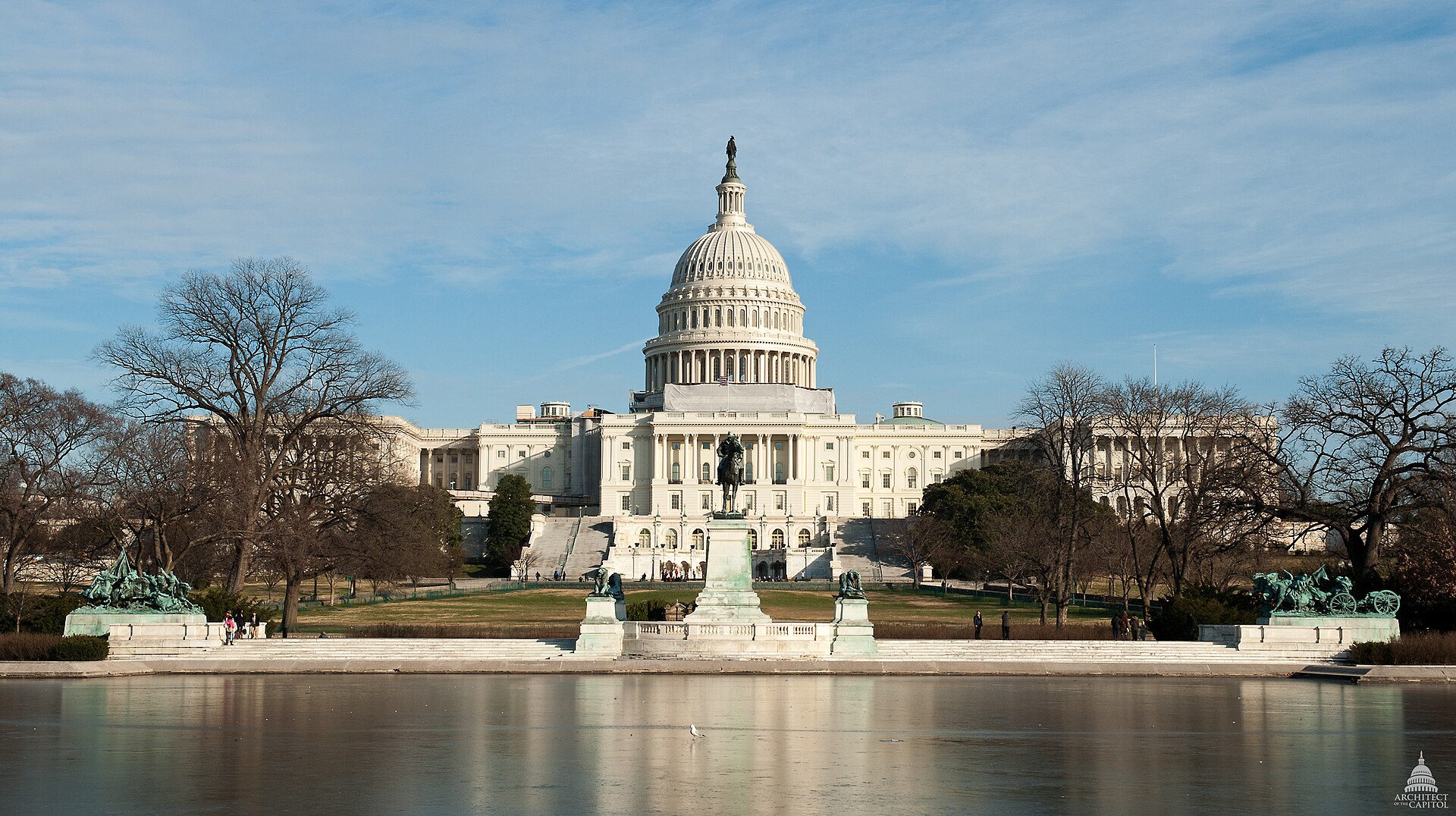
His sharper personal attack was aimed at Pirro, a longtime ally and former Fox News personality whom Trump installed as U.S. attorney in Washington. CNN reported that Trump said Pirro had choked and folded after her office acknowledged in court papers that problems at the Reflecting Pool renovation stemmed from a botched Interior Department rehabilitation effort, not vandalism.
That mattered because the court record clashed with a public story Trump had promoted. In politics, a loyal appointee can echo a message. In court, the evidence has to survive a different test.
A win with a catch
Trump did notch one apparent victory: CNN reported that Todd Blanche, his former personal attorney and acting attorney general, had enough support to be confirmed as attorney general. But the deal came with a concession Trumpworld did not want.
Blanche had to permanently abandon a $1.8 billion fund tied to a settlement between Trump and his own Justice Department. Trump and allies viewed the money as a way to compensate people they say were wronged. Critics saw a serious ethical hazard, arguing that taxpayer money could flow to Trump supporters, including people he had previously pardoned.
Republican Sens. John Cornyn of Texas and Thom Tillis of North Carolina wanted the retreat put in writing. That detail is important because it shows the pressure was not just coming from Democrats or outside watchdogs. It came from within Trump’s own party.
There is still a legal wrinkle. CNN senior legal analyst Elie Honig noted that Trump and his lawyers had not signed the clawback document, meaning Trump or his attorneys could still try to revive the agreement in court. Politically, though, the message was unmistakable: Senate Republicans forced a retreat before handing Trump a personnel win.
The voting bill stalls
Another setback involves the SAVE America Act, a voting restrictions bill that would impose new proof-of-citizenship requirements on top of voter ID systems already handled by states. Trump has argued for months that the measure is needed to stop mass voter fraud.
CNN noted that its fact-checking has found no evidence of the kind of widespread fraud Trump describes. That has not stopped the issue from remaining a core Trump argument, especially among parts of the Republican base.
The problem is votes. Cornyn and Tillis have both argued that Republicans should move on from the bill for now, according to CNN. Even if the legislation advanced, there would not be enough time to implement it before the midterm elections.
That makes the defeat practical as much as ideological. Trump can keep the issue alive at rallies and in posts, but Senate math and election calendars are harder to bend.
Republicans are choosing distance
The pattern is not a full-scale Republican revolt. Most GOP officials still avoid open breaks with Trump when they can. But the latest episodes show selective resistance from senators who have different incentives than the president.
Tillis is not seeking reelection, and his North Carolina seat is viewed by political handicappers as a strong Democratic pickup opportunity. Cornyn, meanwhile, lost a primary runoff to a more MAGA-aligned opponent who received Trump’s late endorsement.
Sen. Susan Collins of Maine is a different kind of test. CNN reported that Collins inserted language into a spending bill to block, at least temporarily, a Trump Office of Management and Budget rule that would give political appointees more control over federal grants than subject-matter experts.
Collins is the only Republican running for reelection in a state Trump won in 2024. Her move suggests some GOP lawmakers still see value in limiting Trump’s reach when the policy or local politics make that safer than full alignment.
Approval numbers add pressure
The political environment makes these setbacks more dangerous for Trump. A CNN poll conducted by SSRS and released last week found that about one-third of Americans approved of his job performance, a level CNN described as his lowest of this presidency and comparable to the end of his first term after January 6, 2021.
Low approval does not automatically weaken Trump inside the GOP. His core supporters have repeatedly stayed with him through scandals, legal fights and electoral disappointments. But weak national standing changes how other Republicans calculate risk.
If Trump is popular, defying him can look like political self-harm. If he is underwater, senators may be more willing to demand concessions, slow legislation or add guardrails to spending bills.
The economy and the Iran war have been major drags, according to CNN’s analysis of the polling and political climate. Oil market disruption has sharpened that problem. Trump’s anger at oil companies may be designed to redirect blame, but voters usually judge presidents by prices they feel directly.
What remains unresolved
Several questions now hang over the week’s political turbulence.
- Jeanine Pirro’s future: CNN reported that Trump is considering removing her, but no final decision has been reported.
- The $1.8 billion fund: Blanche’s written retreat may settle the politics, but legal analysts have noted possible openings if Trump or his lawyers challenge the clawback.
- The SAVE America Act: The bill lacks enough momentum for now, and the calendar makes near-term implementation unlikely.
- The OMB grants rule: Collins’ language would block it temporarily, but the broader fight over political control of federal grants is not finished.
Trump’s angry responses are familiar. What is more revealing is what prompted them. Courts, senators, markets and polling are all pushing back in different ways. For a politician whose brand depends on dominance, the setbacks matter because they show where pressure still works against him.

Leave a Reply