
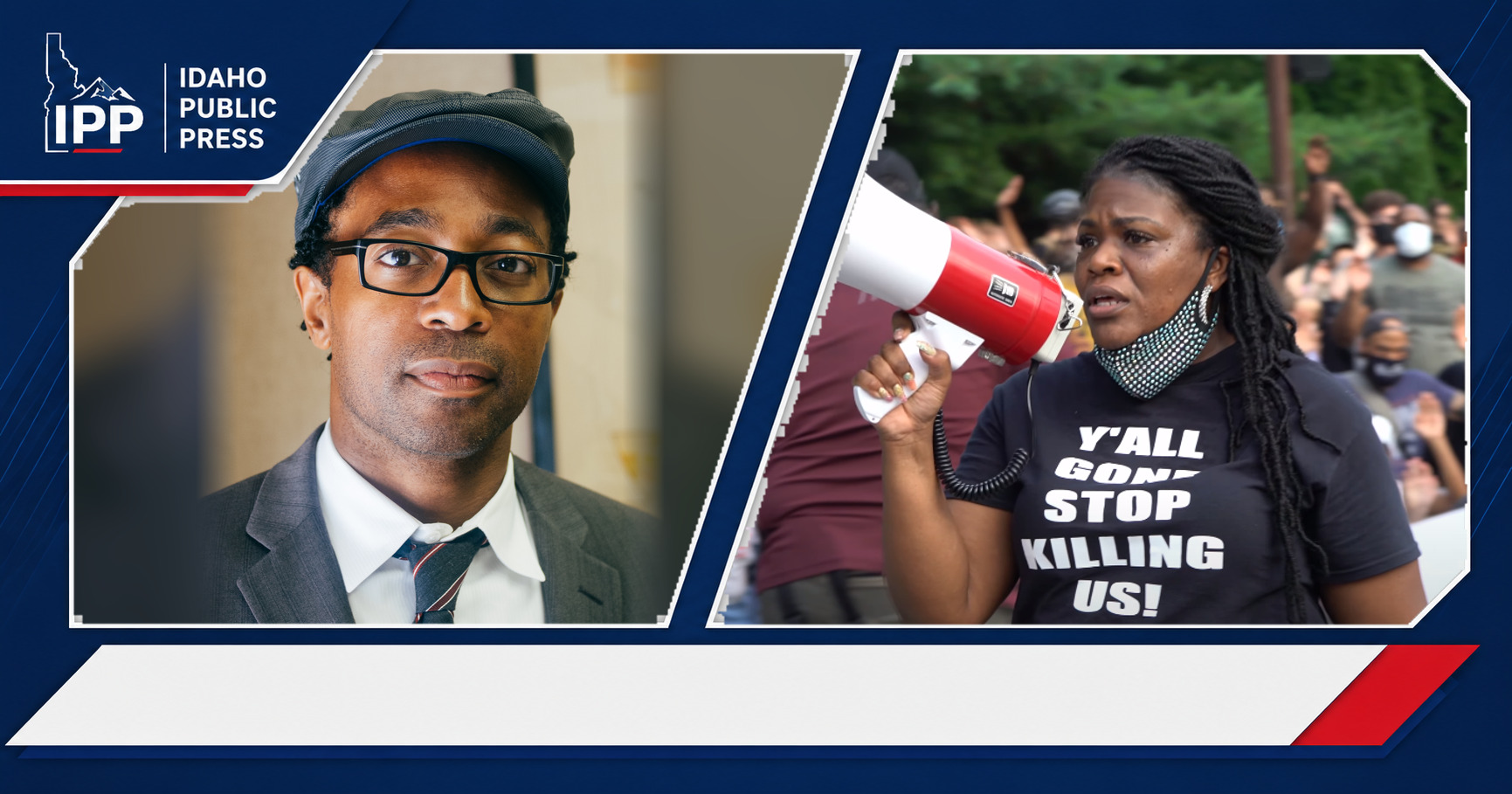
The St. Louis-area race reopened arguments over progressive power, Israel policy, outside spending and Ferguson’s political legacy.
Rep. Wesley Bell defeated Cori Bush in a Missouri Democratic primary rematch, turning back Bush’s challenge in the race for Missouri’s 1st Congressional District, according to the Associated Press. The St. Louis-area contest tested whether Bush, the progressive former congresswoman Bell unseated in 2024, could reverse one of the Democratic Party’s most expensive and ideologically charged House primary losses.
Bell’s win suggests the district has moved further from the coalition that first sent Bush to Congress. It also keeps alive the argument that made their first matchup a national story: who defines Democratic politics in safe blue seats.
Bell survives the Bush rematch
Bell entered the rematch as the incumbent, with the advantage of having already defeated Bush once. Bush returned to the ballot trying to show that her 2024 loss had not ended her political movement in St. Louis.

The Associated Press reported the result as Bell fending off Bush’s primary challenge. Vote totals and the final margin were not included in the available AP material, but the verified outcome is clear: Bell won the Democratic primary rematch for Missouri’s 1st Congressional District.
That result matters for November and for national Democrats watching similar contests. In a district AP has described as overwhelmingly Democratic, the primary can be the decisive race, even with a general election still ahead.
For Bell, the victory strengthens his argument that his 2024 win was not simply a backlash against Bush. For Bush, it is another setback after a fast rise from Ferguson activist to member of Congress to high-profile progressive target.
Why this seat mattered
Missouri’s 1st Congressional District is centered on St. Louis, where local politics, racial justice activism and national Democratic fights often intersect. That made Bell versus Bush a closely watched congressional primary.
Bush became a national figure as part of the progressive group known as the “Squad.” Her 2020 victory over longtime Democratic Rep. William Lacy Clay was viewed as a major win for activists challenging party establishments from the left.
Bell’s path was different, but it also ran through the St. Louis region’s protest era. AP’s prior coverage noted that both Bell and Bush developed public leadership profiles after the 2014 police killing of Michael Brown in Ferguson, Missouri.
That shared history gave the rivalry unusual depth. It was not only a moderate-versus-progressive or incumbent-versus-challenger contest. It was a fight between two politicians shaped by the same local trauma, with different ideas about how to use power afterward.
Gaza shadowed the first fight
The 2024 Bell-Bush contest drew national attention because of the war in Gaza and the role of outside spending. AP reported that Bell’s campaign received a major boost from the American Israel Public Affairs Committee’s super PAC, United Democracy Project, which spent $8.5 million to help defeat Bush in that race.
Bush had repeatedly criticized Israel’s response to the Oct. 7 Hamas attack. AP reported that she called the Israeli retaliation an “ethnic cleansing campaign” and said Israel’s “collective punishment against Palestinians for Hamas’s actions is a war crime.” Those comments drew backlash, including from some supporters in her own district.
Bell, who had been preparing to run for Senate against Republican Josh Hawley before challenging Bush, told AP at the time that Bush’s comments about Israel were “wrong and offensive.” Bush countered that donors aligned with AIPAC supported Donald Trump and other Republicans, warning that if they could unseat her, they would keep targeting more Democrats.
The rematch revived that unresolved argument, even as each campaign cycle brings its own local dynamics. Bell’s supporters see his wins as evidence that a pro-Israel posture and a pragmatic progressive message can succeed in Democratic primaries. Bush’s supporters see the races as examples of how outside money can reshape representation in safe Democratic districts.
Two Ferguson-rooted careers
The Bell-Bush rivalry is inseparable from Ferguson. Brown, an unarmed Black 18-year-old, was killed by a white police officer, Darren Wilson, on Aug. 9, 2014. Wilson said he fired in self-defense; some witnesses said Brown had his hands up. Wilson was cleared of wrongdoing and later resigned.
Bush emerged as a protest leader after Brown’s death, criticizing policing in Ferguson and across the St. Louis region. She first ran unsuccessfully against Clay in 2018, then defeated him in 2020 and won reelection in 2022.
Bell’s post-Ferguson path went through local government and prosecution. A lawyer who had served as a municipal prosecutor and judge, he won a Ferguson City Council seat and later defeated seven-term St. Louis County Prosecuting Attorney Bob McCulloch in the 2018 Democratic primary.
As prosecutor, Bell reopened an examination into Brown’s death. In 2020, he announced there was not enough evidence to charge Wilson, while saying the decision did not exonerate the officer. That history stayed politically sensitive; AP reported that Michael Brown Sr. appeared in an ad for Bush criticizing Bell.
Competing claims to progressivism
One reason the race drew attention is that Bell did not run as a conservative Democrat. He has emphasized progressive credentials of his own, especially from his time as prosecutor.
AP reported that Bell pointed to diversion programs for people dealing with mental health and substance abuse issues, efforts to examine potential wrongful convictions and his position that he would not prosecute abortion cases in Missouri, where the procedure is banned in most instances.
Bush’s pitch centered on movement politics and federal results. AP reported that she said her work brought $2 billion to the district and pointed to her 2021 protest on the steps of the U.S. Capitol, which helped extend the federal eviction moratorium during the COVID-19 pandemic.
The split was not over whether St. Louis Democrats want progressive outcomes. It was over which model voters trusted more: Bush’s confrontational activist approach or Bell’s prosecutor-to-lawmaker argument for working through institutions.
What remains unsettled
Bell’s victory settles the primary result. It does not settle the wider Democratic argument around both races.
Safe blue districts have become major battlegrounds for ideological fights inside the party. Outside groups can spend heavily because the general election is often less competitive, making the primary the central venue for shaping the House caucus.
Bush’s defeat also leaves open what comes next for the movement she helped represent. In her 2024 concession speech, AP reported, she said that whether or not she was in Congress, she would continue taking care of her people. She also said, “We will keep supporting a free Palestine.”
Bell, after his earlier win, said he was committed to serving the St. Louis region in Congress “with integrity, transparency, and dedication.” His rematch victory gives him another chance to make that case in a district where the political wounds are recent, local and national at the same time.








Leave a Reply