
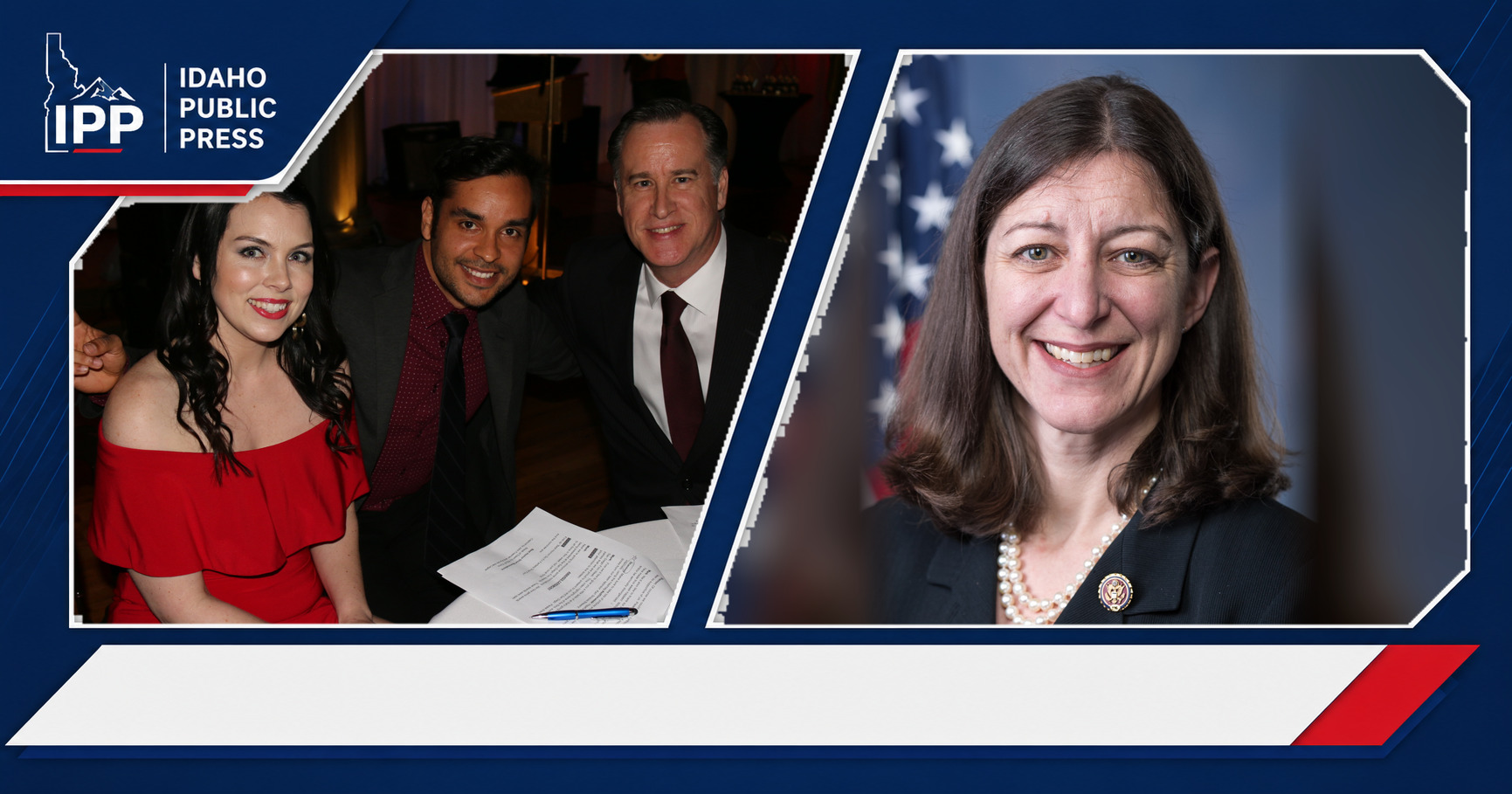
The primary results show Democrats betting on establishment-backed candidates in two races that could matter in the national fight for House control.
Virginia Democrats selected nominees for two U.S. House seats on Tuesday, picking establishment-backed candidates — prosecutor Shannon Taylor and former congresswoman Elaine Luria — for districts they hope to flip in November. The nominees will challenge Republican incumbents Rob Wittman and Jen Kiggans as Democrats try to turn two Virginia congressional districts into part of the broader fight for control of the U.S. House.
The results, reported by The Associated Press, show party voters choosing tested, institutionally supported contenders over insurgent alternatives. That matters because Democrats do not need a national landslide to change House arithmetic; a few seats in states like Virginia could shape Donald Trump’s next two years.
Two races, two maps
Taylor, the elected top prosecutor in a suburban Richmond county, won the Democratic nomination in Virginia’s 1st Congressional District. She will face Wittman, a longtime Republican incumbent, in a district that has generally leaned Republican.
Luria, a former Democratic congresswoman, won in the coastal 2nd Congressional District. Her victory sets up a rematch with Kiggans, the Republican who defeated her in 2022.
The two races offer Democrats very different tests. The 2nd District, anchored by Virginia Beach and Hampton Roads, is widely viewed as a true battleground with a heavy military presence. The 1st District, with voters split between Richmond suburbs and more rural counties, gives Democrats a tougher but still tempting target.
Virginia currently sends six Democrats and five Republicans to the U.S. House, according to AP. All 11 incumbents are seeking reelection this year, which makes any flip a direct shift in the state’s delegation and a potential contribution to national House control.
Luria gets her rematch
Luria’s win was the most familiar storyline of the night. She represented the 2nd District for two terms after flipping it in 2018, then lost to Kiggans in 2022.
Her return puts national Democrats back behind a candidate they already know. Luria is a Navy veteran and former member of the House committee that investigated the Jan. 6 attack on the U.S. Capitol, giving her both a military résumé and a sharp contrast with the Trump-era Republican Party.
After winning the Democratic primary, Luria said she was ready to serve Hampton Roads residents who, in her view, are being left behind by Kiggans and Trump. Kiggans, also a veteran, defended her record Tuesday as that of a proven leader focused on military families, costs and bipartisan results.
That matchup is likely to be one of Virginia’s most watched House races. It is not just a rematch; it is a fight over whether the 2022 Republican gain in a competitive coastal district was a lasting realignment or a seat Democrats can claw back in a better environment.
Taylor takes on Wittman
Taylor’s path is different. She emerged from a crowded seven-way Democratic primary in the 1st District, where the field included a more progressive candidate, public interest lawyer Salaam Bhatti.
Her win gives Democrats a nominee with law-and-order credentials and local government experience. As a prosecutor, Taylor can present herself as a pragmatic candidate rather than a purely ideological one, which may be part of the appeal in a district that includes both suburban and rural voters.
Wittman, however, is not an easy target. He is a longtime GOP incumbent in a district that has often favored Republicans. For Taylor, the race will likely require more than Democratic enthusiasm; she will need to persuade voters who have been comfortable sending Wittman back to Washington.
The Democratic argument is that the political climate has changed enough to make the seat competitive. The Republican argument will be simpler: the district has a GOP habit, and incumbency still matters.
The establishment bet won
The primary results are also a signal about Democratic voters in Virginia. In other states, Democratic primaries this year have exposed tension between progressive challengers and more moderate candidates backed by party leaders. In Virginia, the establishment-backed contenders prevailed.
Taylor and Luria had support from the House Democrats’ campaign arm and a broad group of Democratic leaders, including Gov. Abigail Spanberger, according to AP. That backing gave both candidates money, visibility and institutional credibility.
For some voters, that is exactly the point. Democrats who are focused on winning a House majority often prefer nominees they believe can survive a general election in competitive or Republican-leaning districts.
For others, the result may feel like a missed chance to elevate candidates with a sharper ideological message. AP quoted one suburban Richmond voter who supported Bhatti and said Democrats need bolder figures because the Trump administration is not fighting fair.
Why Virginia matters nationally
Virginia’s House map is especially important because the state is competitive enough to host real fights but stable enough that each district has a clear political identity. Democrats are not trying to sweep the board. They are targeting specific Republican-held seats where they believe candidate quality, local issues and national backlash could overlap.
State Democratic Party chair Lamont Bagby framed the strategy as an offensive push, saying Virginia Democrats would compete everywhere, defend their ground, flip Republican-held seats and hold Trump and his allies accountable on costs, freedoms and corruption.
Republicans, meanwhile, will try to keep the focus local. Kiggans is already emphasizing costs, families, the military and bipartisan work — themes designed to blunt a nationalized Democratic campaign. Wittman’s incumbency gives him a different kind of protection: familiarity in a district that has long been difficult for Democrats.
There is also a redistricting shadow over the year. AP reported that Virginia Democrats hoped to flip at least two seats after an aggressive, voter-approved redistricting plan was overturned by the state Supreme Court earlier this year. That leaves the party trying to gain ground through candidate recruitment and turnout rather than a more favorable map.
What remains unsettled
The primaries answered who will carry the Democratic banner, but not whether the party’s theory is right. Luria has name recognition and a clear rematch frame, but Kiggans has already beaten her once. Taylor has momentum from a crowded primary, but Wittman starts with deep incumbent advantages.
The biggest unknown is the national mood in November. House races can turn on local credibility, but they are rarely insulated from presidential approval, economic anxiety and voter intensity. Democrats want Trump to be a motivating force against Republican incumbents; Republicans want voters to judge each district on representation and results.
For now, Virginia Democrats have made their choice. They picked a prosecutor and a former congresswoman, both backed by the party’s mainstream wing, for two Republican-held seats they believe can help decide control of the U.S. House.
The next test is whether that establishment bet can survive a general election campaign in places where persuasion, turnout and candidate discipline will matter as much as national momentum.







Leave a Reply