

A court filing has turned the condition of Washington’s premier performing-arts venue into a high-profile political and cultural fight. The larger issue is how a federally supported landmark handles costly long-term repairs.
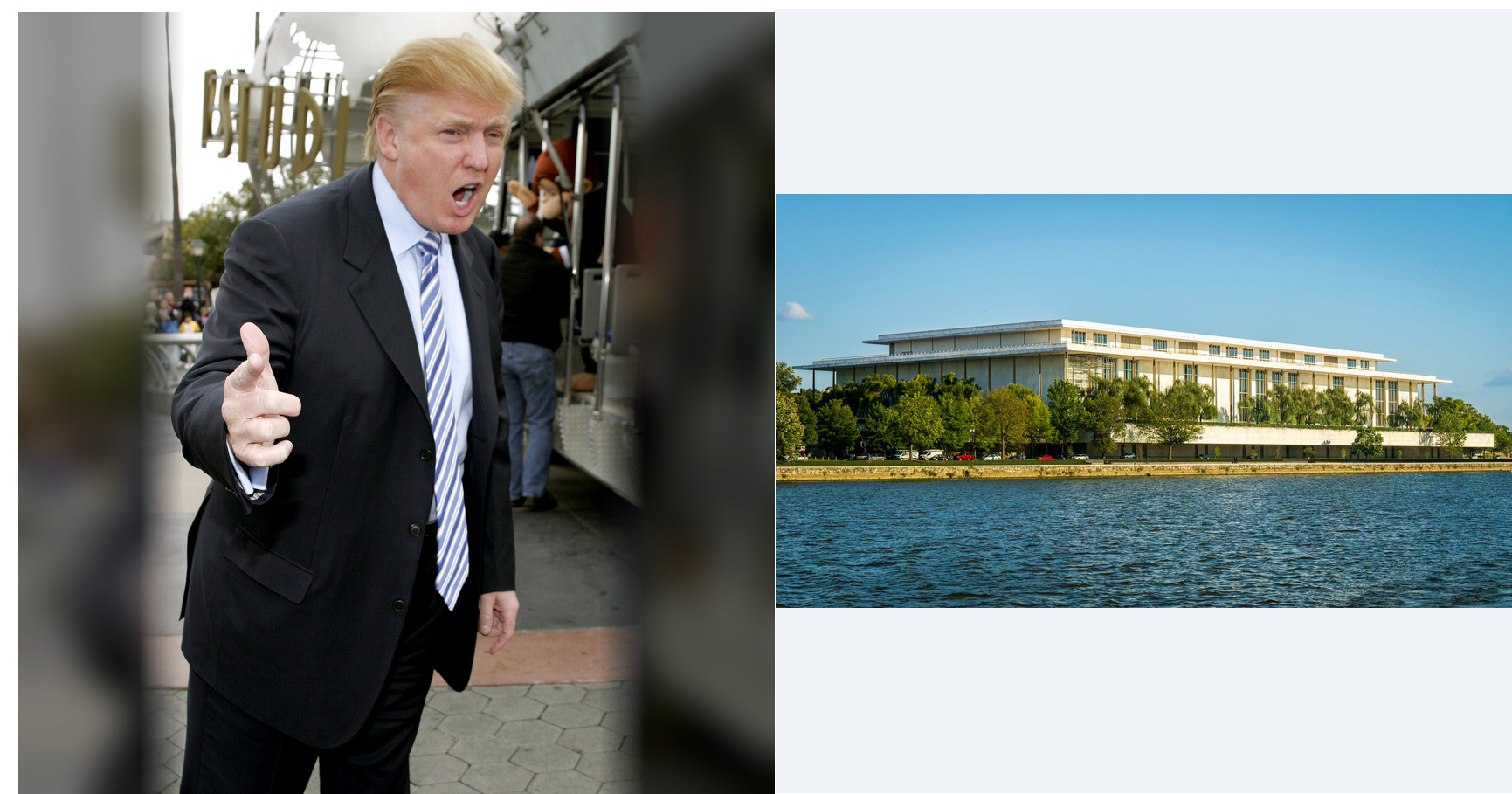
Donald Trump threatened to demolish the John F. Kennedy Center for the Performing Arts in Washington, D.C., unless a reported $250 million renovation is completed. The warning, raised by Trump’s lawyers in a court filing, has put one of the country’s most prominent arts venues at the center of a dispute over building conditions, public money and what comes next for the landmark.
The immediate question is not whether demolition crews are arriving at the Kennedy Center. It is why the possibility was invoked at all — and what the claim says about the expensive, unglamorous work needed to keep a massive performing-arts complex operating.
A dramatic warning in court
The New York Times reported that Trump’s lawyers warned in a court filing that the Kennedy Center might need to be demolished if it is not fixed. The filing was connected to a dispute involving honoring Trump on the building’s facade, according to the Times’ report.

That context matters. A legal filing can make a forceful argument about risk or urgency without serving as a final construction decision, a funded redevelopment plan or a published engineering assessment.
Still, the language is notable because the Kennedy Center is not simply another Washington building. It is a congressionally created national cultural institution, home to major performances, public programs and multiple venues used by visitors and artists year-round.
Trump’s reported position ties avoiding demolition to completing a renovation estimated at $250 million. Publicly available reporting in the research provided does not establish a construction timetable, identify a final funding source or describe which specific building systems would be covered by that figure.
Why the $250 million matters
A nine-figure renovation estimate is large, but so is the building it would address. The Government Accountability Office has described the Kennedy Center’s main building as roughly 1.5 million square feet, with four major theaters, smaller performance spaces, galleries and offices on a 17-acre site overlooking the Potomac River.
The scale helps explain why upkeep can become a national funding question rather than a routine facilities issue. The GAO said the center spends about $40 million annually on repairs, renovation, operations and maintenance, with those expenses paid through federal funding.
In that light, the $250 million figure represents more than a cosmetic refresh. If the estimate is accurate, it signals a potentially significant capital project at a venue whose infrastructure must support audiences, productions, safety systems and daily public access.
There is also a basic distinction worth keeping clear: routine maintenance, a major renovation and demolition are very different choices. The public record summarized here does not show that the Kennedy Center has reached a formal point of no return.
Maintenance has long been a concern
The clash arrives against a backdrop of longstanding questions about how the Kennedy Center plans and pays for capital improvements. In a review of the center’s facilities management, the GAO said the institution had not updated its capital-planning policies and procedures for more than 15 years at the time of the audit.
The watchdog also found that the center had not comprehensively analyzed life-cycle costs for projects, meaning expenses beyond design and construction — including future repairs, maintenance and operations — were not fully incorporated into planning.
Those findings do not independently verify the court filing’s demolition warning or the $250 million estimate. They do show why major repair claims at the Kennedy Center cannot be treated as a purely rhetorical dispute. A building of this size requires sustained planning long after a ribbon-cutting.
The center has also grown. Its privately funded REACH expansion added educational, rehearsal and performance space, while the ongoing responsibility for repair and maintenance remained tied to federal support, according to the GAO.
A cultural landmark with public costs
The Kennedy Center receives about 3 million visitors annually, according to the GAO. That footprint gives any major renovation consequences beyond Washington: performances, arts education, tourism, employees, resident companies and touring artists can all be affected by construction decisions.
Supporters of aggressive investment can reasonably argue that deferring repairs at a heavily used national venue often makes later work more disruptive and more expensive. The case for renovation is especially strong when problems involve core systems that audiences may never see but depend on every time a curtain rises.
Critics may question whether demolition rhetoric is proportionate without a public engineering report, cost comparison or clearly defined plan. They may also ask whether the reported $250 million estimate has been independently tested and how taxpayers, private donors and the institution itself would divide the bill.
Both views rest on a shared reality: preserving a landmark is costly. The disagreement is over urgency, transparency and who gets to define the building’s future.
What remains unclear now
Several central details have yet to be established in the material available: the scope of the proposed renovation, the basis for the $250 million estimate, a target completion date, and whether a formal demolition option has been evaluated by engineers or the Kennedy Center’s governing bodies.
It is also unclear whether the court filing represents a settled policy position or a legal argument designed to strengthen Trump’s side of the facade dispute. That difference is significant. A warning in litigation can shape public debate even when it does not immediately change what happens on site.
For now, the most concrete takeaway is that a high-profile legal and political conflict has drawn fresh attention to a real facilities challenge. The Kennedy Center’s future will depend not only on dramatic claims about demolition, but on detailed assessments, credible cost plans and decisions about how a national arts institution should be maintained.
Washington’s cultural landmarks are often judged by what happens onstage. This episode underscores that their survival can hinge just as much on what is behind the walls: capital planning, federal appropriations and the willingness to pay for repairs before the choices become even harder.








Leave a Reply