
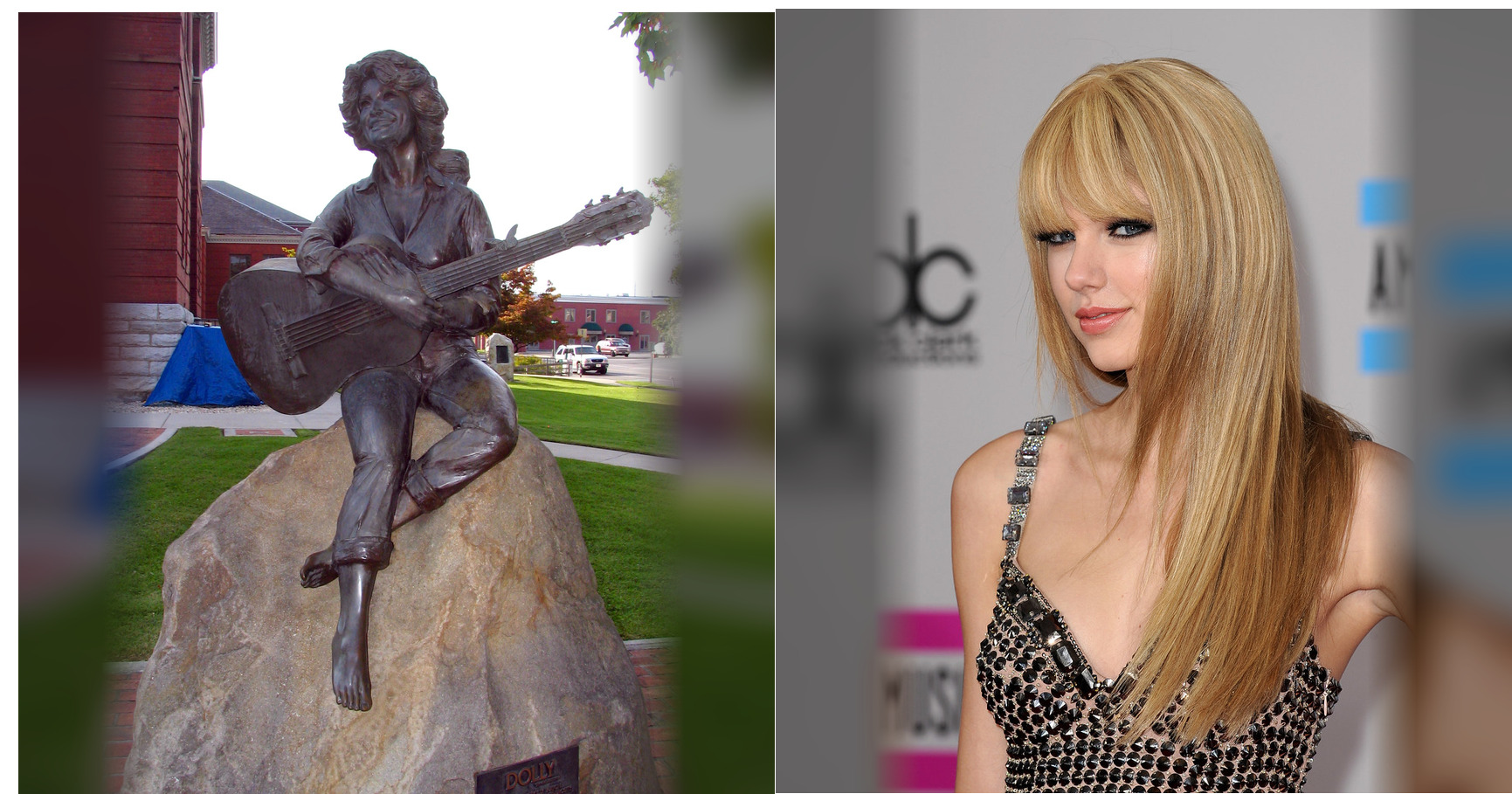
The tributes to Dolly Parton reflect a legacy that stretched far beyond country music, from hit songs and landmark films to literacy work for children. Taylor Swift and Jane Fonda focused on the generosity, resilience and creative freedom that made Parton singular.
Dolly Parton died at age 80 on Aug. 25, 2026, after a private battle with cancer, her family announced in a video statement. The loss of the country music legend, whose career was closely tied to Nashville, Tennessee, brought tributes from Taylor Swift, who mourned Dolly Parton, and Jane Fonda, who remembered Dolly Parton, her 9 to 5 costar.
For the artists and friends speaking out, Parton’s death is also a reckoning with an unusually wide legacy: a songwriter and performer who crossed into film, a shrewd businesswoman who protected her independence, and a philanthropist whose books reached children around the world.
Swift saluted Parton’s lasting example
In a statement shared with USA TODAY, Swift said a world without Parton did not feel “possible, real or right.” She called Parton’s legacy “an everlasting one,” framing the loss in terms familiar to generations of artists who saw Parton as more than a country star.
Swift highlighted the way Parton gave audiences a role model while also encouraging individuality. She praised her as “true grace and true grit,” a combination that captures why Parton’s influence extended well beyond her enormous catalog of songs.
Parton was known for creating a larger-than-life public image without giving up authorship of her work. For younger performers, especially women navigating a business that has often limited their choices, that balance carried practical weight. Parton made glamour, humor, vulnerability and self-possession look compatible.
Swift also pointed to Parton’s literary philanthropy, noting the millions of books provided to children through the Dollywood Foundation’s Imagination Library. It was a reminder that Parton’s public generosity was not a side note to her career; it became one of its defining chapters.
Fonda remembered her partner in crime
Jane Fonda’s remembrance came from a different kind of shared history. The actors starred together in the 1980 workplace comedy 9 to 5, alongside Lily Tomlin, turning a story about office inequality into a lasting pop-culture touchstone.
In an emotional Instagram post, Fonda said she was devastated by Parton’s death and wrote that Parton would remain present in people’s lives because she was “so powerful, so generous and playful.” Fonda, 88, described her friend as someone woven into the lives and hearts of millions.
Her tribute captured the quality that made Parton seem accessible even at the height of fame. Fonda praised her catalog, film work and philanthropic efforts, but also remembered the mischief and humor behind the polished image. That mix made Parton a formidable star without making her feel remote.
9 to 5 mattered because it proved Parton could carry her distinctive voice into a new medium without sanding down its edges. The film’s title song became a hit in its own right, and Parton’s performance helped establish her as an actor capable of matching veteran comic talents beat for beat.
Costars recalled a rare generosity
The memorials quickly expanded across music, film and television. Linda Ronstadt, who recorded the celebrated Trio albums with Parton and Emmylou Harris, said the world was poorer without her friend and recalled recording with her as one of the extraordinary musical experiences of her life.
Parton’s Steel Magnolias costars also remembered a performer whose warmth matched her charisma. Sally Field called her an angel on earth, while Julia Roberts said knowing Parton was a treasure and that “the sun has dimmed today.” Shirley MacLaine said Parton had returned home.
Jamie Lee Curtis focused on Parton’s courage to move into new work and possibilities. Carol Burnett recalled a Thanksgiving-week production in Nashville during which Parton cooked individual turkey dinners for everyone involved in their television special.
Those memories share a theme: Parton’s hospitality was not merely branding. Colleagues described someone who brought care into professional settings, whether through an offstage meal, an encouraging word or a willingness to make others feel included.
Her legacy crossed every boundary
Parton’s death has prompted a familiar question: how did one entertainer become meaningful to such different audiences? The simplest answer is that she refused to stay in one lane. Her work moved between country, pop, film, television, live performance and philanthropy while retaining an unmistakable voice.
That range did not come without tension. Parton’s glamorous persona sometimes led casual observers to underestimate her songwriting, business instincts and control over her own career. Yet those qualities were central to the respect reflected in the tributes.
Her career also made room for apparent contradictions. She could write intensely personal songs, deliver broad comedy, build a major tourist destination in Tennessee and fund a children’s literacy program. Instead of weakening her cultural identity, those different roles made it more durable.
For admirers, the strongest legacy may be the way Parton treated ambition and kindness as partners rather than opposites. The celebrity reactions following her death repeatedly return to that idea.
What remains after the first tributes
Parton had faced health issues during the final year of her life and canceled several public appearances before her death. Her representatives said she had been privately battling cancer, though further details about her illness were not included in the initial announcement.
The immediate response has centered on remembrance rather than plans for public memorial events. Her family’s statement confirmed her death, while the artists who knew and admired her have begun defining the public conversation around what she left behind.
There will be inevitable attention to the songs, films and landmarks associated with Parton. But the early tributes from Swift, Fonda and others suggest a larger measure of her impact: she gave people permission to be ambitious, funny, generous and unmistakably themselves.
That is why the grief has reached far beyond country music. Dolly Parton’s work remains available to revisit, but the voices mourning her are emphasizing something harder to preserve: the human force behind it.








Leave a Reply