
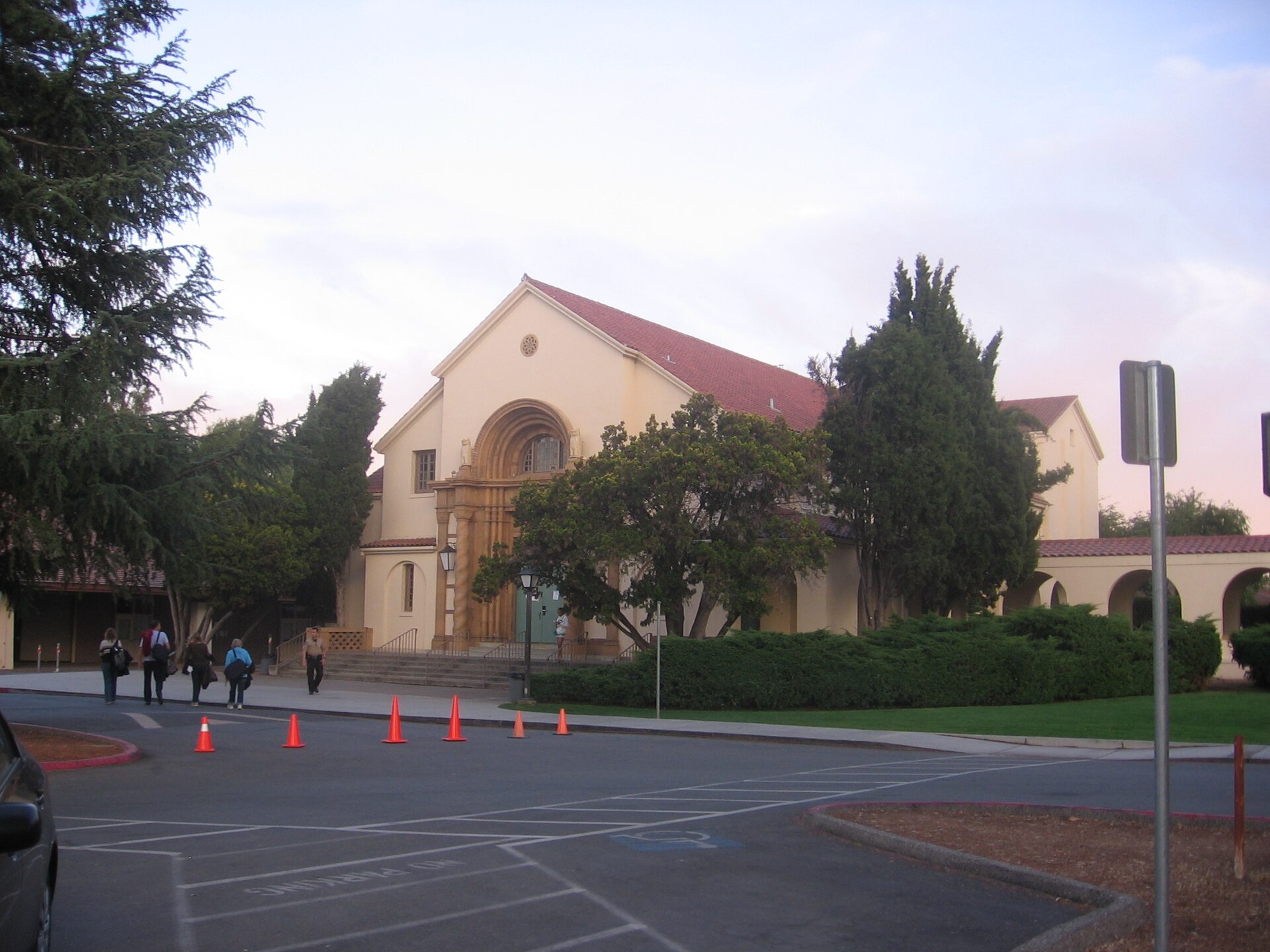
The federal lawsuit puts a school-sponsored visit to a Santa Clara County mosque at the center of a dispute over religious education, parent consent and student photos. The district has said instruction about religion must be academic, not devotional.
Palo Alto Unified School District is facing a federal lawsuit filed by parents and former students over a 2025 school-sponsored field trip to a mosque in Santa Clara County. The suit alleges that Palo Alto High School students participated in prayer, were encouraged to wear Muslim religious attire and were photographed at the mosque without their parents’ permission.
Filed Aug. 8 in the U.S. District Court for the Northern District of California, the case concerns a visit during which students learned about Islam and, according to the allegations, received religious materials. The plaintiffs say the school-sponsored activities crossed the boundary between academic instruction about religion and religious participation, while the alleged photographs raised separate privacy and consent concerns. The lawsuit seeks damages and a finding that Palo Alto Unified violated students’ and parents’ rights.
The lawsuit targets a 2025 visit
Community Members for Religious Neutrality in Public Schools – San Francisco Bay Area filed the civil-rights lawsuit on Aug. 8, 2026, in U.S. District Court for the Northern District of California, according to reporting by USA Today. The defendants named in the report are Palo Alto Unified and Palo Alto High School Principal Brent Kline.
The group includes several Jewish parents and students, along with one Hindu parent and one Zoroastrian parent, USA Today reported. Their allegations have not been proven in court, and a lawsuit is a statement of the plaintiffs’ claims rather than a judicial finding.
The case arose from a Social Justice Pathway field trip intended, according to the reporting, to support social-justice initiatives. Nearly 100 students visited the mosque, operated by the Muslim Community Association, or MCA, in Santa Clara County.
What parents say happened
The complaint alleges students received copies of the Quran, female students were encouraged to wear hijabs, and the group observed prayers connected to a Quran-memorization program. It also alleges students were photographed inside the mosque in religious attire without parental permission and that the images were later publicly shared by the host institution.
Those details are important because they form the core of the plaintiffs’ argument: a public school may teach students about religion, they contend, but should not facilitate religious practice, pressure students toward religious dress or allow student images to be used without consent.
The lawsuit also raises concerns about Zahra Billoo, executive director of the Council on American-Islamic Relations’ San Francisco Bay Area chapter, who spoke during the visit. The plaintiffs characterize her as divisive, particularly in relation to the Jewish community and her criticism of the Israeli government.
Billoo told the San Francisco Chronicle that any exposure students had to her was her firsthand account as an American Muslim woman working in civil rights and social justice. She called the lawsuit misguided and said it misrepresented the field trip.
Religious education is not banned
Public schools are not barred from teaching about religion. Religious traditions, texts, history and cultural practices can be part of academic instruction, especially in courses involving history, literature, civics or social studies.
The legal and practical challenge is the difference between studying religion and promoting it. Schools generally must avoid devotional instruction or actions that could reasonably be seen as pressuring students to affirm, adopt or participate in a particular faith practice.
Palo Alto Unified Superintendent Jason Glass said the district had not yet been served with court papers when he spoke to the San Francisco Chronicle. He also pointed to district policy stating that instruction about religion must be academic rather than devotional and that no faith may be promoted or denigrated.
That policy statement signals the likely fault line in the case. The plaintiffs will seek to show that the field trip exceeded academic instruction, while the district may argue that learning directly from a religious community is a legitimate educational activity when handled appropriately.
Privacy claims widen the dispute
The religious-neutrality allegations are only one part of the complaint. Parents involved in the case also say photographs taken during the visit were posted publicly without parental consent, creating a separate dispute over student privacy and school oversight of outside organizations.
USA Today reported that the photos remained on the Muslim Community Association’s website as of Aug. 17. The parents have asked for them to be removed.
For schools, off-campus learning often involves multiple layers of permission: approval for the trip itself, disclosures about activities, and limits on photography or publication. The complaint could force close scrutiny of what Palo Alto Unified told families in advance, what permissions it obtained and what supervision was in place during the visit.
None of those questions has been resolved publicly in court. The district’s eventual response, if filed, could address the account of the trip, the consent process and the plaintiffs’ legal theory.
Two sharply different views emerge
The Muslim Community Association described the visit as an “unforgettable” day designed to foster conversation, understanding and mutual respect. From that perspective, visiting a mosque can be a practical way for students to learn about a community that is often discussed from a distance.
The plaintiffs see the same event differently. Their complaint says the district failed to maintain religious neutrality, ensure equal treatment among faiths, protect student privacy, and vet or supervise outside speakers they considered religiously divisive.
The disagreement illustrates why school visits to houses of worship can become contentious even when an educational purpose is stated. A school may view direct exposure as instruction; families may view certain activities, attire or prayer observation as participation. The answer often turns on facts such as whether activities were optional, how they were framed, what parents were told and whether comparable treatment is offered across religious traditions.
What the case could decide
The plaintiffs are seeking monetary damages and a declaration that the district violated California law, student privacy rights and parental rights. At this stage, there is no ruling on liability, no finding that the alleged conduct occurred as described and no announced outcome.
The case may also produce more information about the planning of the field trip, communications with families, the role of school staff and any policies governing student attire, prayer observation and photography at religious sites.
Its broader significance is likely to extend beyond Palo Alto. Districts across California and the country regularly arrange visits to churches, synagogues, mosques, temples and other religious institutions as part of academic programs. The Palo Alto dispute underscores the need for clear educational objectives, transparent parent communication, meaningful privacy protections and careful boundaries between learning about religion and participating in it.
For now, the central claims remain allegations in an early federal case. The next meaningful development will be the district’s formal response and any court action determining whether the complaint can move forward.






Leave a Reply