

Maxwell’s latest court loss turns on a crucial distinction: identifying other possible participants is not the same as showing her own conviction was legally unsound. The ruling also leaves unanswered questions about whether authorities will pursue any additional cases.
Ghislaine Maxwell pointed to 25 unindicted alleged Jeffrey Epstein co-conspirators in an effort to get out of prison, but a federal judge rejected her argument. The ruling leaves Maxwell’s conviction and 20-year sentence in place, despite her attempt to use the alleged involvement of others to challenge the case against her.
The decision matters because Maxwell’s filing touched a continuing public question around Epstein’s network: whether other people could face consequences. But the court’s immediate task was narrower—whether Maxwell showed a legal reason to undo her own conviction.
Maxwell’s release bid failed
Reuters reported on August 25, 2026, that Maxwell lost her bid to throw out her conviction for aiding Jeffrey Epstein. The report said U.S. District Judge Paul Engelmayer viewed the effort as a recycling of arguments that had already failed.
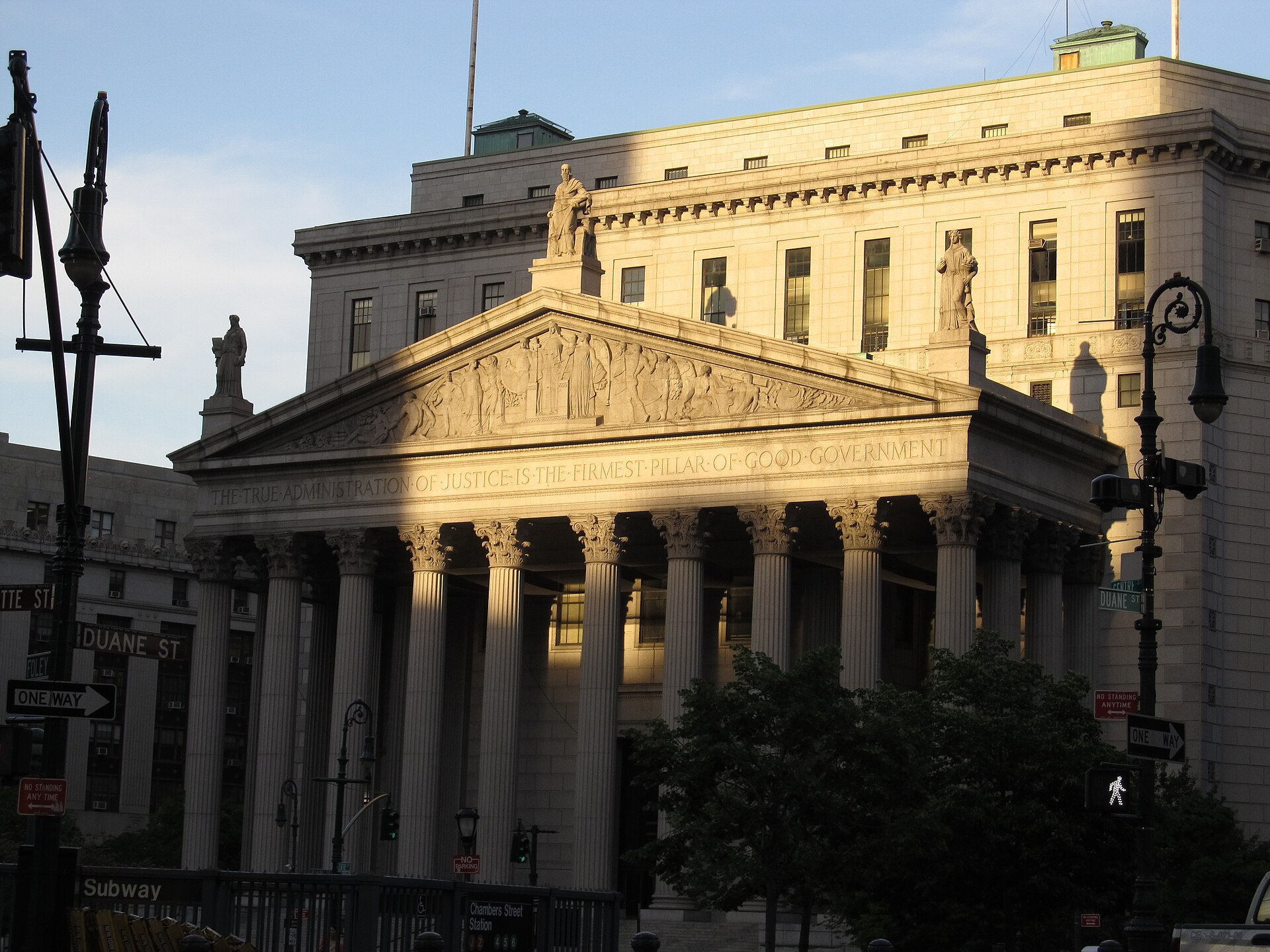
That is a significant procedural result. A post-conviction challenge is not a new trial in which every aspect of a broader investigation is reopened. The person seeking relief must identify a legal defect serious enough to undermine the verdict or sentence.
Maxwell’s argument, as described in the trend report and the Reuters account, involved 25 unindicted alleged Epstein co-conspirators. Her position was that the government’s treatment of other potential participants should affect the case against her.
The judge was not persuaded that this claim provided a basis to vacate her conviction or release her from custody.
What the number 25 does—and does not—mean
The phrase “unindicted co-conspirator” can sound like a finding of guilt. It is not. It generally refers to someone whom prosecutors or a litigant may identify as involved in alleged criminal conduct but who has not been formally charged in that particular case.
That status does not prove that a person committed a crime, and it does not establish why prosecutors chose not to bring charges. Prosecutors may decline a case for many reasons, including insufficient admissible evidence, jurisdictional limits, credibility concerns, investigative priorities, immunity agreements, statutes of limitation, or a decision that charges cannot be proved beyond a reasonable doubt.
Nor does an allegation about uncharged people automatically invalidate a conviction of someone who was charged and found guilty. In Maxwell’s case, a jury had already considered evidence relating to her own conduct and returned guilty verdicts in 2021.
The public interest in the 25-person claim is understandable, particularly because the Epstein case has long prompted questions about people in his orbit. Still, the court’s ruling addresses Maxwell’s legal challenge—not the criminal liability of every person she sought to reference.
Why Maxwell remains in prison
Maxwell was sentenced in Manhattan federal court to 240 months, or 20 years, in prison for conspiring with Epstein to sexually abuse minors, according to the U.S. Attorney’s Office for the Southern District of New York.
The Justice Department said she was convicted on December 29, 2021, after a monthlong jury trial. The counts included conspiracy to entice minors to travel for illegal sex acts, conspiracy to transport minors for illegal sex acts, transportation of a minor for illegal sex acts, sex-trafficking conspiracy, and sex trafficking of a minor.
Federal prosecutors said Maxwell helped recruit and groom underage girls for Epstein over roughly a decade. The government’s account described victims as young as 14 and said the conduct involved locations in New York, Florida, New Mexico and London.
Those findings are central to why the court treated Maxwell’s latest arguments as insufficient. Her conviction rests on the evidence and charges presented in her own case, rather than on whether every alleged participant in a wider scheme was prosecuted.
The legal issue was narrower
Maxwell’s challenge illustrates a recurring tension in high-profile criminal cases. Public discussion often focuses on the widest possible story: who else knew, participated, benefited, or should have been investigated. Courts must instead decide the specific claims properly before them.
For Maxwell to win relief, it was not enough to raise disturbing questions about uncharged people. She needed to show that the prosecution, trial process, verdict, or sentence was legally defective in a way that warranted overturning the judgment.
Judge Engelmayer’s rejection suggests the court found no such showing in the arguments before it. Reuters characterized the decision as a denial of Maxwell’s bid to throw out her conviction, not as an adjudication of claims against the people she referenced.
That distinction is especially important in a case where unverified claims can travel faster than court records. A name, an association, or an allegation does not equal a criminal charge, a conviction, or a judicial finding.
Questions about others remain separate
The ruling does not answer every question surrounding Epstein’s associates, employees, acquaintances, or alleged collaborators. It does not identify which people Maxwell meant, what evidence she cited regarding them, or whether prosecutors have evaluated potential cases involving them.
It also does not require the government to bring new charges. Decisions about additional prosecutions depend on evidence available to investigators and prosecutors, the applicable law, and whether a case can be proved in court.
For advocates and survivors seeking broader accountability, that can be an unsatisfying boundary. They may view the continued focus on uncharged individuals as evidence that scrutiny should not stop with Maxwell. The competing legal view is that criminal accusations must be tested case by case, with reliable evidence and due-process protections.
Both realities can coexist: public questions may remain legitimate, while Maxwell’s own conviction remains legally intact.
What happens after the ruling
For now, the practical outcome is clear. Maxwell remains imprisoned under her 20-year federal sentence, and her effort to use the alleged 25 unindicted Epstein co-conspirators as grounds for relief did not succeed.
She may pursue whatever further appellate or post-conviction options are available to her, but any future challenge would face the same basic hurdle: it must present a legally viable reason to disturb the conviction, not simply a broader account of alleged wrongdoing by others.
The case will likely keep drawing attention because of Epstein’s enduring notoriety and the unresolved public interest in his network. Yet the latest ruling is a reminder that a court’s answer to a conviction challenge can be much narrower than the questions surrounding the case.










Leave a Reply