
The case is not just about mail voting. It could show how far the justices are willing to let federal election policy move close to an election season.
Donald Trump’s emergency appeal over mail ballots will be reviewed by the Supreme Court, where it tests the Supreme Court’s anti-chaos election principle: the Purcell principle, a 20-year-old doctrine rooted in a 2006 decision warning federal courts against last-minute changes to voting rules. The case matters because Trump is asking a 6-3 conservative court to revive parts of an executive order aimed at restricting mail voting before the 2026 election.
The immediate fight is procedural, not a final ruling on whether Trump’s order is lawful. But the way the justices handle it could shape how federal courts treat election-law disputes this fall and in future cycles, including the run-up to 2028.
A timing fight, not merits
Trump filed an emergency appeal at the Supreme Court after federal courts in Boston blocked implementation of his mail-ballot executive order, according to CNN. The appeal asks the justices to intervene quickly, a common feature of modern election litigation that often lands on the court’s emergency docket.
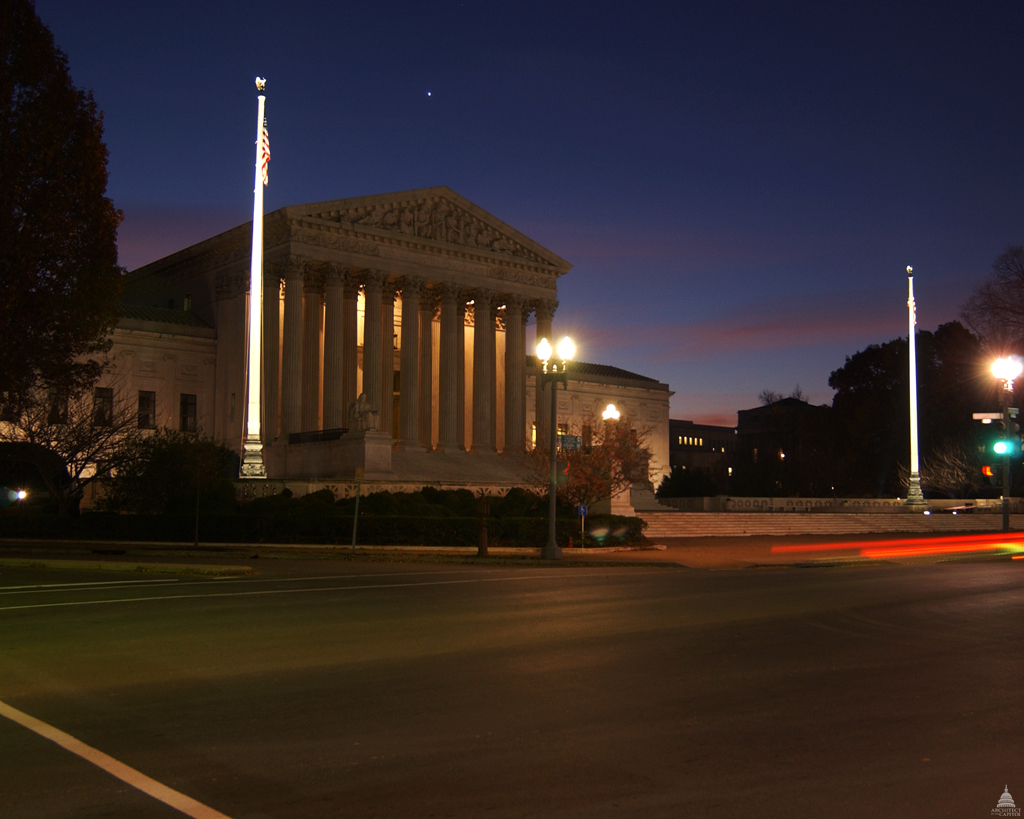
That emergency posture matters. The justices are not being asked to write a full final opinion on every legal question raised by the order. Instead, they are deciding whether blocked parts of the policy can take effect while the underlying case continues.
That is where the Purcell principle enters the picture, even though CNN reported that Trump’s appeal does not directly argue Purcell and does not resolve the merits of the order. If the court revives any significant portion of the policy, states and voting-rights litigants are likely to argue that the justices have created precisely the kind of late election disruption Purcell was meant to prevent.
What Trump’s order would change
The executive order, signed in March, seeks to give federal agencies a larger role in mail voting and voter-roll screening. As described in the litigation, it would require states to send lists of eligible voters to the US Postal Service.
Under that system, the Postal Service would be barred from sending ballots to people who are not on those lists. The order would also require tracking barcodes on ballot envelopes, a technical change that could force states and local election offices to adjust existing mail-ballot systems.
The order also directs the Department of Homeland Security to create lists of people it views as eligible US citizen voters in each state. Another provision would prioritize federal prosecution of state election officials who send or receive ballots involving noncitizens or other people ineligible to vote.
Supporters frame measures like these as election-integrity safeguards. Opponents say they would upend the traditional state-run structure of elections and risk excluding eligible voters because of database errors, timing problems or rushed implementation.
Why Purcell is hard here
The Purcell principle comes from a 2006 Supreme Court case and is often summarized as a warning to federal courts: do not change election rules too close to Election Day. The stated concern is voter confusion, administrative disruption and inconsistent rules while voting is already underway or imminent.
Over time, Purcell has become one of the court’s most powerful election-law tools. It has been invoked in redistricting fights, voting-procedure disputes and emergency appeals where the justices have had to choose between correcting a possible legal wrong and preserving stability before voters cast ballots.
Trump’s case complicates the usual pattern. Purcell is most often discussed when a lower federal court blocks or changes a state election rule shortly before an election. Here, the challenged action is a federal executive order that could require states to alter mail-voting administration.
Chad Ennis, vice president of the conservative Honest Elections Project, told CNN the facts are novel because potential federal agency action could affect how the 2026 election is run. He said whether the Supreme Court would apply Purcell, if at all, remains an open question.
States warn of rushed disruption
Democratic-led states challenging the order have urged the Supreme Court not to let it take effect. In a filing quoted by CNN, they said the order would transform the Postal Service’s role and depart from the nation’s decentralized tradition of election administration.
The states warned that voters could be disenfranchised if officials are forced to create new voter lists and deploy untested technologies on a compressed timeline. Their argument is practical as much as constitutional: even a policy that sounds simple at the federal level can become messy when thousands of local election offices must carry it out.
That is the core tension for the justices. Trump’s side argues that the challengers moved too early against an order that has not yet fully played out. The states counter that waiting could leave them trapped later, when Purcell might be used to say it is too late for courts to stop the policy without causing chaos.
That possible catch-22 is why the case has implications beyond mail ballots. If litigants cannot sue early because their claims are deemed premature, but cannot sue later because election changes are too disruptive, major election policies can become difficult to challenge in time.
The court’s uneven record
The Supreme Court has leaned on Purcell in several high-profile election disputes, though not always in ways critics see as consistent. CNN noted that the court allowed Texas to use a congressional map that helped Republicans, in part because a March primary was approaching.
In 2024, the court cited Purcell when it allowed Louisiana to use a congressional map that benefited Democrats, after the state pointed to approaching candidate filing deadlines. Two years earlier, the court allowed Alabama to use a Republican-drawn congressional map for a primary after a lower court found the map diluted Black voters’ political power.
Justice Brett Kavanaugh defended the doctrine in the Alabama dispute, writing that when an election is close at hand, the rules of the road must be clear and settled. That view treats stability itself as a democratic value.
Critics argue the principle can become selective. Justice Ketanji Brown Jackson objected in a Louisiana redistricting fight when the court allowed a change while voting activity was already underway, writing that the court had dived into the fray. Justice Samuel Alito responded that the map Jackson would have left in place had just been ruled unconstitutional and that the state had suspended voting in the affected contests.
What the justices decide next
The Supreme Court is expected to act on the emergency appeal later this month, according to CNN. A short order could answer only the immediate question of whether parts of Trump’s executive order remain blocked for now.
Even a narrow order may send a larger signal. If the court lets the policy move forward, states may face pressure to begin preparing for new federal mail-ballot requirements while the litigation continues. If the court leaves the lower-court blocks in place, it may suggest the justices are wary of federal changes that could unsettle election administration before 2026.
The broader issue is who gets the benefit of the anti-chaos rule. Purcell has often protected existing election systems from late judicial intervention. Trump’s appeal asks the court to consider federal executive action that could itself change how elections are run.
That distinction may determine how much this case matters. The justices can treat it as a one-off emergency fight over a disputed executive order, or they can use it to clarify when timing concerns should restrain federal courts, federal agencies and presidents alike. For election lawyers watching the docket, the answer could shape the next wave of voting cases long before voters see a ballot.




Leave a Reply