
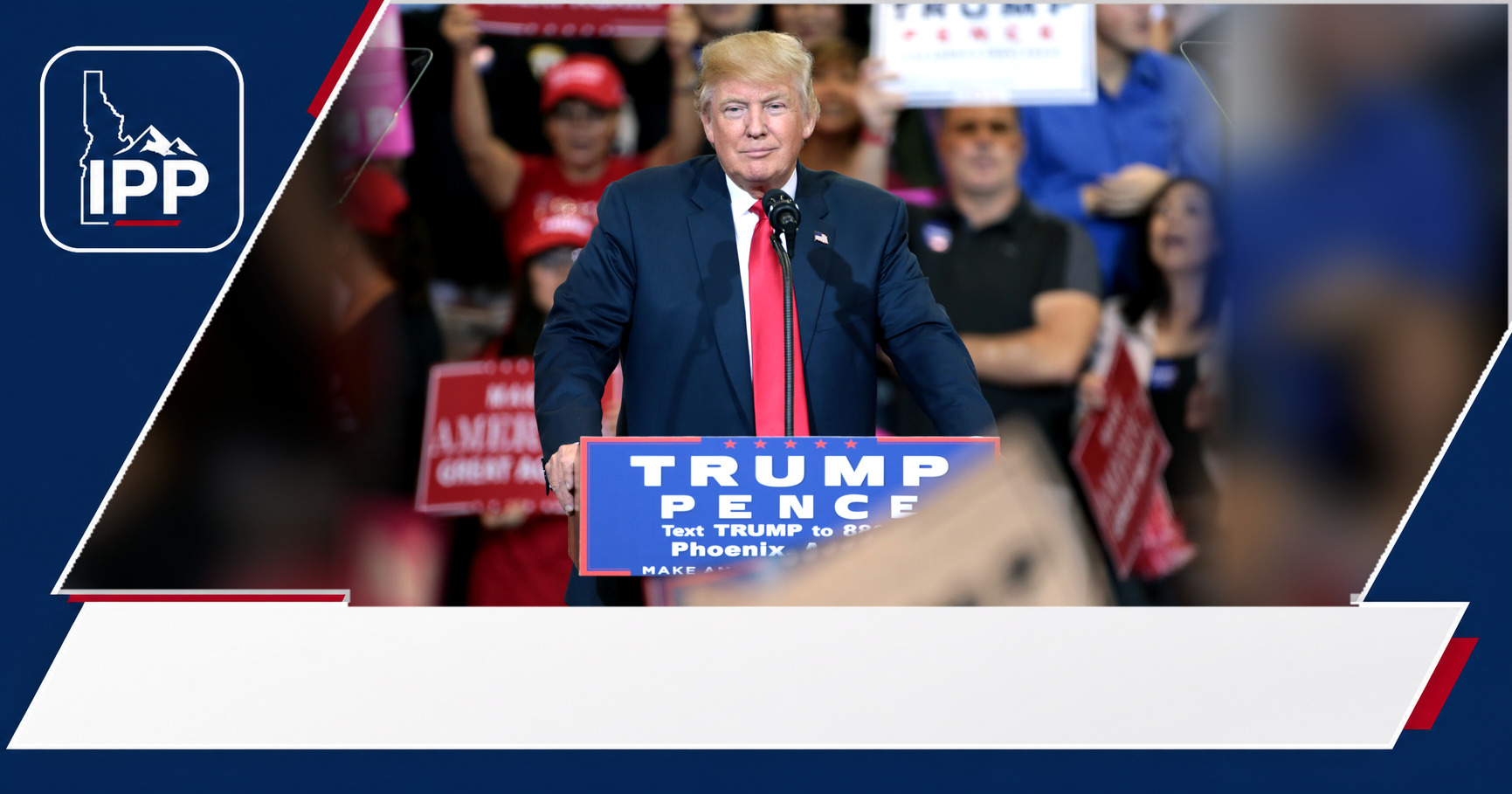
A White House event meant to spotlight military spouses veered into familiar culture-war terrain. The backlash shows how quickly Trump’s broad attacks on Democratic cities can eclipse the policy message around them.
Donald Trump ranted about blue cities during an August 3 Fox News broadcast from the Oval Office, and some Fox News viewers called him deranged or unhinged in social media reactions cited by Daily Express US. Trump was signing an executive order establishing the Military Spouse Commission at the White House when he shifted into an attack on Democratic-voting urban areas, saying they were “dirty” and “filthy” without naming one city.
The moment matters because it unfolded on friendly television terrain and during an event that was supposed to focus on military families. Instead, the clip became another example of how Trump’s broad attacks on Democratic-run places can swallow the original message.
A signing ceremony veered off
Fox News carried the August 3 signing ceremony live as Trump took questions from reporters in the Oval Office. According to Daily Express US, the president had just signed an executive order creating the Military Spouse Commission when he turned to what he described as problems in “blue cities.”

Trump did not identify a specific city. He framed the criticism as a general judgment on urban areas that consistently vote Democratic.
“What do they have in common? They’re all dirty. They are filthy, dirty. Their streets are dirty,” Trump said, according to the report.
He continued: “Their streets smell. Their storefronts have broken. Their trees are all gross. Everything about the place is dirty. And I don’t want to mention any specific city. It’s really all of them.”
Some viewers recoiled online
The sharpest reaction came from viewers who posted about the segment on social media after the Fox News broadcast. Daily Express US reported that some viewers described Trump’s remarks as irrational, with one writing, “He is so deranged! He is just beyond belief!”
Another critic, quoted by the outlet, argued that Trump was not offering a serious plan to improve roads, infrastructure or public conditions. A third accused him of being disconnected from life outside his own circle.
Those posts are not a scientific measure of Fox News’ audience, and they should not be treated as proof of a broad conservative revolt. But they are notable because the criticism was tied to a Fox News airing, not an opposition campaign ad or a Democratic press conference.
There was also support for Trump in the reactions cited by the outlet. One supporter wrote that Trump was right and argued that Democratic-run cities were “dirty” and “dangerous.” That split is the political usefulness of the phrase: it gives supporters a quick target and critics a reason to accuse him of flattening millions of Americans into a campaign insult.
Why “blue cities” lands hard
“Blue cities” is a political shorthand, not a precise policy category. It usually refers to large urban areas that vote Democratic, but the phrase often gets stretched to carry claims about crime, homelessness, sanitation, immigration, policing and local spending all at once.
That is why Trump’s comments drew attention. He did not say one administration had failed at one policy. He said “all” of them were dirty, then described streets, storefronts and trees in sweeping terms.
For supporters, that kind of language sounds like blunt talk about visible disorder in major cities. Many voters have real concerns about public safety, housing costs, open-air drug use, transit conditions and downtown vacancies, and Republicans have long argued that Democratic city leaders have not handled those problems well.
For critics, the problem is the lack of specifics. A claim that every blue city is filthy does not distinguish between neighborhoods, budgets, mayors, state policies or actual data. It also turns local problems into an identity attack, which is exactly the kind of rhetoric that can energize one audience while alienating another.
The policy message got buried
The event was centered on the Military Spouse Commission, a White House initiative whose name signaled a focus on military families. Daily Express US also reported that Defense Secretary Pete Hegseth spoke during the ceremony and emphasized strong families, troop readiness and quality housing.
That contrast is part of the story. A signing ceremony can be designed to highlight a constituency, create a clean policy image and give television networks a tidy visual. One unscripted detour can change the entire public memory of the event.
For military spouses, the practical questions are likely to be about what the commission will do, who will serve on it, what authority it will have and whether it will address common concerns such as housing, employment barriers, child care or frequent relocations. Those details were overshadowed by the city remarks.
For Trump, that may not be accidental. He often uses official settings to reinforce campaign-style contrasts between his supporters and Democratic leaders. The risk is that the governing action becomes a backdrop for the insult, rather than the other way around.
The politics are familiar
Trump has repeatedly used Democratic cities as symbols of what he says is national decline. The approach is simple: take highly visible urban problems, connect them to Democratic governance and present himself as the corrective force.
That strategy can work with voters who already see major cities as chaotic or mismanaged. It also pushes Democrats to defend complicated local records in a hostile frame, where any acknowledgment of problems can sound like agreement with Trump’s premise.
But the same strategy has limits. Major U.S. cities are not just political symbols; they are economic centers, cultural hubs and home to large numbers of independents, Republicans and nonvoters as well as Democrats. Broadly insulting them can reach far beyond the mayors or councils Trump wants to attack.
The Fox News reaction cited by Daily Express US suggests the line between blunt and excessive is not always predictable, even among people watching a network where Trump often finds a sympathetic audience.
What remains unanswered
Several basic questions remain open. Trump did not name the cities he had in mind, did not point to specific metrics and did not outline a city-focused policy proposal in the quoted remarks.
It is also unclear how representative the viewer backlash was. Social media reactions can be loud, fast and selective. They can capture real anger without showing how many people share it.
The more concrete question is whether the Military Spouse Commission receives attention after the viral exchange fades. If the administration wants the executive order to define the day, it will need to explain what the commission is meant to accomplish and how military families will see results.
For now, the takeaway is sharper and simpler: Trump used a White House signing ceremony on Fox News to attack unnamed blue cities, and some viewers who saw it described the remarks as deranged or unhinged. The policy event moved on; the rhetoric became the story.


Leave a Reply