

The estimate puts a new price tag on a deployment that has become part security operation, part political fight. It also raises questions about what taxpayers are buying and how success is being measured.
The National Guard deployment in Washington, D.C., is expected to cost about $1.4 billion more through the end of President Donald Trump’s second term, with roughly 2,500 Guard personnel continuing in the capital from October 2026 through January 2029, according to an estimate surfaced by Sen. Elizabeth Warren’s office during the Defense Department comptroller confirmation process.
The estimate, tied to questions in Congress, turns a visible federal presence in D.C. into a long-term budget fight. It asks taxpayers to weigh cost, safety claims, local frustration and the unclear endpoint for a mission that began in August 2025.
The new price tag
The projected $1.4 billion is an additional cost estimate for keeping the Guard in Washington beyond the first year of the deployment. USA TODAY reported that the figure came from Warren’s office as part of the confirmation process for Jules Hurst III, Trump’s nominee for Pentagon comptroller.
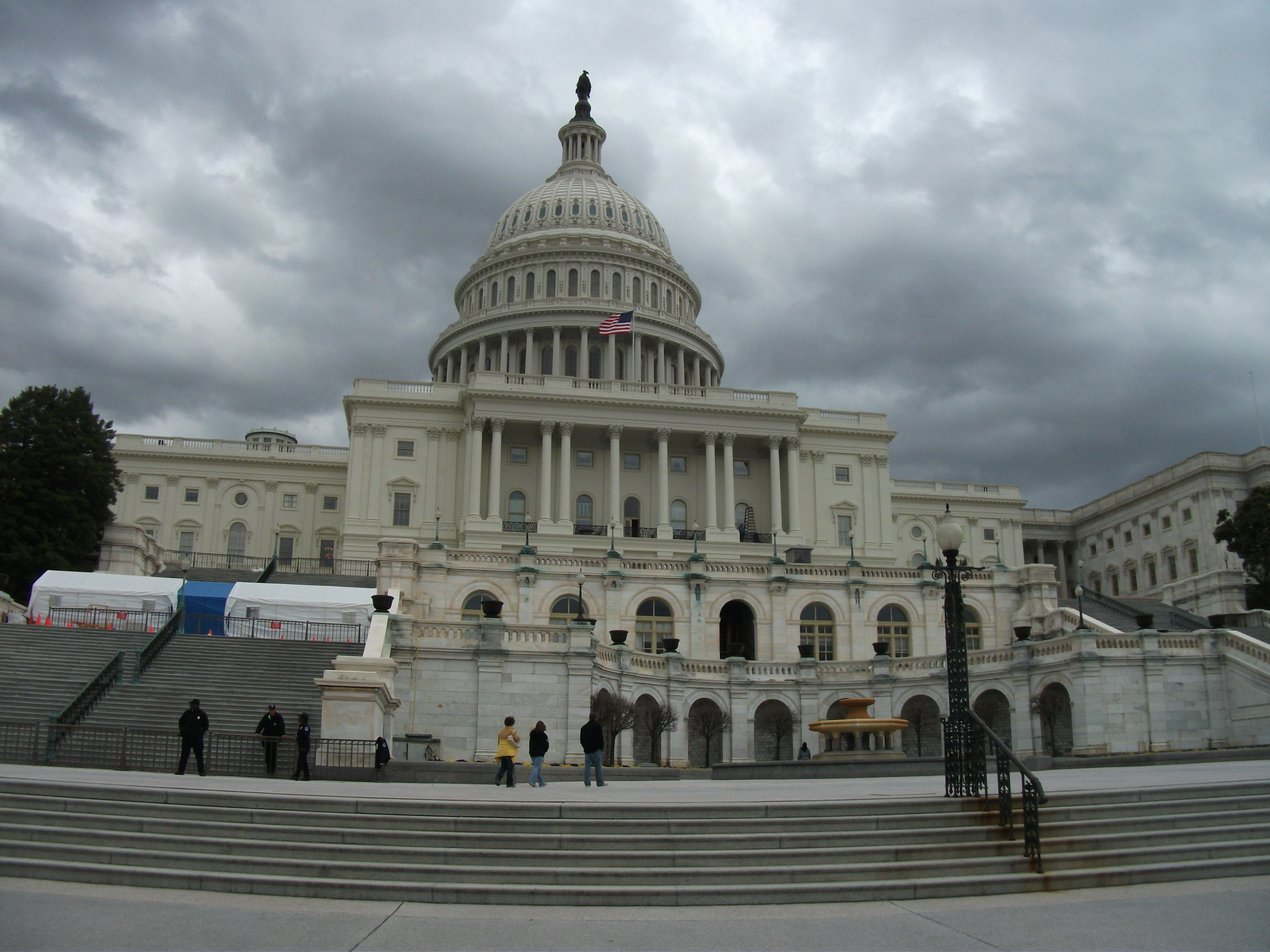
The estimate is based on a continuing force of about 2,500 National Guard members in D.C. from October 2026 through January 2029. That window would carry the deployment through the end of Trump’s second term.
That matters because the deployment is no longer being discussed as a short-term show of force. A January 2026 Congressional Budget Office report estimated that the federal government had spent $223 million on the Washington Guard deployment through 2025. The new estimate suggests a much larger bill if the mission becomes a fixture through 2027, 2028 and into January 2029.
Warren framed the cost as a political and fiscal warning. “The National Guard are not pawns and taxpayer dollars are not a piggy bank for Trump’s political stunts,” she said in a statement, according to USA TODAY.
What the estimate covers
The reported figure appears to reflect the cost of maintaining thousands of Guard personnel in the capital over more than two years. That can include pay, housing, food, transportation, equipment, logistics and other costs tied to sustaining a mission away from home stations.
The public estimate does not, by itself, answer every budget question. It does not fully explain how costs would fluctuate if the number of troops changes, if the mission expands or narrows, or if the deployment is ended before January 2029.
It also leaves open whether the administration views the 2,500-person level as a steady-state requirement or a planning assumption. That distinction matters: a planning estimate can become a ceiling, a floor or a political target, depending on how Congress and the Defense Department treat it.
For readers far from Washington, the practical issue is simple. A deployment that began as a federal response in one city is being priced like a sustained national security operation, and the cost would be borne by federal taxpayers.
Crime numbers cut both ways
The central argument for keeping Guard members in D.C. is public safety. But the available crime data cited in the reporting does not create a clean political talking point for either side.
According to D.C. police data cited by USA TODAY, violent crime rates have risen by 3%. Property crimes such as burglary and car theft have dropped by a combined 23%. Homicides have continued to fall, but that decline began in 2023, before Trump first deployed the National Guard in August 2025.
Supporters of the deployment can point to visible patrols, emergency responses and a sense of added federal capacity in crowded or high-profile areas. Critics can point to the timing of the homicide decline and argue that the most dramatic improvements cannot be credited solely to the Guard.
That is the hard part of evaluating a deployment like this. A uniformed presence is easy to see. Proving what it prevented is much harder, especially when crime trends were already moving in different directions before the mission began.
A visible force in daily life
In Washington, the Guard presence is not abstract. Service members have been seen in parks, near Metro stops, in residential neighborhoods and around heavily visited federal spaces. For some residents, that presence can feel reassuring. For others, it has become a daily reminder that the city is being treated differently from other American communities.
USA TODAY reported that some residents have bristled at the deployment, with people shouting at service members and signs urging the National Guard to go home appearing on sidewalks and walls. That tension puts Guard members in an uncomfortable position: they are carrying out orders while becoming the public face of a policy fight they did not create.
The mission has also carried real danger. The Justice Department charged Rahmanullah Lakanwal, 29, an Afghan national, with killing U.S. Army Specialist Sarah Beckstrom, 20, and severely injuring U.S. Air Force Staff Sgt. Andrew Wolfe, who was 24 at the time, in connection with a shooting blocks from the White House in late November 2025. The department said Lakanwal had traveled from Washington state.
That case underscores why officials may argue that the deployment is not simply ceremonial. It also complicates the debate: a violent attack on Guard members can be used to justify heightened security, while also showing the risks created when troops are kept in a highly visible domestic role for an extended period.
The mission beyond policing
Another part of the administration’s case may rest on services that do not show up neatly in crime statistics. The Washington Post reported that Brig. Gen. Leland Blanchard II said service members had responded to about 800 medical emergencies and administered about 325 doses of Narcan.
Those numbers, if confirmed, would suggest the Guard has been performing a broader public-safety role, including overdose response and emergency assistance. USA TODAY reported it tried to verify those figures with the D.C. National Guard but did not receive an immediate response after an email bounced back and calls were not returned.
That verification gap matters. Emergency-response claims can shape public opinion and congressional funding decisions, but they need clear documentation if they are being used to justify a $1.4 billion extension.
There is also a policy question beneath the numbers: if Guard members are filling gaps in emergency response, should the answer be a multiyear military deployment, or more investment in local civilian services?
What Congress can still press
The confirmation process for a Pentagon comptroller nominee gives senators a lever to demand clearer accounting. A comptroller would be expected to explain how the Defense Department tracks costs, evaluates missions and justifies spending requests.
Congress could press for specifics in several areas:
- How the $1.4 billion estimate was calculated.
- Whether the 2,500-person level is expected to remain constant.
- What metrics would determine whether the deployment is working.
- How emergency responses, arrests, deterrence claims and community effects are being tracked.
- What conditions would lead the administration to reduce or end the mission.
The political fight is already clear. Trump’s allies are likely to defend the deployment as a public-safety measure in the nation’s capital. Warren and other critics are casting it as an expensive use of troops for political theater.
The harder question is the one that comes after the slogans: what measurable outcome would make the next $1.4 billion worth it? Until the administration and Congress define that standard, the D.C. Guard deployment will remain both a budget line and a symbol of a much larger fight over federal power in the capital.







Leave a Reply