

A 6-3 Supreme Court decision blocked Louisiana from using a map with a second majority-Black district in future elections. The ruling leaves major questions about how much protection the Voting Rights Act still offers minority voters when states redraw political lines.
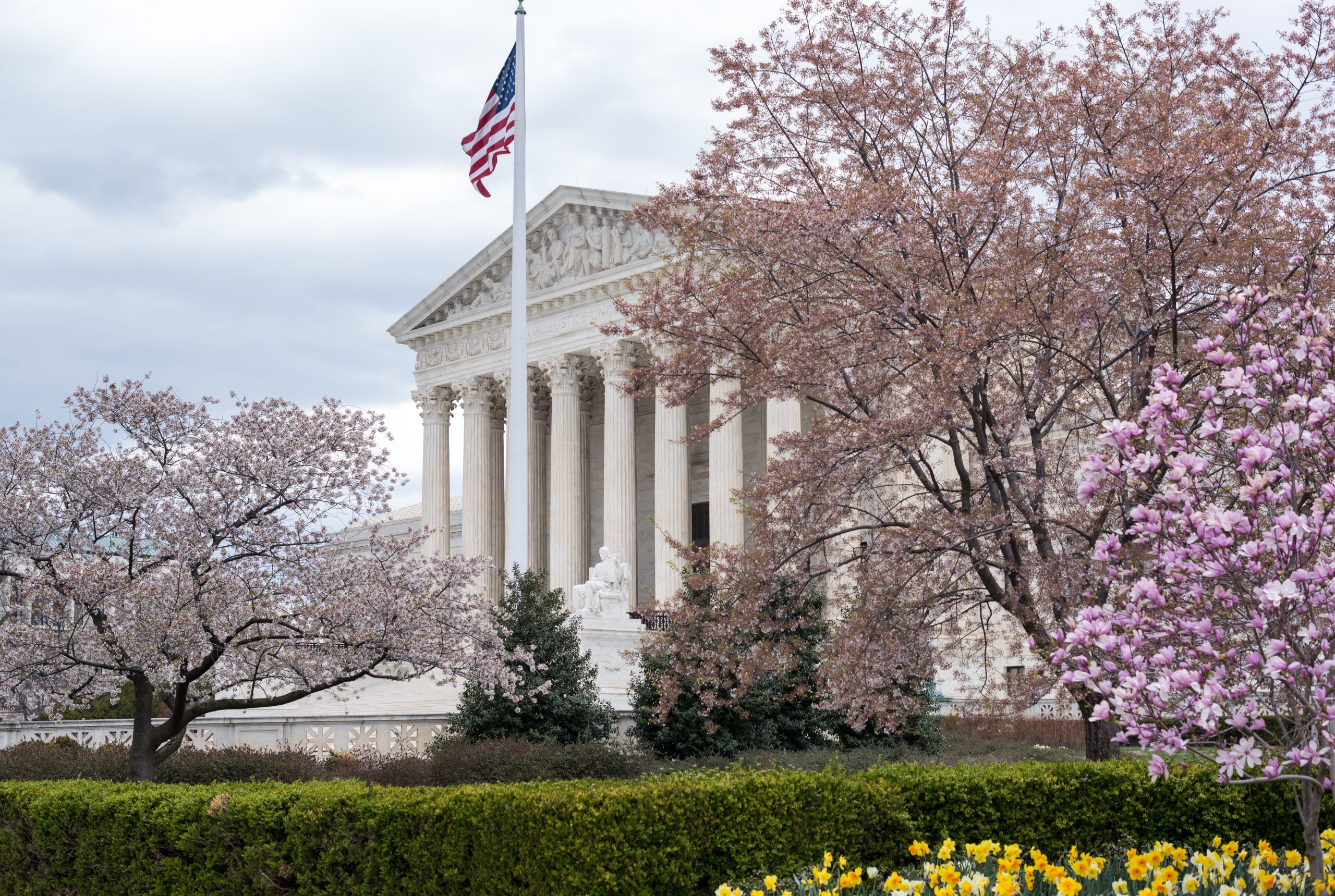
Black voters, the Supreme Court and Louisiana’s congressional map are at the center of a new fight over political representation. On Wednesday, April 29, the court voted 6-3 to strike down a Louisiana map challenged as racially discriminatory, leaving in place a lower-court ruling that prevents the state from using its second majority-Black congressional district in future elections.
The ruling affects Black voters’ political representation and voting power in Louisiana, and it has implications for the Voting Rights Act and future redistricting nationwide. The immediate map dispute is over, but the court’s reasoning may make it harder to challenge districts that weaken minority voting strength.
A second Black district blocked
Louisiana has six congressional districts. After the 2020 census, the state’s first new map contained one majority-Black district, even though Black residents make up roughly one-third of Louisiana’s population.
Black voters sued, arguing that the 2022 map likely violated Section 2 of the Voting Rights Act, the federal law that bars voting practices that discriminate based on race. A federal judge agreed at the preliminary stage, and the U.S. Court of Appeals for the 5th Circuit upheld that finding.
Louisiana was told to create a new map. Its 2024 version added a second majority-Black district, and Democrat Cleo Fields won that seat in the November 2024 election.
That second map immediately triggered another lawsuit, this time from voters who described themselves as non-African American. They argued that Louisiana had sorted voters by race in violation of the Constitution’s Equal Protection Clause.
The court’s decision changed the map
According to SCOTUSblog’s account of Louisiana v. Callais, the Supreme Court’s 6-3 ruling left standing a three-judge federal court decision barring Louisiana from using the 2024 map. The practical result is that the second majority-Black district cannot be used in future elections under that ruling.
The justices did not formally invalidate Section 2 of the Voting Rights Act, despite arguments from Louisiana and the challengers that pressed the court to revisit the provision. That distinction matters: the law remains on the books.
But a statute can survive while becoming much harder to enforce. Justice Elena Kagan, writing in dissent for herself and Justices Sonia Sotomayor and Ketanji Brown Jackson, said the majority’s approach had made Section 2 “all but a dead letter,” according to SCOTUSblog.
The majority opinion, written by Justice Samuel Alito, emphasized that the Constitution “almost never permits” government discrimination based on race. The key legal question, in his framing, was whether complying with the Voting Rights Act belongs among the narrow interests that can justify race-conscious action by a state.
Why the Voting Rights Act matters
Redistricting happens after each census, when states redraw congressional and legislative boundaries to reflect population shifts. The line-drawing process can shape which communities have a realistic chance to elect candidates they support.
Section 2 has long been used to challenge maps accused of diluting the voting strength of racial minority communities. In broad terms, plaintiffs have had to show that a minority community is large and geographically compact enough to form a district, politically cohesive, and routinely outvoted by a bloc of other voters.
That framework comes from the Supreme Court’s 1986 decision in Thornburg v. Gingles. Alito’s opinion said the court was not abandoning the so-called Gingles test, but updating it to align with the statutory text and later developments.
The update could prove consequential. The majority suggested that plaintiffs should be able to offer an alternative map that creates a majority-minority district while still fully accommodating a state’s legitimate goals, which can include protecting incumbents or pursuing partisan objectives.
Race and politics collide
Louisiana’s case captures the difficult overlap between race and party in the South. Black voters in Louisiana have often supported Democratic candidates, while statewide political power has shifted strongly toward Republicans. A map can therefore have racial and partisan consequences at the same time.
Louisiana told the court that its 2024 map was designed not simply around race, but around political considerations, including preserving districts for powerful Republican incumbents such as House Speaker Mike Johnson and Rep. Julia Letlow. The challengers called it implausible that race and politics had played equal roles.
That disagreement goes to the heart of modern redistricting litigation. States are generally allowed to consider partisan advantage when drawing maps, subject to state-law constraints, but they face far stricter constitutional limits when race predominates without sufficient justification.
Supporters of the Supreme Court’s result see it as a needed check on governments assigning voters to districts because of their race. Critics see a rule that overlooks the practical reality that ostensibly neutral maps can fracture or pack Black communities and reduce their influence at the ballot box.
A tougher path for future challenges
The Louisiana ruling does not mean every majority-Black district is unlawful, nor does it erase every Voting Rights Act claim. Future cases will turn on their own records, alternative maps, population patterns and evidence of discriminatory intent.
Still, the decision may raise the evidentiary burden for voters challenging maps. If courts demand that plaintiffs present alternatives satisfying every legitimate state objective, challengers may face a steep task: mapmakers often have multiple competing goals, and those goals can be described broadly.
The ruling also arrives as states prepare for the next cycle of redistricting after the 2030 census. Legal standards established now will shape the negotiating power of communities, legislators and advocacy groups long before new district lines are finalized.
For Black voters in Louisiana, the immediate question is what map will govern future congressional elections and how much opportunity remains to elect preferred candidates in two districts rather than one. For the country, the larger question is whether the Voting Rights Act can still provide an effective remedy when demographic representation and constitutional objections to race-conscious districting collide.
The fight is far from settled
The court’s decision resolves the status of Louisiana’s 2024 map, but it does not settle the basic political argument. One side argues that equal treatment requires government to stop making districting decisions based on race. The other argues that ignoring race in a society shaped by residential segregation and unequal political access can preserve unequal results.
Both positions invoke equality, yet they point toward different rules for mapmakers. That is why Louisiana’s second majority-Black district has become a national test case rather than a local boundary dispute.
As more redistricting cases reach federal courts, the practical meaning of the Supreme Court’s ruling will depend on how judges apply its new reading of Section 2. The outcome may determine not only where district lines are drawn, but whose voting power those lines protect.










Leave a Reply