
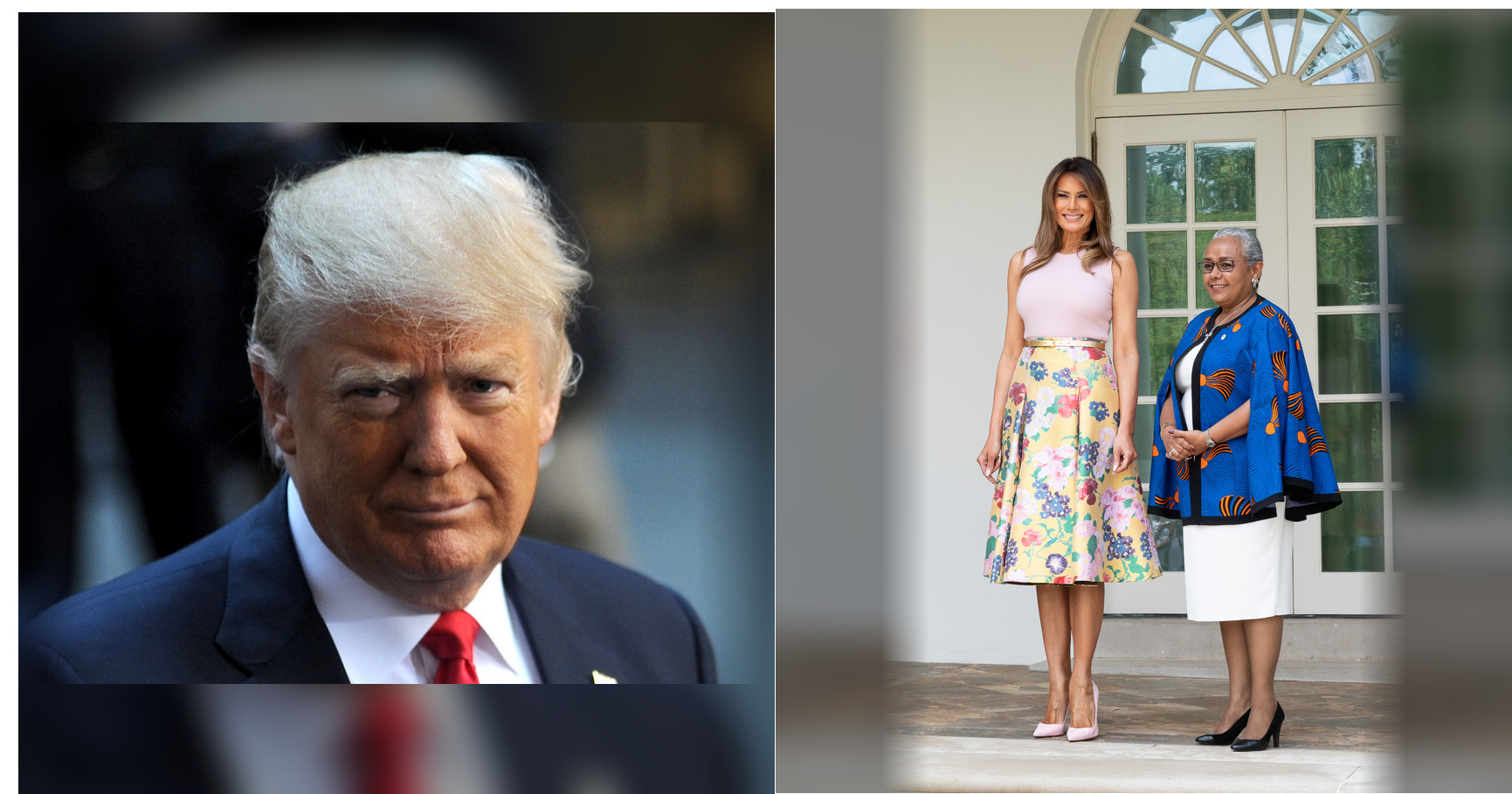
A brief public moment involving the president and first lady is drawing scrutiny because video can invite more certainty than it actually provides. What is visible, what was reported and what remains unverified are not necessarily the same thing.
Melania Trump and Donald Trump appeared to have a tense exchange at the Freedom 250 event, according to a Newsweek video post. Video appeared to show the couple seemingly arguing during the Freedom 250 event, a public-facing initiative tied to America’s 250th anniversary of independence.
The footage has drawn attention because it captures an unscripted-looking interaction between President Donald Trump and first lady Melania Trump. But the available report does not establish what either person said, what prompted the exchange or whether the moment reflected a disagreement.
What the video report says
Newsweek characterized the interaction as a tense exchange and said the video showed the couple apparently arguing over something. That description is the central verified claim available from the report: observers could see an exchange that appeared strained.
There is an important limit to that account. A video without clear audio, a full lead-up or direct comment from the people involved cannot reliably reveal the substance of a private conversation. Facial expressions, gestures and a few seconds of interaction can suggest tension, but they do not prove an argument.
Neither Donald Trump nor Melania Trump is quoted in the available material explaining the interaction. There is also no independently established account of what happened immediately before or after the clip.
A public moment invites interpretation
Short clips of political figures travel quickly because they offer viewers a sense of access to moments that are usually carefully managed. When the people in the frame are a president and first lady, every glance, gesture or apparent exchange can become a subject of online analysis.
That interest is understandable, but it creates a familiar problem: viewers often try to turn body language into a definitive narrative. One person may see a sharp disagreement; another may see a logistical exchange, fatigue, distraction or a conversation cut off before its meaning becomes clear.
The most defensible reading is narrower. The pair appeared to have an uncomfortable or tense public interaction, as the video report described it. Claims about their relationship, motives or the words exchanged would go beyond the evidence currently available.
Freedom 250 carries a larger role
The event’s name refers to Freedom 250, the public-private partnership connected to the White House’s broader Task Force 250 effort. The initiative is organizing celebrations around the 250th anniversary of American independence on July 4, 2026.
According to the White House’s Freedom 250 page, the anniversary programming began in 2025 and is planned to continue through the end of 2026. The project involves federal, state and local government participants alongside private-sector, nonprofit and educational partners.
That context helps explain why appearances connected to Freedom 250 are more than routine ceremonial stops. They are part of a long-running presidential effort to frame a major national anniversary, and they put the president and first lady together in highly visible settings.
Still, the national symbolism of the event should not be used to fill gaps in the account of the couple’s exchange. The footage may be politically notable because of who appears in it, but it does not by itself show that the interaction affected the event or its mission.
Why context matters in viral clips
Video is powerful evidence of what can be seen and heard. It is weaker evidence of what people mean, particularly when a clip is brief, silent, edited or missing the moments around it. That distinction matters in political coverage, where a striking image can become more influential than a fully sourced explanation.
There are competing instincts at work. Supporters of close scrutiny argue that public officials and their families make public appearances voluntarily and that notable interactions are fair subjects for reporting. Others caution that commentators routinely overread body language and turn ambiguous moments into claims that cannot be supported.
Both points can be true. A public interaction can be newsworthy without supplying enough evidence for a firm conclusion about a couple’s private relationship or state of mind.
- What the footage can support: The Trumps appeared in a public setting and were described by Newsweek as having a tense exchange.
- What it cannot settle: The topic of the conversation, whether they were arguing, or what either person intended.
- What would add clarity: A longer, unedited recording with audible dialogue or a statement from Donald Trump, Melania Trump or their representatives.
What remains unknown
The available reporting leaves the key questions unanswered. There is no confirmed explanation for the interaction, no transcript and no indication that either member of the couple addressed it publicly.
That uncertainty is not a minor technicality. It is the difference between reporting that an exchange appeared tense and asserting that a specific dispute occurred. The first is an observation attributed to the video report; the second would require evidence that has not been provided.
For now, the Freedom 250 clip is a reminder of how quickly a small public moment can become a larger political-media story. The visual impression may be compelling, but the known facts remain limited: Donald Trump and Melania Trump were seen interacting at a Freedom 250 event, and the exchange was widely characterized as appearing tense.



Leave a Reply