
The hearing clash put Blanche’s move from Trump’s defense team to Justice Department leadership under a microscope. At issue is whether formal recusals are enough to protect public trust.
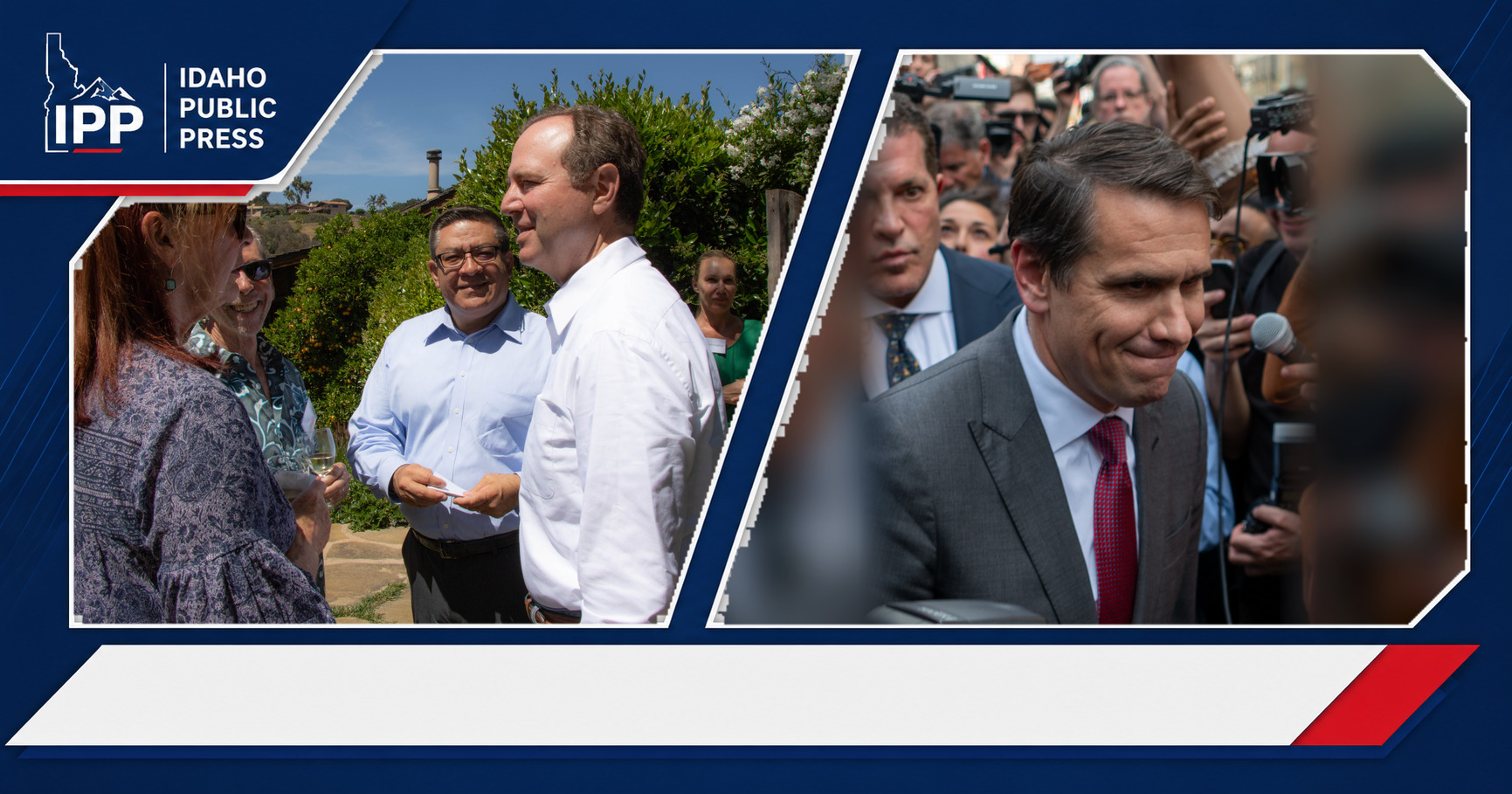
Todd Blanche was criticized by an irate senator, U.S. Sen. Adam Schiff of California, during a Senate Judiciary Committee nomination hearing in Washington, D.C., on Aug. 4. The troubling Blanche past surfaced as Schiff contrasted Blanche’s years as a Southern District of New York prosecutor with his current role as acting attorney general.
The senator described Blanche’s past as troubling because, in Schiff’s telling, a former federal prosecutor and Donald Trump’s former personal criminal defense lawyer is now helping run a Justice Department making decisions around Trump-linked matters. Blanche pushed back sharply, denying ethics violations and saying the truth had to matter.
The clash centered on recusals
According to excerpts released by Schiff’s Senate office, the exchange began with a direct question about conflicts of interest. Schiff noted that Blanche represented Trump in at least three criminal matters: the New York hush money case, the federal January 6 case and the Mar-a-Lago classified documents case.
Schiff pressed Blanche on whether Justice Department ethics officials told him he had to stay out of matters tied to that prior representation. Blanche said he had met with senior ethics lawyer Joseph Tirrell and acknowledged that, to the extent work remained around those cases, he was recused.
That answer did not end the dispute. Schiff argued that the real question was not simply whether Blanche had said the word recusal, but whether his actions and influence inside the department had been kept separate from Trump-related decisions.
Blanche’s position was that the senator was overstating or mischaracterizing his role. At one point, he said Schiff could not accuse him of violating ethical rules and then lie about what he did.
Why Schiff invoked Blanche’s past
Schiff’s most pointed line was personal: “What happened to you, Todd Blanche?” His office framed the question around Blanche’s earlier career at the Southern District of New York, a U.S. attorney’s office often associated with aggressive public corruption and financial crime prosecutions.
The senator’s criticism was not that Blanche’s past as a prosecutor was itself a scandal. It was that Schiff sees a troubling contrast between that résumé and Blanche’s current defense of expansive presidential power.
In Schiff’s telling, Blanche has moved from the role of independent-minded federal prosecutor to a Justice Department leader willing to protect Trump’s interests and target Trump’s perceived political enemies. Blanche rejected the premise and repeatedly disputed Schiff’s characterization.
That tension explains why the phrase “troubling Blanche past” landed in the political bloodstream. The controversy is less about an old episode than about a résumé being used as evidence in an argument over present-day judgment.
The Mar-a-Lago report dispute
One flashpoint was Volume Two of a special counsel report connected to the Mar-a-Lago classified documents investigation. Schiff questioned how Blanche could oppose release of material related to an investigation of a former client while also claiming to be recused from Trump-related matters.
Blanche answered that a federal judge had said the report could not be released. Schiff interrupted and focused instead on the Justice Department’s position, arguing that the department under Blanche did not seek release.
Blanche said the relevant litigation took place before he became deputy attorney general and that he was a private citizen still representing Trump at the time. He also said that, since March, he had not been part of anything before the judge connected to that matter.
Schiff countered that Blanche had previously been asked whether he would release the report and had answered no, rather than saying he would recuse himself. That difference matters politically because it turns a procedural ethics question into a credibility question.
The IRS settlement raised stakes
The hearing also moved into a Justice Department and IRS settlement that Schiff described as a “slush fund” arrangement and a “tax immunity deal” for the president. Those are Schiff’s characterizations, and they were disputed in the exchange.
Schiff accused Blanche of signing an agreement that, in his view, declined to defend the IRS and Justice Department against a lawsuit involving the president. Blanche responded that Schiff’s description was not what he had said and that the department had made a decision to settle the case.
The argument became a proxy for a larger concern: whether the Justice Department is functioning as an independent legal institution or as a tool for the president’s personal benefit. Schiff said the arrangement looked collusive. Blanche framed it as a settlement decision reached after internal discussion.
For readers watching from outside Washington, that distinction is the whole fight. Settlements happen constantly in government litigation. But when the beneficiary is the president, and the official involved once represented him personally, ordinary legal discretion can look like a conflict even when officials insist rules were followed.
Two readings of the blowup
There are two very different ways to read the hearing. Schiff and other critics see Blanche as an example of a broader pattern: lawyers who once defended Trump personally moving into government roles where they can influence outcomes connected to Trump’s legal and political interests.
From that view, Blanche’s past matters because it sharpens the conflict. A former federal prosecutor knows the norms of independence, recusals and public confidence. If he appears to blur those lines, critics argue, the damage is bigger than a typical partisan appointment fight.
Blanche’s side of the exchange points the other way. He said he is recused where ethics rules require it, said some cases are no longer ongoing and rejected the suggestion that he secretly influenced decisions from which he was barred.
That is why his irritation was central to the moment. The “worst thing you can accuse someone of” line, as highlighted in coverage of the hearing, reflects how seriously Blanche treated the ethics allegation. For a lawyer, being accused of violating professional obligations is not just a political attack; it goes to credibility.
What remains unresolved
The hearing did not settle the underlying questions. Schiff’s excerpts show Blanche acknowledging recusals in broad terms, but they do not fully answer how those recusals are documented, who monitors them day to day or what counts as indirect involvement.
Several practical questions remain open:
- Whether Blanche’s recusal covers only active litigation or also internal DOJ discussions touching Trump’s former cases.
- Whether the Justice Department will provide more detail about who made decisions on the special counsel report.
- Whether the IRS settlement will face additional congressional scrutiny.
- Whether senators will seek written ethics guidance connected to Blanche’s prior representation of Trump.
The immediate takeaway is not that Schiff proved an ethics violation or that Blanche disproved every concern. It is that Blanche’s career path has become part of the confirmation fight itself.
For the Justice Department, perception is not a side issue. If senior officials with close ties to the president are involved in decisions that affect him, the department has to show more than technical compliance. It has to show the public where the walls are, who built them and whether they are holding.


Leave a Reply