
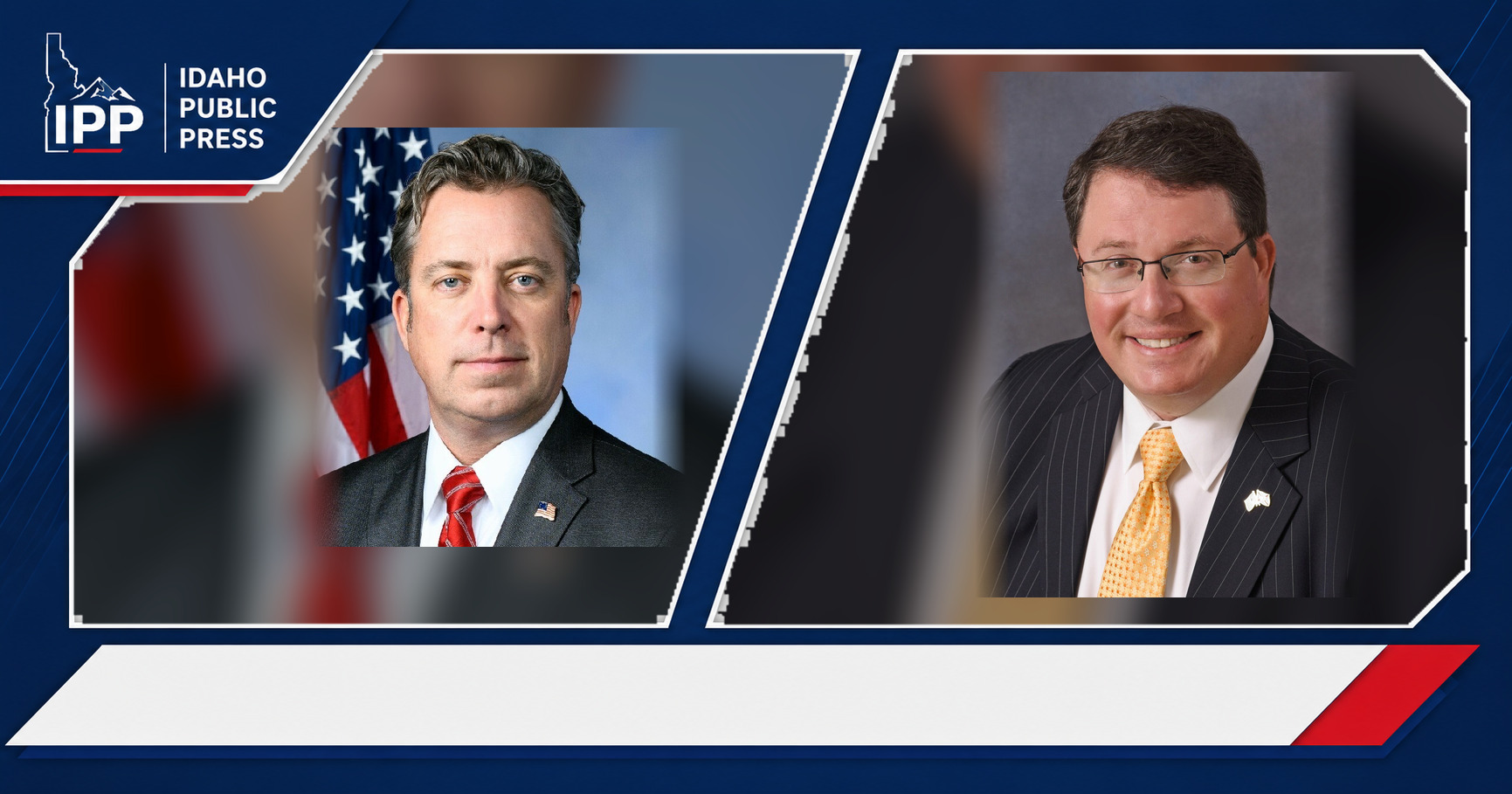
Recent remarks by two Republican lawmakers have sharpened a long-running question about political speech, religious freedom and party discipline. The immediate issue is not simply what was said, but how GOP leadership chose to respond.
Republican politicians are continuing to use anti-Muslim rhetoric, and GOP leaders have provided little public pushback against those remarks. Comments by Tennessee Rep. Andy Ogles and Florida Rep. Randy Fine have put new attention on why Republicans keep pushing language critics call bigoted — and why the party’s congressional leadership has largely avoided a direct public rebuke.
The dispute matters because it tests where Republican leaders draw the line between legitimate concerns about extremism and speech that treats Muslim Americans as a collective threat. It also raises a practical question for Congress: whether inflammatory rhetoric from members brings any political or institutional consequence.
Two remarks drove the latest clash
NPR reported that Ogles, a second-term Republican representing a safely Republican Tennessee district, posted that “Muslims don’t belong in American society.” The district includes tens of thousands of Muslim constituents, according to NPR.
Fine, a Republican congressman from Florida, added to the controversy with a post saying the country needed “more Islamophobia, not less,” NPR reported. The remarks drew condemnation from Democrats and Muslim advocates, who characterized them as anti-Muslim bigotry.
Those statements did not emerge in a vacuum. The debate has unfolded alongside fears prompted by recent attacks in New York and Virginia involving suspects whom authorities said were inspired by, or had supported, ISIS. Public safety concerns are real; the central disagreement is whether they justify rhetoric aimed broadly at Muslims rather than at individuals or violent groups.
That distinction is not minor. Muslims are a religiously diverse group of Americans and immigrants, while ISIS is a militant organization whose ideology and violence are rejected by Muslim leaders and communities worldwide.
Johnson framed the issue around Sharia
House Speaker Mike Johnson was asked about Ogles’ post. According to NPR’s reporting, Johnson said there was “popular sentiment” around concern that Sharia law could be imposed on the United States and said that concern was what animated the reaction.
Johnson also said the issue was not about Muslims as people. Still, critics argue that framing an answer around Sharia, rather than directly rejecting Ogles’ statement, risks validating a premise that Muslim religious practice poses a generalized threat.
Sharia is commonly used to describe a broad religious and ethical framework that guides many observant Muslims in personal matters, including prayer, charitable giving, family life and dietary choices. It is not a single legal code, nor is ordinary religious observance a plan to replace the U.S. Constitution.
NPR noted that a “Sharia-free America” caucus has 50 Republican members. Its existence reflects how warnings about Sharia have become a visible feature of some GOP messaging, even as civil-liberties advocates say such language can turn a complex faith tradition into a political scare word.
Why silence is part of the story
Leaders do not need to agree with every member of their party, and they may choose not to turn every controversy into a public fight. But congressional leadership has tools that go beyond statements: committee assignments, internal pressure, censure efforts and public standards for party conduct.
NPR’s account found that only a few Republicans had publicly criticized the recent comments. No comparable disciplinary action by House GOP leadership was described in the report.
That limited response is why the controversy has become a leadership story rather than only an Ogles or Fine story. A public rebuke can signal that a party rejects a member’s language even when it does not endorse punishment. Silence, ambiguity or a shift toward a related security debate can be read very differently by supporters, critics and lawmakers deciding how far to go.
Republican officials may argue that leadership should focus on terrorism and public safety rather than policing rhetoric, or that public comments are being interpreted without sufficient context. Critics counter that avoiding a direct condemnation leaves Muslim Americans to absorb the cost of language that questions their place in the country.
The comparison with Steve King
The sharpest contrast cited by NPR comes from 2019, when then-Rep. Steve King, an Iowa Republican, questioned why “white nationalist” and “white supremacist” were considered offensive terms in an interview.
Republican leaders condemned King’s remarks and removed him from his House committee assignments. That did not end every internal debate over race or extremism in the party, but it was a tangible act of discipline that clearly communicated leadership’s position.
The comparison does not mean every case has identical facts or should produce an identical sanction. It does show that party leaders have previously chosen a more forceful response when rhetoric was judged politically and morally unacceptable.
For critics of the current response, the difference is revealing: statements widely condemned as anti-Muslim have received less public resistance from leadership than King’s comments did seven years earlier. For defenders, the cases involve different members, circumstances and political arguments, making direct equivalence imperfect.
A broader shift in political incentives
NPR congressional correspondent Barbara Sprunt described the moment as part of a changed political era, one shaped in part by President Donald Trump’s past calls for a ban on Muslim immigration to the United States.
The larger point is about incentives. Elected officials may use provocative language because they sincerely hold a view, because they believe it will energize voters, or for both reasons. When fellow party members offer little criticism, the perceived political cost of escalating that language can shrink.
That does not mean all Republicans share Ogles’ or Fine’s views. The Republican Party includes lawmakers with different positions on immigration, religious liberty, national security and the appropriate limits of political speech. Yet the public response from top leaders affects which voices appear to represent the party most prominently.
It also shapes the experience of Muslim constituents. A lawmaker’s words may be aimed at a national online audience, but they land locally — in schools, workplaces, houses of worship and communities represented by the officials making the remarks.
What remains unresolved
Neither the NPR report nor the public debate settles how, or whether, House Republican leadership will respond further. The immediate unanswered question is whether leaders will directly repudiate statements targeting Muslims as a group, rather than addressing only concerns about ISIS, terrorism or Sharia.
There is also no indication in the reporting that House leaders are preparing formal punishment for Ogles or Fine. That leaves the current dispute centered on rhetoric, accountability and the precedents created when inflammatory statements receive a muted institutional response.
The core issue is straightforward even if the politics are not: combating violent extremism does not require treating millions of Muslims as suspect. How Republican leaders handle that distinction will help determine whether the latest controversy remains a short-lived outrage or becomes a clearer signal about the party’s boundaries.


Leave a Reply