
The warning is not just about one commentator’s dramatic line. It points to a real tension inside Trump’s movement: whether MAGA can outlive Trump as a unified political force.
A right-wing pundit predicts when MAGA will implode, and the warning is less about one explosive day than a succession crisis: once Donald Trump is no longer the movement’s undisputed center, the internal divides and instability within MAGA could become impossible to contain. The “Completely bananas” right-wing pundit framing has landed because Trump supporters and conservative commentators are already arguing over what MAGA means after Trump.
That is the live issue behind the latest flare-up. BBC reporting on Trump’s cabinet-room comments, 2028 maneuvering and fights across his coalition shows why the prediction matters now: MAGA is powerful, but it is not ideologically tidy.
The warning is about succession
The pundit’s prediction is best understood as a post-Trump warning. MAGA has been exceptionally durable as a personal movement built around Trump’s instincts, grievances and media command. It has been less tested as a transferable political brand.
That distinction matters because Trump has repeatedly blurred the line between his own future and the movement’s future. At a rally in Pennsylvania, supporters chanted “four more years,” according to the BBC, even though the Constitution bars a third elected term. Trump also told supporters that the final three years of his second term amount to an “eternity.”
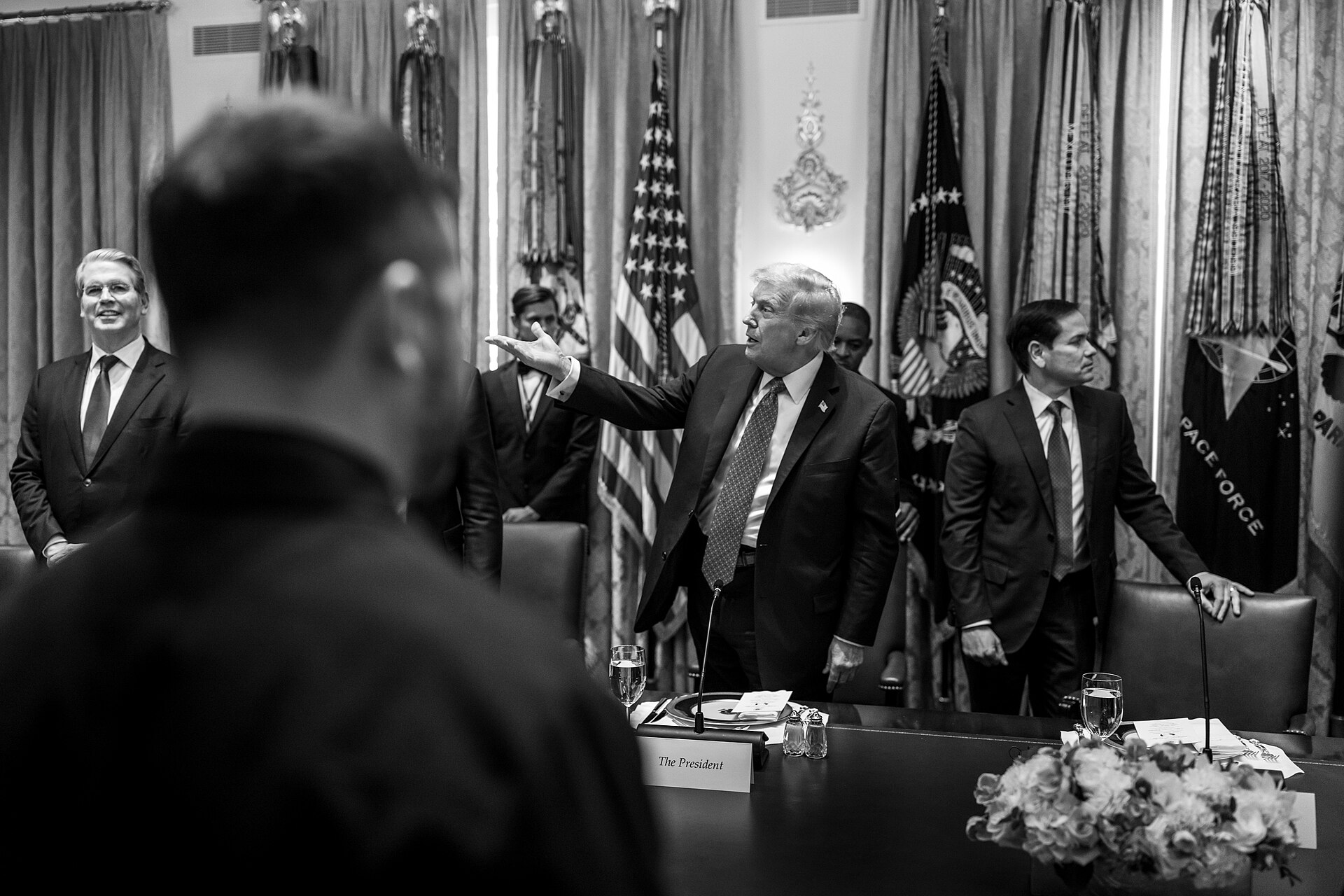
Yet in a cabinet meeting cited by the BBC, Trump also looked around the room and said the next Republican presidential candidate was “probably sitting at this table.” He added that it could be “a couple of people” there, while saying plainly: “It’s not going to be me.”
That is the tension. If Trump is not the 2028 nominee, someone else has to inherit a movement that has often defined loyalty as loyalty to him personally.
Trump’s table shows the fault lines
The possible heirs do not represent one neat ideology. Vice President JD Vance is widely viewed as one of the most plausible successors and as a bridge to the intellectual, populist and Silicon Valley-aligned factions trying to turn Trumpism into a governing doctrine.
Secretary of State Marco Rubio represents another path. Once a Trump rival and a more conventional Republican foreign-policy hawk, Rubio has remade himself inside the MAGA era, moving closer to Trump’s immigration and America First positions.
Robert F. Kennedy Jr. reflects a different kind of coalition politics. His Make America Healthy Again agenda, vaccine skepticism and path from Democrat to independent to Republican show how Trump’s movement absorbed voters and figures who do not fit old party categories.
Kristi Noem, as homeland security secretary, embodies the hardline immigration wing. Her rhetoric and enforcement posture speak to one of MAGA’s most emotionally powerful issues, but also one of its most polarizing.
A coalition can win and still split
The reason “implode” talk resonates is that MAGA has always contained contradictions. It includes working-class voters skeptical of corporate power, wealthy donors who want deregulation, social conservatives, anti-interventionists, immigration hardliners, tech libertarians, culture-war influencers and health-freedom activists.
Trump has been able to hold those groups together partly because he turns politics into a loyalty test. Without him as the central referee, fights that were once managed by personality could become fights over doctrine, money, appointments and primary power.
The BBC noted that members of Trump’s team have feuded over policy and that Rep. Marjorie Taylor Greene has cut loose from his orbit, accusing the president of losing touch with the Americans who put him in power. The outlet also described a dispute roiling the Heritage Foundation and pitting influential right-wing commentators against one another.
Those are not proof of collapse. They are signs that the movement is already debating who gets to define it.
The base is not static
Another reason the warning has teeth: voter coalitions change. The BBC reported that Republicans lost support in recent local elections among minority and working-class voters who helped Trump win back the White House in 2024.
Public approval is another pressure point. A YouGov survey cited by the BBC found Trump with a net approval rating of minus 14, down from plus 6 when he took office again in January.
Polls are snapshots, not destiny. Trump has survived political moments that many opponents and even some conservatives once treated as fatal. But if his approval weakens while would-be heirs start competing for ownership of MAGA, the movement’s internal disputes become more consequential.
The danger for Republicans is not that MAGA voters disappear. It is that different factions decide they are the real MAGA and reject a nominee who does not satisfy their version of the brand.
Why collapse predictions can fail
There is a strong counterargument: people have predicted MAGA’s demise before and been wrong. Trump’s bond with his base has outlasted impeachments, indictments, party resistance, media backlash and policy reversals.
Movements also do not need perfect ideological consistency to survive. Winning coalitions are often messy. Democrats and Republicans have both held together voters with conflicting priorities when the alternative seemed worse.
Former Republican Rep. Rodney Davis, now with the U.S. Chamber of Commerce, told the BBC that the next Republican president after Trump will need to set himself or herself apart while not moving too far away from Trump. His point captures the balancing act: inherit the energy without looking like a pale copy or a betrayal.
That could happen. Vance, Rubio or another figure could win Trump’s blessing, consolidate the base and turn MAGA into a more institutionalized Republican identity. The movement could evolve rather than implode.
The real test comes after Trump
The pundit’s dramatic forecast is useful because it strips the issue to its core. MAGA’s biggest unresolved question is whether it is a movement with a future leader or a leader with a movement attached.
The answer will likely depend on several things:
- Trump’s endorsement: Whether he clearly backs one successor or keeps rivals competing for his favor.
- The economy: Whether working-class and lower-propensity voters still feel the movement is delivering for them.
- Primary incentives: Whether candidates gain more by expanding MAGA or by accusing rivals of betraying it.
- Policy fights: Whether immigration, foreign policy, health, trade and tech power become binding issues or breaking points.
For now, MAGA remains the dominant force in Republican politics. Leadership of the movement still looks like the key to the party’s future.
But the right-wing pundit’s implosion warning points to a vulnerability that Trump’s victories have not solved. A coalition built around one figure can look strongest right before the succession fight begins.





Leave a Reply