
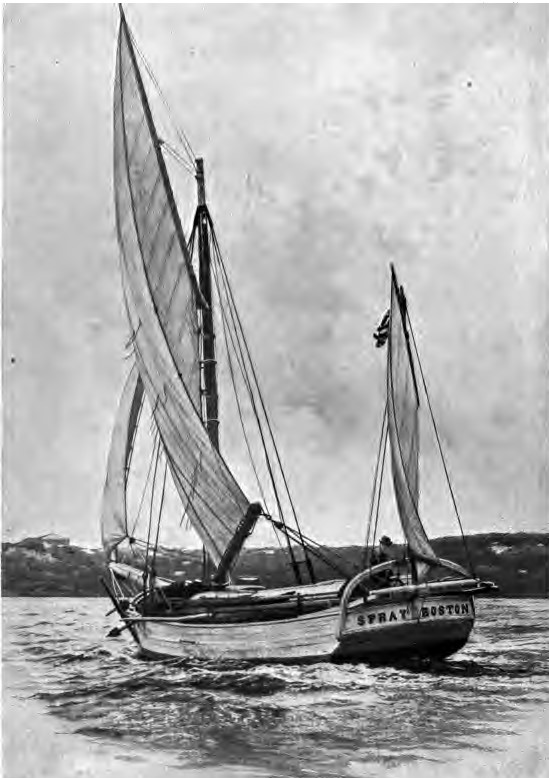
The story has resurfaced because it punctures a fantasy many adults find irresistible: leaving everything behind. For one child, the open sea became a closed world.
A parent’s dream can sound beautiful from the outside: sell the settled life, board a sailboat, chase the horizon, make the world the classroom.
For Suzanne Heywood, that dream became something else. As a child, she spent roughly a decade aboard a small boat with her family, cut off from normal school, friends and the ordinary freedom to grow up among children her own age.
The dream was not hers
Heywood’s story has drawn fresh attention after a first-person account circulated on HuffPost and MSN, describing how a father’s plan to sail around the world left a child feeling trapped for years. The details are not the glossy version of family adventure that often fills travel feeds.
In a 2023 interview with the education charity Theirworld, Heywood said she was taken out of school at age seven and spent the next 10 years living at sea with her family. She later returned to the United Kingdom at 17 and won a place at Oxford University.
Her memoir, Wavewalker: Breaking Free, is framed around that childhood: a girl living on a small boat, unable to attend normal school or form normal friendships. Theirworld quoted Heywood describing the period as life in a “very different world,” trapped for a decade on a boat as a child.
The unsettling part is not simply that the trip was extreme. It is that the choice belonged to adults, while the cost was paid by a child.
School vanished by degrees
Heywood’s account lands hard because education did not disappear all at once. It thinned out, then stopped feeling like a reliable part of life.
According to Theirworld, Heywood said her mother, a primary school teacher, brought some math and English worksheets aboard. But the work happened only at sea, and only when the weather was not rough. After the first year or two, even that minimal schooling stopped, she said.
That detail matters. Children can survive disruption, but they need structure. They need adults who treat learning as more than an optional activity squeezed between voyages, weather and adult plans.
Heywood eventually completed her schooling by post, but she said she was never able to return to normal school. By the time she reached university, she had catching up to do that went beyond academics.
The boat got smaller
For many adults, the idea of a family boat suggests freedom: no traffic, no school run, no office, no ordinary constraints. For a child, the same boat can become a very small world.
Heywood told Theirworld that at first she missed her friends most. She went from seeing them every day to spending long stretches largely with her younger brother during voyages that could last weeks.
Over time, she said, she also missed the chance to learn. That shift is revealing. A child may first feel the emotional loss of friends and routine, then later understand the deeper loss of opportunity.
Isolation was not just social. Theirworld’s summary of her childhood says she was deprived of formal education, friends and even safety. Heywood has also spoken of being shipwrecked as a small girl on Wavewalker, a memory she later used to put other problems in perspective.
Education became the exit
One of the most striking pieces of Heywood’s story is how she began to imagine a life beyond the boat. It did not come from a carefully planned curriculum. It came partly from outsiders.
She told Theirworld that crew members came aboard for short voyages and that the boat became “a little like a floating hotel,” with her father charging people to sail with the family. Through some of those crew members, she began to understand that university and a career were possible.
For Heywood, education became more than self-improvement. It became a route out.
That is why her later advocacy has such force. She donated proceeds from the launch of Wavewalker: Breaking Free to Theirworld and told the charity she is passionate about education because it was denied to her as a child.
Adventure is not the problem
Heywood’s experience does not mean every traveling family is harming its children. Some families manage long-term travel with rigorous schooling, stable relationships, child-centered planning and a willingness to stop when the arrangement no longer works.
The warning in her story is more specific. Adult freedom can become a child’s confinement when there is no meaningful choice, no outside check and no serious plan for education or social development.
That distinction is important because “world schooling” and unconventional childhoods are often sold as automatically richer than ordinary life. They can be enriching. They can also hide neglect behind beautiful scenery.
The key question is not whether a child is seeing the world. It is whether the child still has access to the basics: learning, safety, friends, privacy, medical care, trusted adults beyond the family and a real path back to ordinary life if needed.
The real lesson is agency
Heywood’s adult life complicates any simple reading of the story. She did reach Oxford. She became an author and business leader. She speaks about resilience, and she told Theirworld that small steps forward can matter when challenges feel too large.
But resilience is not proof that the harm was acceptable. Children should not have to turn deprivation into a success story for adults to recognize what was taken from them.
The reason this story keeps grabbing readers is that it punctures a fantasy without flattening it. The sea can be beautiful. Adventure can be transformative. But a childhood is not an adult project, and a child is not cargo.
Heywood’s story is ultimately less about sailing than power. Who gets to choose the journey? Who gets to leave? Who gets taught, heard and protected along the way? Those are the questions that remain after the romance of the voyage fades.







Leave a Reply