
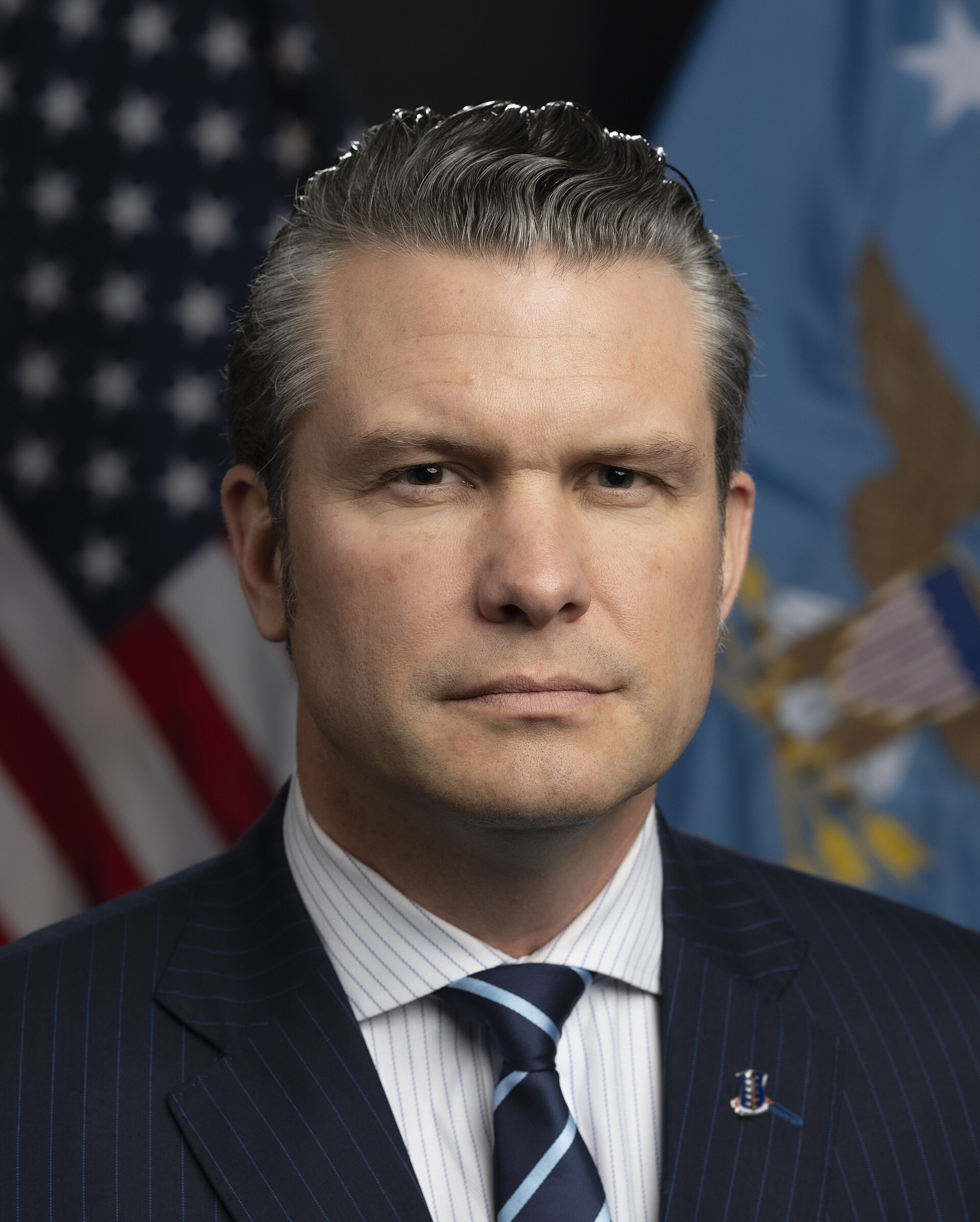
Pete Hegseth’s new Defense Policy Board includes Marc Andreessen and Blake Masters, whose business connections overlap with a fund where Donald Trump Jr. is a partner. The appointments put a familiar Washington question back in focus: when does industry expertise become a potential conflict?
Pete Hegseth appointed advisers to a Pentagon advisory body, including Marc Andreessen and Blake Masters, and two of the appointees have ties to a venture capital fund linked to Donald Trump Jr. The Pentagon picks raise questions about potential conflicts of interest because Andreessen Horowitz and firms connected to 1789 Capital hold investments in military and space technology.
The concern is not that the advisers directly award contracts. The Defense Policy Board is advisory. But its members can help shape the conversations around strategy, force structure and emerging defense technology—areas where private investors and contractors have enormous financial stakes.
The two appointments under scrutiny
Hegseth reconstituted the Defense Policy Board on June 29, 2026, naming 15 members and installing former U.S. trade representative Robert Lighthizer as chair, according to reporting by the Guardian. The board had been disbanded in April 2025 as part of a broader review of Pentagon advisory panels.
Among the new members are Andreessen, co-founder of the Silicon Valley venture capital firm Andreessen Horowitz, often known as a16z, and Masters, a former Republican Senate candidate and business executive.
Donald Trump Jr. is a partner at 1789 Capital, a venture fund whose co-founder is Omeed Malik. The Guardian reported that a16z and 1789 Capital have overlapping investments, including in companies with major interests in defense and aerospace.
That overlap is the core of the ethics debate: advisers with insight into Pentagon priorities may also be connected, directly or through their firms and board roles, to companies seeking or performing government business.
Why the board’s role matters
The Defense Policy Board does not vote on procurement awards or write Pentagon contracts. It advises the defense secretary and the under secretary of defense for policy on broad national-security questions, including strategy and force structure.
Still, advisory access can be consequential. Members may hear senior officials’ thinking, participate in discussions about military needs and help frame how decision-makers view new technologies. In a defense market shaped by long-term planning, that kind of proximity can be valuable even without formal authority over a specific contract.
Scott Amey, general counsel at the Project on Government Oversight, told the Guardian that advisory committees often create conflict concerns because members may seek government business from the same agencies they advise. The risk, he said, is that inside knowledge or influence could provide an advantage to an employer or client.
Those concerns are not proof that any board member has acted improperly. They are the reason ethics rules, financial disclosures and recusals exist: to separate public responsibilities from private financial interests where possible.
The investments behind the questions
The Guardian identified several companies in which a16z and 1789 Capital have reportedly both invested, including Anduril Industries, Hadrian and SpaceX. Each operates in sectors that sit close to current Pentagon priorities: autonomous systems, aerospace, manufacturing capacity and space technology.
Anduril, which develops defense technology and autonomous weapons systems, has become one of the most prominent companies in the modern defense-industrial landscape. The Guardian reported that a16z has backed the company since 2019, while 1789 became an investor in 2022.
The report also noted that the U.S. Army awarded Anduril a contract worth up to $20 billion months before the company’s May 2026 funding round. CNN, cited in the Guardian report, said Anduril received roughly $1.25 billion in federal funding during the first 500 days of Trump’s second term.
Masters’ connections are structured differently. He sits on the boards of three Colombier entities linked to Malik, including vehicles associated with PublicSquare and GrabAGun. Those relationships do not establish that Masters has a financial interest in any particular Pentagon decision, but they add to the network of connections drawing scrutiny.
Industry knowledge versus public trust
There is a practical case for putting people with technology, investment and defense-sector experience on a Pentagon advisory panel. The department is grappling with artificial intelligence, drones, space systems, supply-chain resilience and the rapid commercial development of military-relevant technology. Officials may argue that people who understand those markets can offer useful expertise.
Critics see the same expertise as a complication when it comes with active investments, board seats or client relationships. Nick Cleveland-Stout of the Quincy Institute for Responsible Statecraft told the Guardian that about half of the new board comes from the defense industry and remains active in it.
That debate is bigger than any one administration. The Defense Policy Board has faced conflict questions before. In the run-up to the 2003 Iraq invasion, a review found that at least nine of its 30 members had links to defense contractors with billions of dollars in Pentagon business, according to the Guardian’s account. Then-chair Richard Perle resigned amid conflict-of-interest allegations.
The history helps explain why the current appointments are attracting attention quickly. Advisory bodies can seem distant from everyday politics, yet their members often operate at the point where government policy, corporate strategy and national security meet.
What remains unclear
The available reporting does not establish whether Andreessen, Masters or other board members have been required to recuse themselves from particular discussions, what financial-disclosure materials apply to each member, or how the Pentagon will handle matters involving companies tied to their business networks.
The Guardian said it sought comment from the Defense Department, a16z and Masters. The department and a16z had not responded by the publication’s deadline. A lack of response is not evidence of misconduct, but it leaves key safeguards and procedures unexplained publicly.
The most important next step is likely to be less about the board’s public meetings than its ethics administration: disclosures, conflict reviews, waivers if any are issued, and recusal decisions. Those details determine whether the Pentagon can show that outside expertise is being used without giving private interests an improper foothold in defense policy discussions.
A test for advisory-panel oversight
The appointments place the Trump administration’s approach to defense technology under a sharper lens. As private capital flows into weapons systems, aerospace and space infrastructure, the line between expert advice and investor interest becomes harder to police.
For Hegseth and the Pentagon, the question is whether they can demonstrate clear boundaries around that line. For critics, the appointees’ overlapping business ties show why those boundaries need to be visible, detailed and enforced—not simply assumed.





Leave a Reply