
John Bolton, once Donald Trump’s national security adviser and now a prominent critic, is at the center of a new debate over presidential power. The unanswered question is whether a legitimate investigation can be separated from Trump’s plainly stated drive for political payback.
Donald Trump has made punishing political opponents a guiding principle of governance, and the FBI searched John Bolton’s home in a development that identifies a familiar public figure as Trump’s apparent next target. Bolton, Trump’s former national security adviser turned critic, has become a defining test of whether the president is using government powers to pursue political revenge—or allowing investigators to follow evidence without political direction.
The search matters because Trump ran on a promise to retaliate against people he says weaponized government against him. His administration says it is restoring law and order. Critics see an accumulating pattern in which former officials, elected Democrats and other Trump antagonists face the extraordinary pressure of federal scrutiny.
Bolton is a particularly charged target
Bolton is not an obscure former official pulled unexpectedly into a political storm. He served as Trump’s national security adviser during the president’s first term, then became one of his most high-profile Republican critics after leaving the White House in 2019.
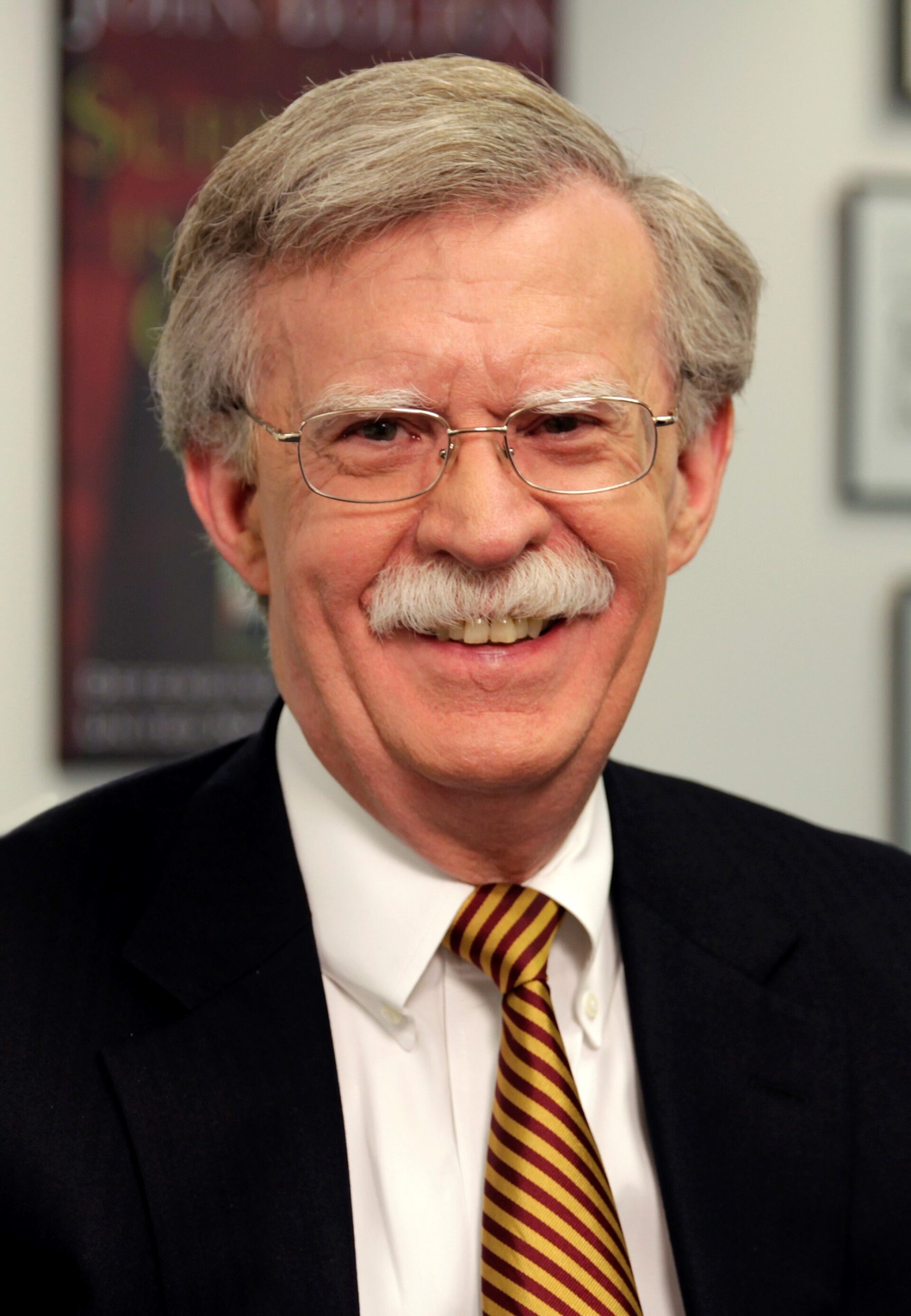
His 2020 book portrayed Trump in deeply unfavorable terms. The first Trump administration tried to stop its publication and opened a grand-jury investigation; both efforts were halted during the Biden administration, according to the Associated Press.
That history makes the FBI search of Bolton’s home unusually loaded, whatever evidence may have prompted it. It arrives after years in which Trump and Bolton have publicly represented opposing views of each other—and after Trump’s return to office with a far more explicit promise to use presidential authority against perceived enemies.
There is an essential distinction worth preserving: an FBI search does not establish that Bolton committed a crime. Search warrants are approved through a judicial process, but the public does not yet know the full factual basis, scope or potential outcome of the search described by the AP.
Trump’s words raise the stakes
Trump has not hidden his broad view of executive control. Discussing the Bolton search, he said he had told staff not to inform him in advance, while also stressing that he has authority over prosecutions.
“I could know about it. I could be the one starting it,” Trump told reporters, according to the AP. “I’m actually the chief law enforcement officer.”
That statement captures the tension surrounding his second term. A president can set broad law-enforcement priorities and appoint senior Justice Department officials. Yet the department’s traditional independence in individual cases is meant to prevent criminal investigations from becoming instruments of partisan punishment.
Trump’s supporters argue that concern about politicization rings hollow after the criminal cases he faced between his two terms. Trump repeatedly described those cases as political persecution, and White House spokeswoman Abigail Jackson told the AP that President Joe Biden had weaponized his administration against political opponents while Trump is “restoring law and order.”
A growing list fuels suspicion
Bolton’s case is being viewed alongside other administration actions, not in a vacuum. The AP reported that Trump’s team opened investigations involving New York Attorney General Letitia James and Sen. Adam Schiff, two Democrats who had been involved in major legal or impeachment fights with Trump.
The administration has also pursued matters involving former officials from Trump’s first term, including Miles Taylor and Chris Krebs. Taylor wrote a book warning about what he described as Trump’s authoritarian tendencies. Krebs drew Trump’s ire after affirming the security of the 2020 election, which Trump lost to Joe Biden.
Other actions cited by the AP include a watchdog investigation of former special counsel Jack Smith and Attorney General Pam Bondi’s order for a grand jury examination of the origins of the Russia investigation into Trump’s 2016 campaign. Trump has also called for an investigation of former President Barack Obama.
No single investigation proves a campaign of retaliation. Cases can have different facts, legal theories and decision-makers. But the common thread identified by critics is hard to miss: many of the people facing new scrutiny either investigated Trump, challenged him politically or publicly criticized him.
The administration rejects retaliation claims
Vice President JD Vance rejected the idea that Bolton was being targeted because of criticism of Trump. “If there’s no crime here, we’re not going to prosecute it,” Vance said in a television interview cited by the AP.
That is the administration’s core response: federal investigators should not ignore potential wrongdoing simply because a subject is politically prominent or hostile to the president. From that perspective, declining to investigate influential critics could itself create an unequal justice system.
But that defense depends heavily on process and transparency. The public needs to see that investigative decisions follow evidence, normal procedures and legal standards rather than presidential grievance. The more Trump personally celebrates, previews or appears to demand investigations of named adversaries, the harder it becomes for the administration to establish that separation.
Former Justice Department official Stephen Saltzburg summarized the critics’ concern to the AP: the people targeted appear connected by having investigated or criticized Trump “in one way or another.” That is not a legal finding. It is, however, a serious institutional warning.
Why the Bolton episode matters now
The Bolton search comes amid a wider assertion of federal power. The AP reported that Trump has deployed military personnel and federal law-enforcement officers to American cities for crime and immigration operations, while signaling that Chicago could face a similar deployment.
Those policies involve separate authorities and separate debates. Still, their political effect compounds the concern around the Bolton episode: critics fear an administration increasingly willing to use the visible machinery of the state against resistance, whether from cities, agencies, former officials or political rivals.
Reuters has documented at least 470 people and institutions affected by Trump’s broader campaign of retribution in his second term. That tally underscores why Bolton’s case has resonated far beyond one former adviser’s home. It is being read as another data point in a governing approach Trump promised openly.
For now, the facts that would determine the legitimacy of the Bolton investigation remain unclear. What is known is that a former Trump insider with a long record of criticizing him is under new federal scrutiny. Whether that proves to be a conventional investigation or the emblem of a retribution presidency will depend on evidence, prosecutorial conduct and the safeguards that remain around presidential power.
The real test is institutional restraint
Trump’s political opponents are entitled to neither immunity nor special protection from valid investigations. Trump is equally not entitled to use the Justice Department as a personal score-settling operation. Both principles can be true at the same time.
That is why language matters as much as the eventual result in any one case. When a president frames critics as enemies and describes himself as the nation’s “chief law enforcement officer,” each investigation of a past antagonist carries a burden of proof beyond the courtroom.
The Bolton search has put that burden in plain view. The immediate question is what investigators found and why they sought the warrant. The larger question is whether institutions designed to enforce the law can maintain public confidence when the president has made revenge a central part of his political argument.






Leave a Reply