
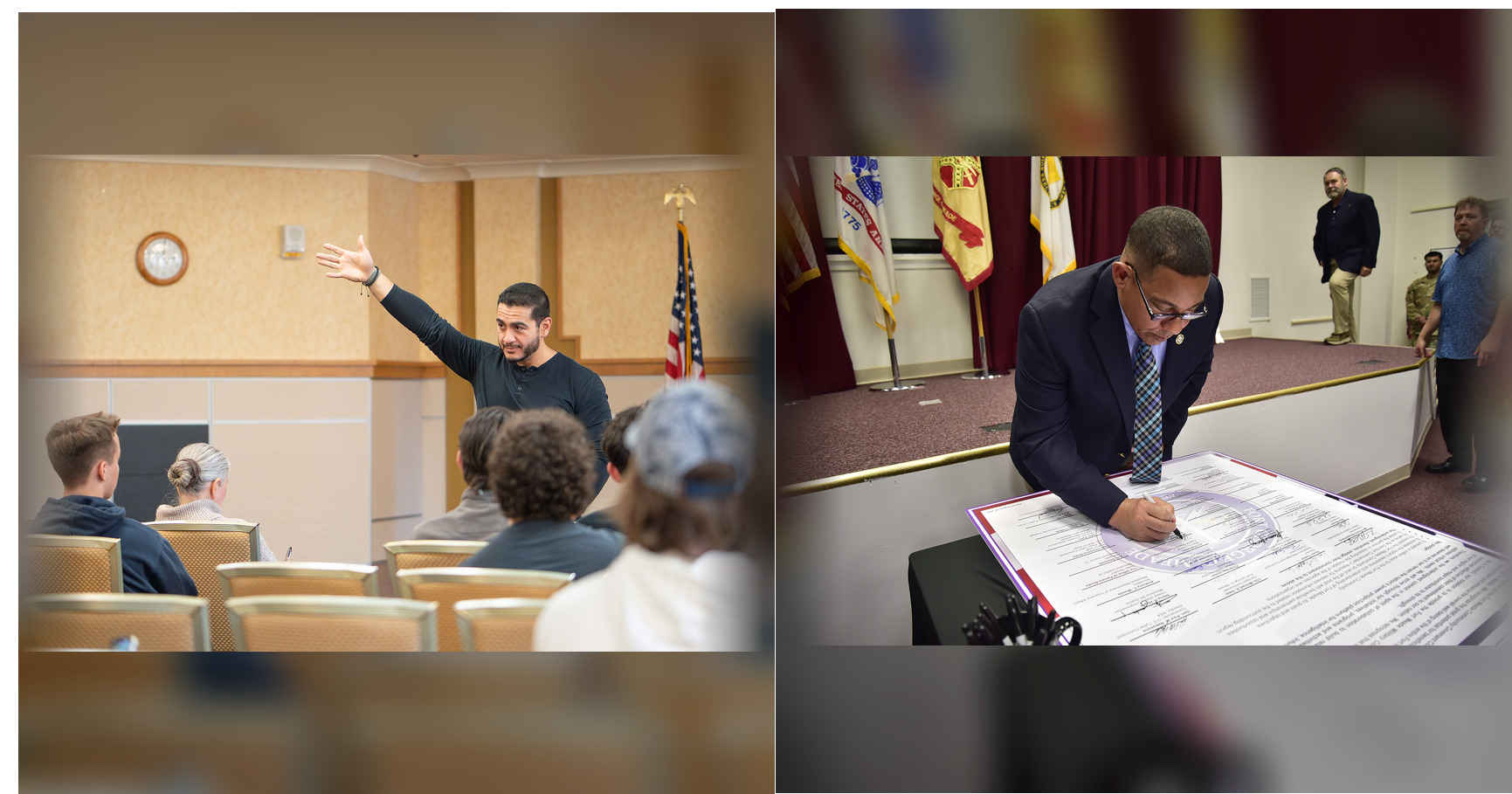
The new surveys offer Democrats reassurance after earlier polls raised questions about Abdul El-Sayed’s general-election strength. They also show why Michigan’s Senate contest is far from settled.
Republicans suffered a major polling setback in the Michigan Senate race as four new polls showed Democratic nominee Abdul El-Sayed leading Republican Mike Rogers. The results, reported this week, give El-Sayed narrow to mid-single-digit advantages in Michigan, a critical 2026 battleground where the outcome could shape the Senate’s balance of power.
The four surveys do not make the race safe for Democrats. They do, however, blunt a recent narrative that Rogers had seized the edge after El-Sayed’s closely fought primary, and they put fresh focus on the voters both campaigns still need to win.
Four polls point in one direction
The four surveys cited by Newsweek each placed El-Sayed ahead of Rogers, though by very different margins. The spread is a reminder that a polling average can be more useful than any single splashy result.

- An AARP poll found El-Sayed ahead 48% to 47% among likely voters.
- Susquehanna Polling & Research put him ahead 46% to 39%.
- A TIPP Insights survey, sponsored by the Republican-affiliated League of American Workers, showed a 45% to 42% El-Sayed lead.
- A GBAO poll sponsored by Senate Majority PAC showed El-Sayed ahead 50% to 44%.
Those are not interchangeable surveys. They used different firms, sample sizes, field dates and sponsors, and each carries its own margin of error. Still, the fact that all four landed on the same side of the race gives Democrats evidence that the earlier worries were not the whole picture.
The closest result, the AARP survey, underscores the central reality: Michigan remains highly competitive. A one-point lead is effectively a snapshot of a tied contest when sampling error is considered.
Why the new numbers matter
El-Sayed’s victory over Representative Haley Stevens in the Democratic primary had prompted concerns within his party about whether a progressive nominee could win statewide in an evenly divided state. Rogers, a former congressman, is betting that he can attract moderates and voters uncomfortable with El-Sayed’s politics.
That argument looked stronger earlier in August. A Fox News poll conducted by Beacon Research and Shaw & Company Research put Rogers ahead 51% to 47%, while a pre-primary EPIC-MRA/MIRS poll showed him leading El-Sayed 46% to 43%.
The new results do not erase those polls. They change the immediate picture from one in which Rogers appeared to have a clear early advantage to one in which El-Sayed is competitive across several fresh surveys.
For Republicans, that means the race cannot simply be framed as a referendum on Democratic doubts about their nominee. Rogers must now make a more affirmative case to voters who may be dissatisfied with both candidates.
Independents are the revealing group
Party loyalty remains strong in the polling. In the AARP survey, El-Sayed won support from 91% of Democratic respondents, while Rogers drew 96% of Republicans. That leaves independent and unaffiliated voters as a particularly important audience in a close state.
In that AARP poll, independents favored El-Sayed 48% to 42%. Susquehanna’s survey also found El-Sayed ahead among independents and unaffiliated voters, 46% to 24%, according to its polling report.
Those results are encouraging for El-Sayed, but they should not be treated as a permanent realignment. Independent-voter samples can be smaller than a poll’s total sample, which means their results can move sharply from one survey to another.
They also signal where the campaign will be fought. Rogers has room to argue that a Republican can appeal beyond the party base, while El-Sayed needs to show that his primary coalition can extend into the suburbs, among unaffiliated voters and across Michigan’s diverse regional electorate.
El-Sayed still faces Democratic tests
The polls contain warning signs for the Democratic nominee alongside the favorable toplines. The AARP survey found El-Sayed ahead among Black voters by 41 points, a large margin but smaller than the 76-point advantage Kamala Harris received among Black Michigan voters in 2024, according to CNN exit-poll data cited by Newsweek.
That comparison is not a forecast of Election Day. Turnout, candidate familiarity and the makeup of the electorate can all differ between a presidential election and a midterm. But it identifies a practical challenge: Democrats cannot assume that traditional voting blocs will turn out or vote in presidential-year proportions.
El-Sayed and Rogers also entered this phase of the campaign with weak favorable ratings in the Susquehanna poll. It found 31% viewing El-Sayed favorably and 45% unfavorably; Rogers registered 28% favorable and 37% unfavorable.
Low favorability can create an unusually fluid race. It gives each candidate an opening to define the other, but it also makes it harder to build support among voters who have not committed to either side.
Trump could reshape the contest
National politics will likely bear heavily on a statewide Senate race. In the Susquehanna poll, 56% of respondents disapproved of President Donald Trump’s job performance, while 38% approved.
Democrats hope to turn the midterms into a judgment on Trump, particularly as voters weigh inflation, household costs and gas prices. If that remains the dominant political mood, it could help El-Sayed hold together a broader anti-Republican coalition.
Republicans, meanwhile, have an incentive to localize the race around El-Sayed’s ideology, the aftermath of the divisive Democratic primary and concerns about whether he represents Michigan’s political center. The campaign’s tone may hinge on which frame proves more persuasive.
Foreign policy could remain part of that fight. U.S. support for Israel was a major point of conflict in the Democratic primary, and Michigan’s sizable Arab American and Jewish communities make the issue politically consequential. El-Sayed has criticized the Israeli government, but it remains unclear how much the issue will affect general-election turnout and persuasion.
A consequential race with time left
The seat is open because Democratic Senator Gary Peters is retiring, making Michigan one of the most consequential Senate contests of the 2026 midterms. Democrats see it as essential to their path toward Senate control; Republicans see an opening in a state that has repeatedly produced close statewide elections.
The polling averages may shift again, especially because voters are still forming impressions after the August 4 primary. El-Sayed won that contest by only one point despite entering it with larger polling leads, a result that gives both sides reason to be cautious about treating surveys as certainties.
For now, the takeaway is narrower but meaningful. Four polls showing El-Sayed ahead have weakened the case that Rogers begins the general election as the clear favorite. They have not weakened the larger expectation that Michigan will be one of November’s hardest-fought Senate races.







Leave a Reply