
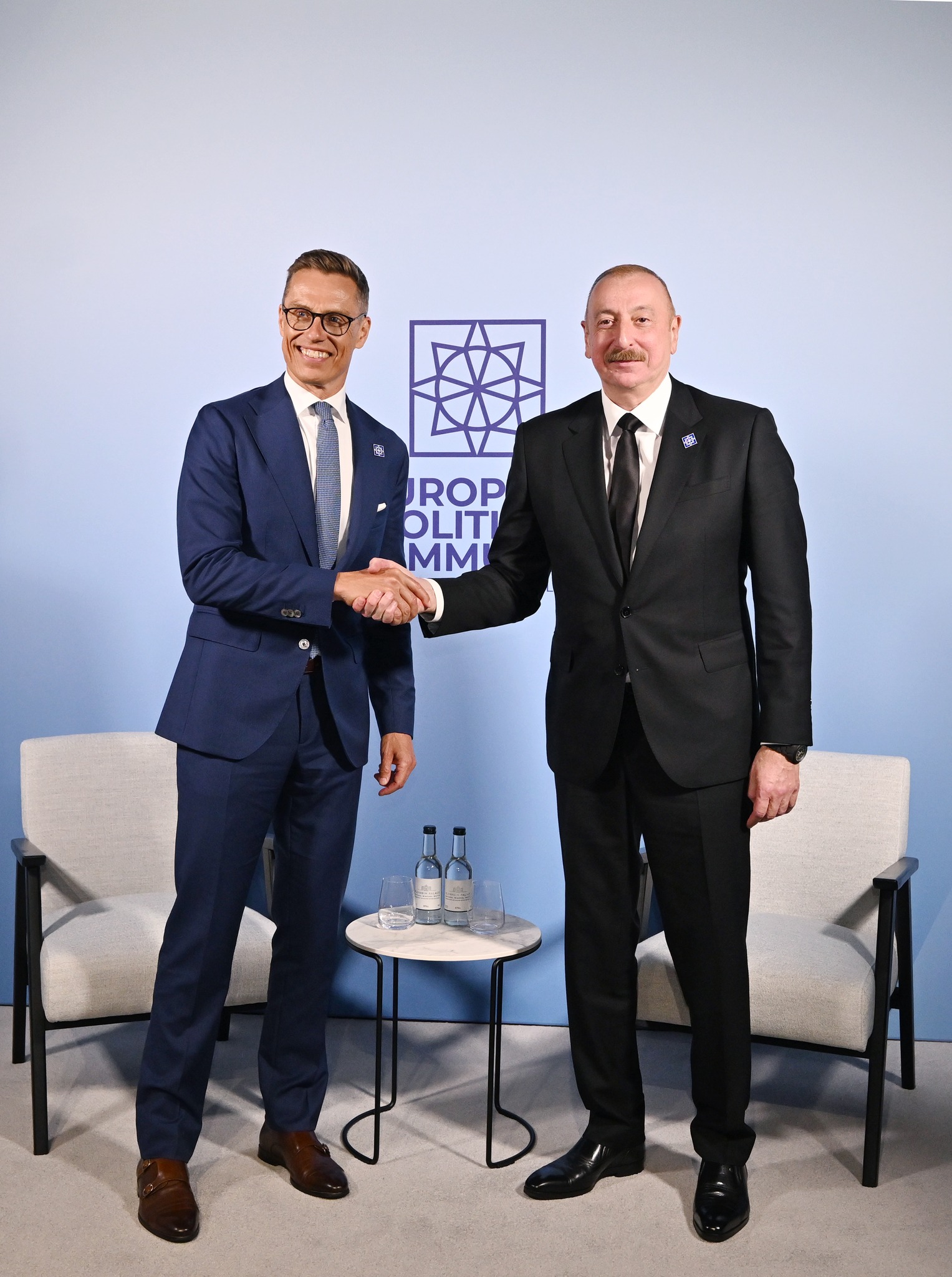
The claim sounds bold while missiles are still falling. But Finland’s president is arguing that Russia’s original gamble has already failed — and that Europe cannot afford to act as if the war is over.
Finland’s president made the kind of statement that can sound jarring in the middle of an active war: Ukraine, he said, has already won.
Alexander Stubb was not saying the fighting is over, or that Kyiv no longer needs help. His argument was sharper than that: Russia’s central objective was to break Ukraine as an independent state, and after more than four years of full-scale war, it has failed to do so.
Stubb’s win is about survival
Speaking to CNBC at a NATO summit in Ankara, Turkey, Stubb said Ukraine had preserved its independence, sovereignty and territorial integrity despite Russia’s full-scale invasion. That, in his view, changes the way the war should be measured.

He compared Russia’s limited battlefield gains in Ukraine with the scale of Soviet advances during World War II. According to CNBC’s account of the interview, Stubb said Russia had advanced about 60 kilometers during the active war, while in World War II it moved from Moscow to Berlin, roughly 1,400 kilometers.
His conclusion was direct: if the question is who achieved their core political goal, Ukraine has survived and Russia has not achieved the outcome it sought.
That is a different definition of victory from the one many readers may instinctively use. It is not a parade in Kyiv or a signed peace deal. It is the survival of a country that Moscow expected to dominate, fracture or force into submission.
Not a claim the war is over
Stubb paired his optimistic assessment with a warning. Ukraine still needs substantial military support, especially air defense, he told CNBC. He specifically said Ukrainian President Volodymyr Zelenskyy needs air defense and that allies must help as much as possible.
That caveat matters. Russian attacks on Ukrainian cities, infrastructure and front-line positions continue to impose heavy costs. A strategic argument that Russia has failed is not the same thing as saying Ukrainians are safe, or that territory no longer matters.
The tension in Stubb’s remarks is the point. Western leaders are trying to keep public attention on Ukraine without suggesting an endless stalemate. By saying Ukraine has already won in one crucial sense, Stubb is trying to reinforce confidence — while still pressing NATO governments to send the weapons Kyiv says it urgently needs.
It is a morale argument and a procurement argument at the same time.
Why Finland’s voice carries weight
Stubb is not speaking from a country far removed from Russia. Finland shares a roughly 1,340-kilometer border with Russia, a geographic fact that shapes Helsinki’s security thinking.
Finland joined NATO in 2023 after decades of military nonalignment, a historic shift driven by Russia’s invasion of Ukraine. Sweden followed in 2024, ending its own long tradition of nonalignment. Together, the Nordic moves expanded NATO’s northern flank and underscored how Russia’s war reshaped European security.
Stubb also brings a long foreign-policy résumé to the moment. He became Finland’s president in 2024 and previously served as prime minister, foreign minister, minister for European affairs and trade, and finance minister.
That background makes his phrasing notable. He is not merely offering encouragement to Kyiv. He is making a case to NATO allies that Ukraine is not a burden on the alliance but a central part of Europe’s defense future.
NATO’s burden shift is accelerating
The Ankara summit, according to CNBC’s reporting, was dominated by Ukraine’s future, Russia’s threat to Europe and the question of how quickly European countries can reduce reliance on the United States.
Stubb described the moment as a shift toward what he called a stronger Europe inside a stronger NATO. He said European allies had heard Washington’s message: take more responsibility for their own defense in wartime, crisis, peacetime and planning.
That message has been building for years across multiple U.S. administrations, but Russia’s invasion gave it new urgency. NATO has said its relationship with Ukraine has become one of the alliance’s most substantial partnerships since the early 1990s, and that allies significantly scaled up practical assistance after Russia’s full-scale invasion in February 2022.
At the 2024 Washington Summit, NATO allies agreed to establish NATO Security Assistance and Training for Ukraine to coordinate military equipment and training. They also announced a long-term security assistance pledge for Ukraine with a minimum baseline of 40 billion euros within the following year, according to NATO.
Sweden echoed the warning
Stubb was not alone in arguing that Russia is failing to achieve its aims. Swedish Prime Minister Ulf Kristersson told CNBC that Russia was “certainly not winning” and said Ukraine was having “spectacular successes.”
Kristersson framed the next phase as a contest over time. His warning was that Russia is betting on Europe becoming tired, distracted or intimidated by the cost of supporting Ukraine.
That is why the Nordic message is less celebratory than it may appear at first glance. If Ukraine has already denied Russia its largest objective, the argument goes, then the danger is not Ukrainian collapse as inevitable fate. The danger is Western fatigue making Russia’s long game more viable.
Kristersson pointed to Europe’s 90 billion euro loan package as a sign of continued backing. He also said Sweden was moving ahead with plans involving Saab-made Gripen fighter jets for Ukraine, including newer aircraft for purchase and older models as support, according to CNBC.
The real test comes next
Stubb’s statement lands because it flips the usual battlefield question. Instead of asking only how much territory Russia holds today, he asks whether Moscow has achieved the political result it wanted. On that measure, he argues, Ukraine’s survival is already a Russian defeat.
But the practical test is still ahead. Ukraine’s air defenses, ammunition supplies and long-term force development remain critical. NATO says allies are committed to helping Ukraine build a force capable of defeating Russian aggression now and deterring it in the future.
The unresolved question is whether Europe can move fast enough. If the U.S. reduces its military footprint or shifts more responsibility to European allies faster than Europe can expand its defense-industrial base, Ukraine could face dangerous gaps.
That is why Stubb’s “Ukraine has won” line should not be read as a victory lap. It is a challenge to NATO: if Russia’s original plan has failed, allies now have to make sure time does not rescue it.






Leave a Reply