
A new focus on Sean “Diddy” Combs comes as the long-delayed prosecution over Tupac Shakur’s 1996 killing moves through a Las Vegas courtroom. The case has revived old allegations, but a reported possibility of charges is not the same as an announced prosecution.
Diddy could face criminal charges, according to reporting that links the potential charges to the murder of Tupac Shakur. The renewed scrutiny arrives as Duane “Keffe D” Davis stands trial in Las Vegas over Shakur’s 1996 killing, bringing a three-decade-old case—and claims involving people beyond the defendant—back into public view.
For now, the key distinction is crucial: the potential charges are linked to the murder of Tupac Shakur, but the available reporting does not establish that Sean “Diddy” Combs has been charged in the case. Davis has pleaded not guilty, and prosecutors must first prove their case against him.
The claim is not a charge
Headlines about a person who could face charges can quickly be mistaken for confirmation that authorities have opened or announced a prosecution. They are not the same thing.
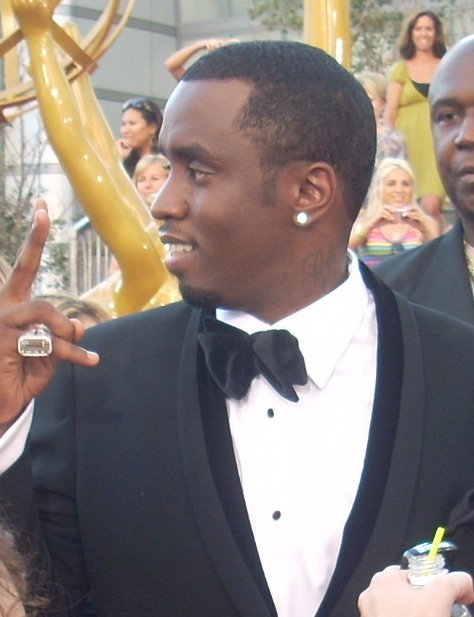
A criminal case generally requires investigators and prosecutors to decide there is sufficient admissible evidence to support a specific allegation against a specific person. That process can involve witness accounts, documents, recorded statements, corroborating evidence and legal review. Public discussion, old accusations and trial testimony may all attract attention without meeting that threshold.
No charging document, court filing or prosecutor’s announcement identifying Combs as a defendant was included in the supplied reporting. That leaves major questions unanswered: what conduct might be under review, which jurisdiction would have authority, what evidence authorities may possess, and whether prosecutors have made any charging decision at all.
Combs should not be treated as charged or convicted in connection with Shakur’s death based solely on reports that charges are possible.
Davis is the defendant on trial
The active case concerns Davis, 63, who was indicted in 2023 and is the first and only person charged in connection with Tupac Shakur’s killing, according to CNN’s trial coverage. He faces one count of murder with a deadly weapon and has pleaded not guilty.
Prosecutors say Davis orchestrated the shooting as revenge after an assault on his nephew, Orlando Anderson, earlier on the night Shakur was shot. Their account does not allege that Davis fired the shots himself; it alleges that he directed or arranged the killing.
Davis’s defense has challenged the strength and age of the evidence. His attorney, Michael Sanft, argued in opening statements that the case lacks reliable facts and criticized the quality of earlier investigative work.
That disagreement is at the center of the trial. Prosecutors must prove their allegations beyond a reasonable doubt, while the defense is testing whether testimony, recorded statements and decades-old investigative leads can satisfy that high standard.
A 1996 killing reaches court
Shakur was shot in a drive-by attack in Las Vegas on September 7, 1996, and died days later at age 25. The murder became one of music’s most enduring unsolved cases, shaped by the era’s East Coast-West Coast rap rivalry, gang allegations and years of public speculation.
The first day of Davis’s trial included testimony from a former officer who encountered Shakur after the shooting and a witness who described hearing gunfire while driving nearby. Prosecutors also presented video connected to the earlier confrontation involving Anderson, according to CNN.
Retired detectives have been called to explain the case’s long, uneven investigative history. One former detective discussed suspicions involving music executives, CNN reported, but suspicions are not findings of fact and do not by themselves establish criminal responsibility.
The lengthy delay creates obvious challenges for both sides. Memories fade, witnesses become unavailable, physical evidence can be harder to interpret, and investigators’ past decisions can become a major part of the dispute before a jury.
Why Combs is back in focus
Combs’s name has circulated around accounts of the Tupac case for years, including claims attributed to Davis in public interviews and his memoir. CNN noted that the trial coverage addressed what Davis had said about Combs and Shakur in that book.
Those claims have long been contested in the broader public conversation surrounding the killing. The fact that an allegation appears in a memoir, interview, news report or court proceeding does not automatically make it proven—or mean every person named in such material faces criminal liability.
The current trial can nonetheless put old statements under a much sharper spotlight. Evidence admitted in court may be evaluated by a jury, challenged by defense lawyers and tested against other accounts. Material that is discussed publicly may never be admitted, or may be given limited weight.
For Combs, the practical issue is whether investigators can substantiate any alleged connection with evidence that prosecutors can lawfully use in court. The reporting provided does not answer that question.
The evidence fight has only begun
One key issue in Davis’s trial is his past statements to investigators. Prosecutors say he provided information during recorded interviews more than a decade ago under a limited proffer arrangement, a setting in which a suspect may share information while exploring a possible deal.
Normally, statements made in that context can carry limits on how they are used if no agreement is reached. Prosecutors have argued that Davis later repeated many of the same claims publicly, and a judge has ruled his prior police interviews admissible, CNN reported.
The defense is expected to challenge the reliability and meaning of those statements. That matters beyond Davis: a case built substantially on a defendant’s own past accounts can raise difficult questions about motive, credibility and corroboration.
Any discussion of Combs in that evidentiary battle should be viewed through the same lens. A mention in testimony or a recorded account can be relevant to a trial narrative without establishing that the person mentioned committed a crime.
What the trial may clarify
The Davis trial may give the public its most detailed courtroom account yet of what prosecutors believe happened on the night Shakur was shot. It could also reveal how investigators assessed competing leads, including leads involving people who are not defendants.
But the proceedings do not guarantee an immediate answer to whether anyone else will be charged. Prosecutors can pursue additional cases, decline to do so, or continue investigating without public action. Their decisions depend on evidence, applicable law and the ability to prove allegations beyond a reasonable doubt.
For now, the confirmed legal proceeding is Davis’s murder trial in Las Vegas. The possibility of Diddy facing Tupac-linked criminal charges remains a reported prospect, not an announced case—and that difference is the most important fact to keep in view as the trial unfolds.










Leave a Reply