
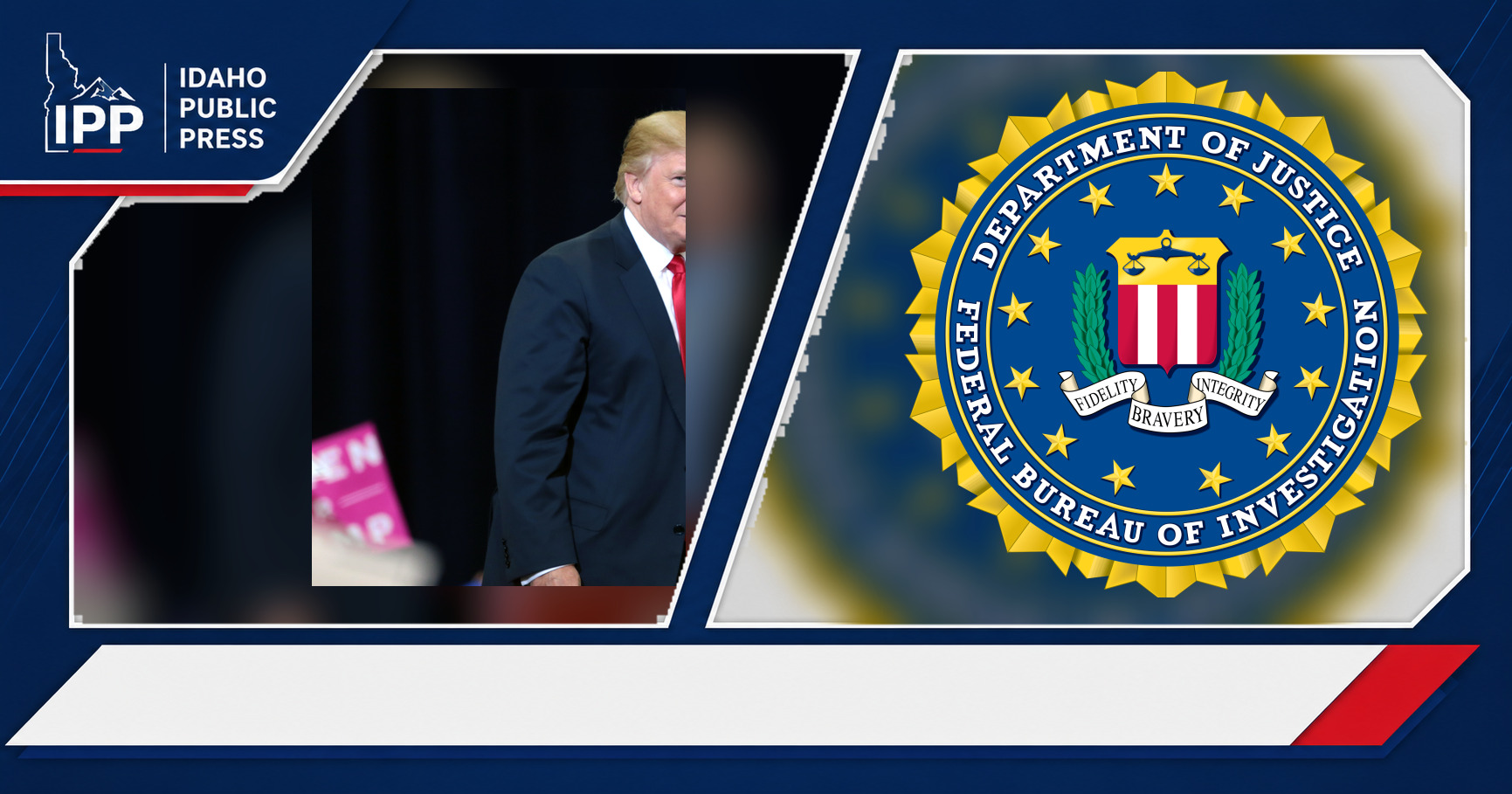
The records offer a closer look at a sensitive 2017 FBI inquiry involving Donald Trump, Russia and the firing of FBI Director James Comey. They also show why the documents are likely to intensify, rather than settle, a long-running political fight over the investigation.
A trove of FBI documents sheds light on the Trump-related probe opened after President Donald Trump fired FBI Director James Comey in May 2017. The documents reveal why the probe fell apart in the practical sense: the FBI closed the matter on April 9, 2019, after Special Counsel Robert Mueller submitted his report and did not bring charges against Trump.
But the newly declassified records do not end the argument over the investigation. They add detail to the FBI’s stated rationale for opening a sensitive inquiry known as Oxferd Comma, while raising fresh questions about what evidence officials had, how they assessed it and whether the decision was justified.
The inquiry began after Comey’s firing
The White House released the memos as declassified material and said they show the FBI opened Oxferd Comma on May 16, 2017, one week after Trump fired Comey. The opening communication said the bureau was examining whether Trump might have been acting, knowingly or unknowingly, on behalf of the Russian government, and whether federal crimes or national-security threats were involved.

According to the records, the inquiry also considered whether Trump and others could have obstructed an associated FBI investigation. The memo cited public explanations surrounding Comey’s dismissal and said an alternative reading of those events could suggest the Russia investigation had been a factor in Trump’s decision.
That timing is central to the renewed debate. Comey’s removal was already a major flashpoint in 2017, and the FBI’s concerns helped set the stage for Deputy Attorney General Rod Rosenstein’s appointment of Mueller as special counsel the next day, May 17.
What the newly released memos say
The FBI categorized Oxferd Comma as a sensitive investigative matter and described it as the least intrusive way to address the national-security risk it identified. The documents say then-acting FBI Director Andrew McCabe and Rosenstein were informed that the inquiry had opened.
The White House release argues that the records are significant because they identify a distinct, coded FBI inquiry focused directly on Trump and on the possibility that he was under Russian influence. It also points to internal FBI material suggesting some investigators had doubts that there was evidence of coordination between Trump’s 2016 campaign and Russia.
One cited May 2017 text from FBI official Peter Strzok expressed concern that there might be “no big there there.” Another record summarized comments from agent William Barnett, who later said he had not seen evidence of collusion between the Trump campaign and the Russian government.
Those statements are consequential, but they are not a complete account of what the FBI knew or believed across all parts of its Russia-related work. Individual agents’ assessments can illuminate internal skepticism without, by themselves, resolving whether supervisors had an adequate basis to open an inquiry.
Closure is not the same as vindication
The closing memo says Oxferd Comma was shut on April 9, 2019, shortly after Mueller delivered his confidential report to Attorney General William Barr. Mueller’s investigation did not establish that members of the Trump campaign conspired or coordinated with the Russian government in its election-interference activities.
On obstruction, however, Mueller’s report took a narrower and more complicated approach. It did not charge Trump, but it also stated that it did not exonerate him. Barr later concluded that the evidence was insufficient to establish an obstruction offense.
That distinction matters when describing why the FBI matter ended. The closure reflects the end of a specific investigative track after the special counsel process concluded; it does not, on its own, prove that every concern raised in 2017 was fabricated or that every investigative judgment was sound.
The broader Russia investigation remains contested
Oxferd Comma was connected to, but not identical with, Crossfire Hurricane, the FBI’s broader counterintelligence investigation into possible links between Russia and Trump’s campaign. The two are frequently blended together in political rhetoric, even though they involved different decisions, timelines and stated purposes.
Trump and his allies have long argued that the FBI and Justice Department pursued an unjustified investigation that damaged his presidency. The White House release adopts that view, saying the bureau’s own information had undercut the premise behind the inquiry.
Critics of that framing point out that U.S. intelligence agencies concluded Russia interfered in the 2016 election and that the FBI had legitimate reasons to examine Russian contacts and efforts to influence American politics. They also note that a decision not to charge Trump with conspiracy did not erase Russia’s interference campaign.
A 2019 Justice Department inspector general report found that the FBI had sufficient factual predicate to open Crossfire Hurricane, while identifying serious errors and omissions in surveillance applications involving former Trump campaign adviser Carter Page. Special Counsel John Durham’s 2023 report sharply criticized the FBI’s handling of the broader investigation and said the bureau should not have opened a full inquiry based on the information it had.
Why the documents are emerging now
The White House said its Government Transparency Task Force identified and declassified the memos. It said the release comes as federal prosecutors in Fort Pierce, Florida, reportedly examine whether officials at the FBI, Justice Department and intelligence agencies engaged in wrongdoing connected to investigations of Trump and his supporters.
The documents’ release therefore has an unmistakable political and institutional context. Declassification can make previously unseen records available for public scrutiny, but it can also foreground a selective set of materials while other records remain classified, redacted or outside the release.
For that reason, the strongest takeaway is limited but meaningful: the memos provide a clearer contemporaneous account of the FBI’s formal rationale for Oxferd Comma and its eventual closure. They do not independently answer every question about the judgment calls behind the investigation.
Questions that still need answers
The newly available papers are likely to sharpen several unresolved issues: what evidence was presented to senior officials before the case was opened, how conflicting assessments inside the FBI were weighed, and whether later reviews will produce additional records that put the memos in fuller context.
There is also a public-interest question larger than Trump. Sensitive investigations involving a president demand a high threshold, rigorous documentation and credible oversight. So do claims that law-enforcement agencies acted for political reasons.
The FBI documents add an important piece to a years-long record. Their clearest contribution is procedural: they show a Trump-focused inquiry being opened in the volatile days after Comey’s firing, routed into the Mueller era and closed after that special-counsel investigation reached its end.




Leave a Reply