
The allegation touches one of the most charged subjects in U.S. politics: whether efforts surrounding the 2020 election crossed into organized violence. But the material provided leaves major factual questions unanswered, making careful attribution essential.
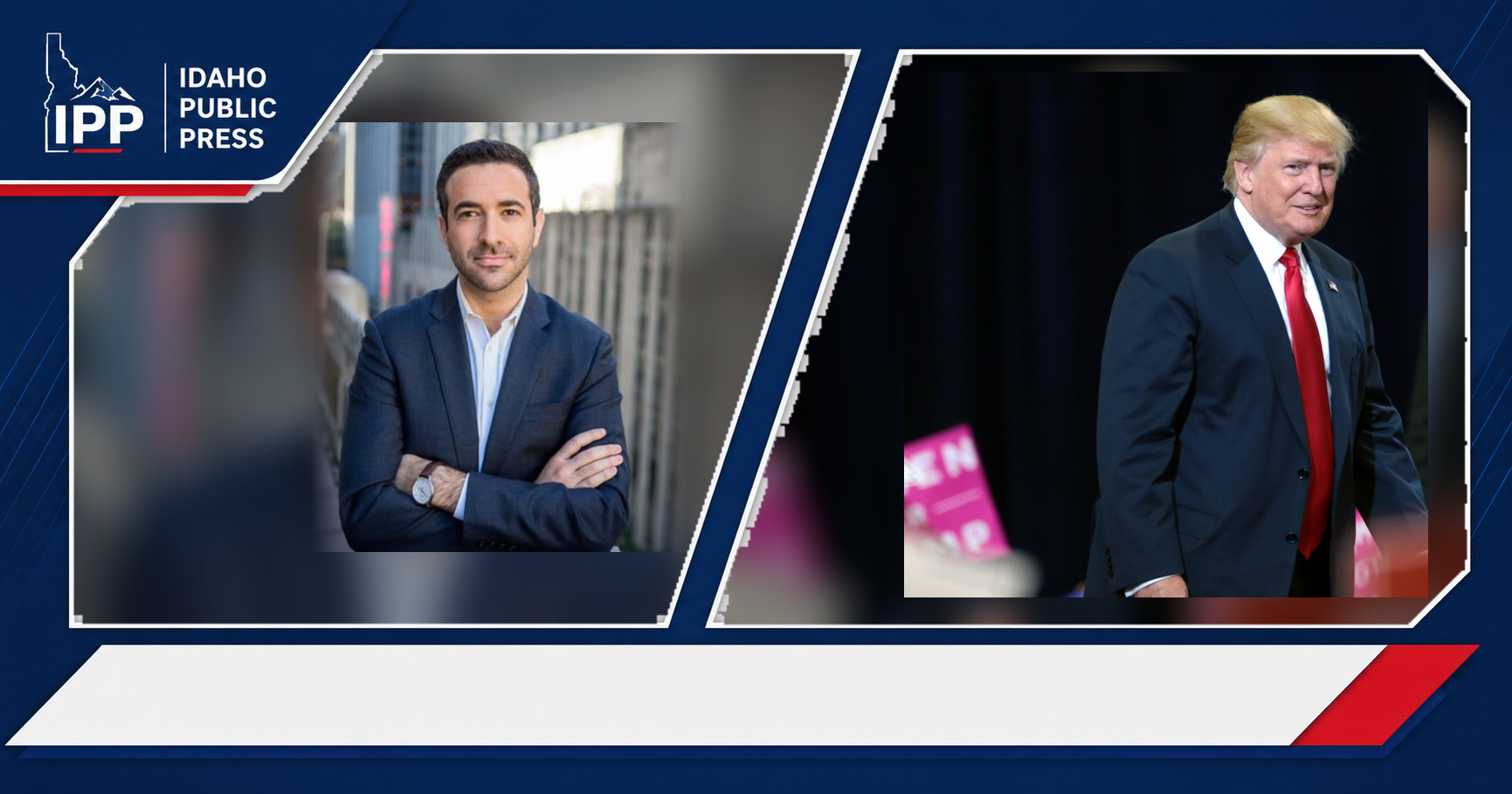
Donald Trump, Ari Melber and an unnamed militia are at the center of a headline saying Trump was “exposed for” a coup-linked militia after he lost a bid to fund it. The supplied record says Melber analyzed Trump’s alleged connection to a coup-linked militia and that Trump lost a bid to fund the militia, but it does not identify the group, the funding request, the official who rejected it or when the purported decision occurred.
That gap matters. Claims connecting a president or former president to a militia and a coup-related effort demand more than a provocative label: they require documents, named participants and a clear account of what was proposed, funded or rejected.
The headline makes a serious claim
The phrase “coup militia” carries a specific and weighty implication. It suggests an organized armed group connected to an attempt to unlawfully disrupt or overturn democratic government.

Yet the supplied source material consists of a headline only. It provides no transcript of Melber’s remarks, no video segment, no reporting identifying the militia, and no underlying record of a Trump funding proposal.
That does not prove the claim is false. It means the claim cannot be independently established from the materials provided here.
What “lost a bid” would require
A funding bid can mean very different things in government and politics. It could refer to a request in a federal budget, an appropriations amendment, a proposed grant, a state-level expenditure, a private fundraising effort, or a legal request for access to money.
Each possibility has a different paper trail. A federal appropriations dispute would normally involve legislation, committee action, agency budget documents or public statements. A court-related request would generally produce filings, orders or docket entries.
Without knowing the mechanism, it is not possible to say who stopped the funding, why it failed, how much money was involved, or whether Trump personally made the request. Those are not minor omissions; they determine what the allegation actually means.
Melber’s analysis is not evidence alone
Melber is an MSNBC anchor and legal commentator whose program often examines court proceedings, government records and political disputes. Commentary can help viewers understand a complicated event, but it is distinct from the primary evidence on which a factual allegation rests.
For a claim of this scale, readers should be able to locate the material Melber relied on: a bill, official memo, sworn testimony, court filing, investigative report or on-the-record statement. The supplied brief does not include any of those items.
The distinction is especially important when a headline uses words such as “exposed.” That term suggests a settled revelation. In practice, public understanding should turn on what has been documented, what remains alleged and what has been disputed.
The known Jan. 6 context
There is extensive public documentation of Trump’s efforts to challenge the 2020 election result and of the violence at the U.S. Capitol on Jan. 6, 2021. NPR reported in August 2023 that a federal grand jury had charged Trump with four felony counts related to alleged efforts to overturn the election.
According to NPR’s account of the indictment, prosecutors alleged that Trump pursued false claims of election fraud, pressured then-Vice President Mike Pence to disrupt certification of the Electoral College vote, and supported strategies involving alternate slates of electors.
NPR also reported that a crowd of Trump supporters marched to the Capitol after Trump’s rally and that people in the crowd breached police lines and entered the building, interrupting Congress’s certification of Joe Biden’s victory. Those facts provide the broad setting in which commentary about coup-related conduct is often made.
But the supplied NPR reporting does not substantiate the separate claim that Trump sought funding for an unnamed militia. The Jan. 6 context cannot fill in evidence missing from a specific funding allegation.
Why labels need precision
Political language can quickly collapse several different questions into one. Was a group actually a militia? Was it formally organized? Was it accused or convicted of crimes? Did it have any direct link to Trump? Was public money, campaign money or private money at issue?
Those distinctions affect both accuracy and accountability. An individual supporter, a loose online network, an extremist organization and a government-recognized militia are not interchangeable categories.
There is also a fair competing view to consider. Trump and his supporters have repeatedly argued that efforts to scrutinize his conduct around the 2020 election have been politically motivated. That position does not resolve a factual claim either way; it underscores why specific evidence should be available and assessed on its merits.
The missing record is the story
The most responsible reading of the supplied headline is narrow: it attributes a claim to Ari Melber about an alleged Trump-linked, coup-related militia and an unsuccessful effort to fund it. It does not, on its own, establish that such a proposal existed or that Trump had the alleged relationship.
To move beyond that limited conclusion, reporting would need to identify the militia by name, explain the alleged connection to a coup-related effort, describe the funding mechanism, specify Trump’s role and cite the record showing the bid failed.
Until those details are produced, readers should treat the assertion as an unverified characterization rather than a confirmed account. In a political climate full of sweeping accusations, precision is not a hedge. It is the difference between analysis and proof.






Leave a Reply