
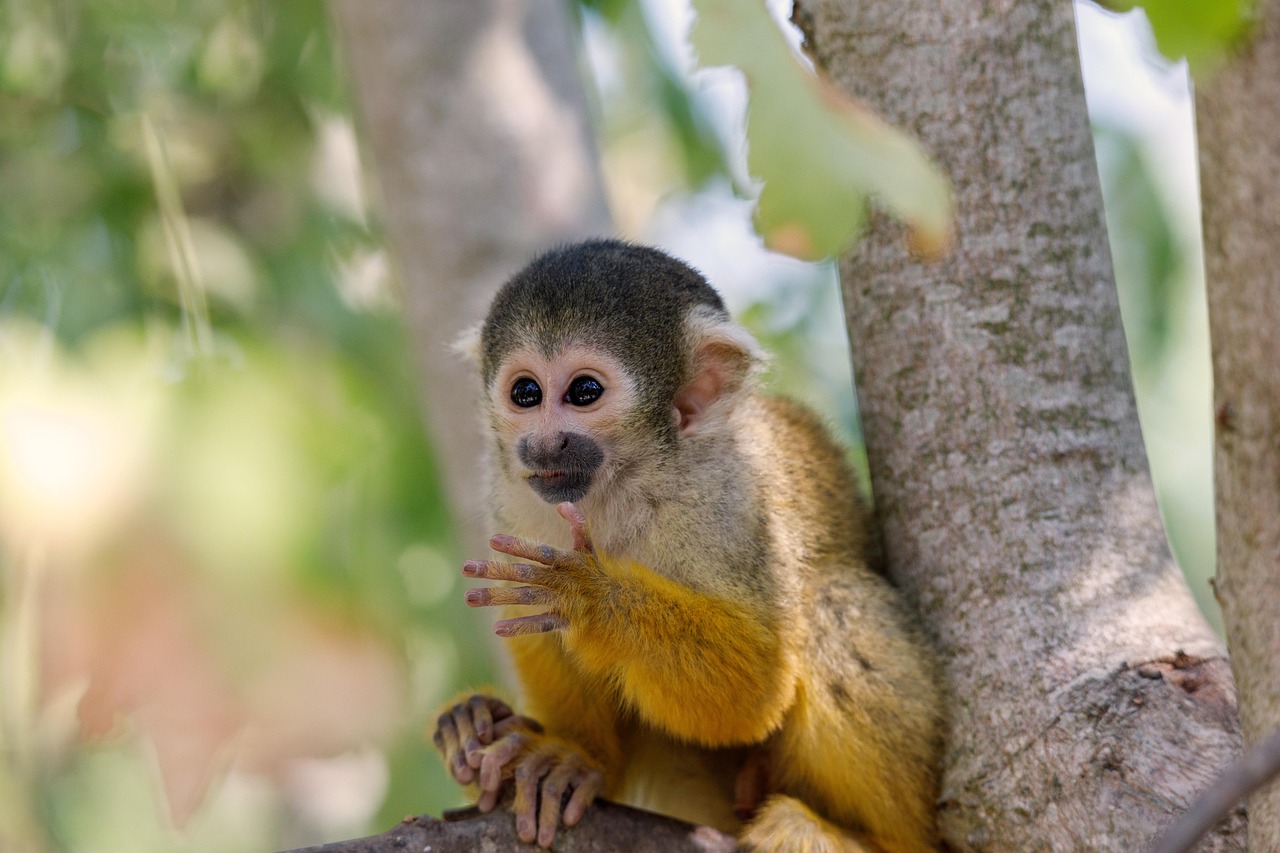
The reported encounter puts a striking predator-prey exchange in focus: an eagle vocalizes, monkeys panic, and the bird remains nearby. Research on primates and raptors shows why those seconds of alarm can be crucial, even if the eagle’s motive is not yet established.
An eagle calls out before hunting monkeys, the monkeys panic, and the eagle watches their response during the reported hunting attempt. The scene matters because monkeys can react with remarkable speed to aerial predators, but the available account does not establish that the eagle’s call was a deliberate tactic designed to trigger panic.
That distinction turns a dramatic wildlife moment into a more interesting question about animal behavior: what can observers reasonably infer from a predator’s sound and a prey group’s sudden response?
What the reported encounter shows
The central claim is straightforward: an eagle vocalized before attempting to hunt monkeys, and the monkeys responded with visible alarm or panic while the bird watched.
It is a vivid sequence, but it should be read carefully. A call before a hunt does not automatically prove the bird intended to flush, confuse or test its prey. The vocalization could have been linked to territorial behavior, communication, agitation, a response to the monkeys, or circumstances that cannot be reconstructed from a short observation.
Wildlife footage and brief field reports often capture the most dramatic seconds of an encounter, not the full chain of events before and after it. Without information on the eagle species, the monkey species, location, repeated observations and the outcome of the attempt, firm conclusions about strategy would go beyond the evidence supplied.
Why monkeys react so quickly
The monkeys’ response is the least surprising part of the exchange. Primates live with real predation pressure from above, and many species have evolved alarm systems that help groups identify danger fast.
A landmark 1980 study by researchers Robert Seyfarth and colleagues found that vervet monkeys gave different alarm calls to different classes of predator. In playback experiments, monkeys hearing an eagle alarm looked upward, while leopard alarms drove them into trees and snake alarms directed attention downward.
That work is often cited because it showed that animal alarm calls can prompt highly specific behavior. In the context of an eagle overhead, a group’s abrupt scanning, calling, bunching together or movement through the canopy is not random chaos. It can be an organized response to a threat from the sky.
Still, “panic” is a human shorthand. A monkey group may look frantic to people while individuals are actually performing distinct jobs: detecting the predator, warning relatives, tracking its direction, protecting young or choosing the safest route through branches.
Raptors are serious primate predators
Large forest eagles are capable hunters of primates. Research on crowned eagles, among Africa’s most powerful raptors, has documented their predation on monkeys and the persistent vigilance that their presence can create in primate groups.
A 2002 paper on crowned eagle foraging noted that monkeys commonly produce alarm calls when they detect crowned eagles, treating those calls as a sign of predation risk. Separate research on blue monkeys found that males adjusted alarm behavior in the presence of a crowned eagle in ways that reflected danger to other members of their group.
Evidence from other regions points in the same broad direction. A published account of a harpy eagle attempting to take an adult howler monkey emphasized the challenge of hunting agile primates in the canopy. Monkeys are not passive prey; they move rapidly, use dense vegetation and benefit from more eyes and ears in a group.
For an eagle, that means a hunting opportunity can change in seconds. For monkeys, early detection can mean the difference between an exposed individual and a group that has already relocated or made the predator’s position known.
A call may carry competing meanings
The tempting interpretation is that the eagle called to make the monkeys panic, then assessed the disorder for an opening. It is possible that a predator could benefit when prey movement reveals a vulnerable individual. But possible is not the same as demonstrated.
Scientists generally need repeated observations, comparisons with quiet approaches, details about the timing of calls and measurable hunting outcomes before identifying a behavior as a deliberate hunting method. One encounter cannot tell us whether calling improves an eagle’s odds or makes the target harder to catch.
There is also a competing possibility: noise may work against a predator that relies on surprise. If the monkeys recognize the eagle’s presence earlier, they may become more vigilant, cluster with others, take cover or broadcast warnings that remove any advantage of stealth.
That tension is what makes the event compelling. The eagle may have been signaling something to the monkeys, to another bird or simply expressing a state of arousal. The monkeys, meanwhile, appear to have treated the sound and the bird as an immediate threat.
Reading behavior without overreading it
Animal behavior stories can make intention feel obvious because the actions occur in such a tight sequence: call, alarm, watch, hunt. Yet behaviorists are cautious about assigning a complex plan when the evidence shows only timing and response.
The more defensible conclusion is that the reported eagle-monkey encounter captures a high-stakes communication environment. The eagle’s presence prompted an urgent response, and the monkeys’ reaction likely changed the conditions of the hunt.
What remains unclear is whether the eagle’s vocalization was part of a repeatable predatory technique, an incidental call or an interaction shaped by factors outside the clip or account. Better documentation would include the species involved, the setting, the number of animals, what happened after the call and whether similar events recur.
For now, the scene is a reminder that a forest canopy is not quiet merely because humans cannot see the action clearly. Calls, movement and attention can rapidly reshape the balance between hunter and hunted.
The takeaway from the canopy
The reported eagle did call before hunting monkeys, and the monkeys did panic as the eagle watched their response. That sequence fits a well-established reality: primates are highly alert to raptor threats, and eagles can be formidable predators.
What it does not yet prove is the story’s most provocative implication—that the eagle intentionally announced itself to manipulate the monkeys. The evidence supports a dramatic encounter and a credible anti-predator reaction. The purpose of the eagle’s call remains an open behavioral question.











Leave a Reply