

Abdul El-Sayed’s unfavorable ratings have raised concerns for Democrats in Michigan. Yet comparisons across the races most likely to decide the Senate suggest Republicans have the broader candidate-image problem.
Abdul El-Sayed is an unpopular Democratic Senate candidate in Michigan, where a Fox News poll found his image 13 points underwater: 42% of registered voters viewed him favorably and 55% unfavorably. Senate Democrats have this one conspicuous problem candidate, but Republican Senate candidates face a broader popularity problem across key races. Michigan is the only crucial race in which Democrats have the more unpopular candidate, according to the available polling averages.
That does not make El-Sayed’s standing irrelevant in a race central to the fight for Senate control. It does complicate the easy read that Democrats alone have a candidate-quality problem. Across the most competitive contests, the larger question is whether voters’ relatively dim view of several Republican nominees will translate into ballots.
Michigan remains a difficult exception
El-Sayed’s numbers give Democrats a clear reason for concern. A candidate who is known well enough to draw substantially more unfavorable than favorable views has less room for error, particularly in a closely matched race.
The Fox News survey cited in the polling analysis also had El-Sayed running roughly even with Republican former Rep. Mike Rogers in a head-to-head matchup, with El-Sayed narrowly behind. That distinction matters: weak favorability is a warning sign, not a final vote count.
Rogers was not viewed positively either. His net image rating in that poll was minus-6, compared with El-Sayed’s minus-13. Michigan is therefore less a case of one broadly popular Republican confronting an unpopular Democrat than a contest in which both candidates have work to do with voters.
Democratic anxiety is understandable because Michigan may be essential to the party’s path to a Senate majority. If the map gives Democrats few routes to gain ground, a weakness in Michigan carries more weight than an identical weakness might elsewhere.
Republicans’ issue spans the map
Michigan stands apart in the broader comparison. CNN’s review of quality polling averages across eight races most likely to shape Senate control found the Republican nominee with a net-positive image rating in only one state: Alaska.
Every Democratic candidate in that group except El-Sayed was in net-positive territory, according to that analysis. In seven of the eight races, the Democratic nominee was rated more favorably than the Republican by between 8 and 24 points.
Those gaps do not establish that Democrats will win seven races. Senate elections are shaped by turnout, party registration, state voting habits, campaign spending and national events. Still, candidate image can be consequential when voters are deciding between two people rather than simply registering a partisan preference.
The pattern also challenges the notion that either party can assess the Senate landscape through one headline-grabbing candidate. El-Sayed may be Democrats’ most obvious image problem, but Republicans have several candidates entering the general-election stretch with similarly weak or weaker ratings.
Maine and Texas show the pressure
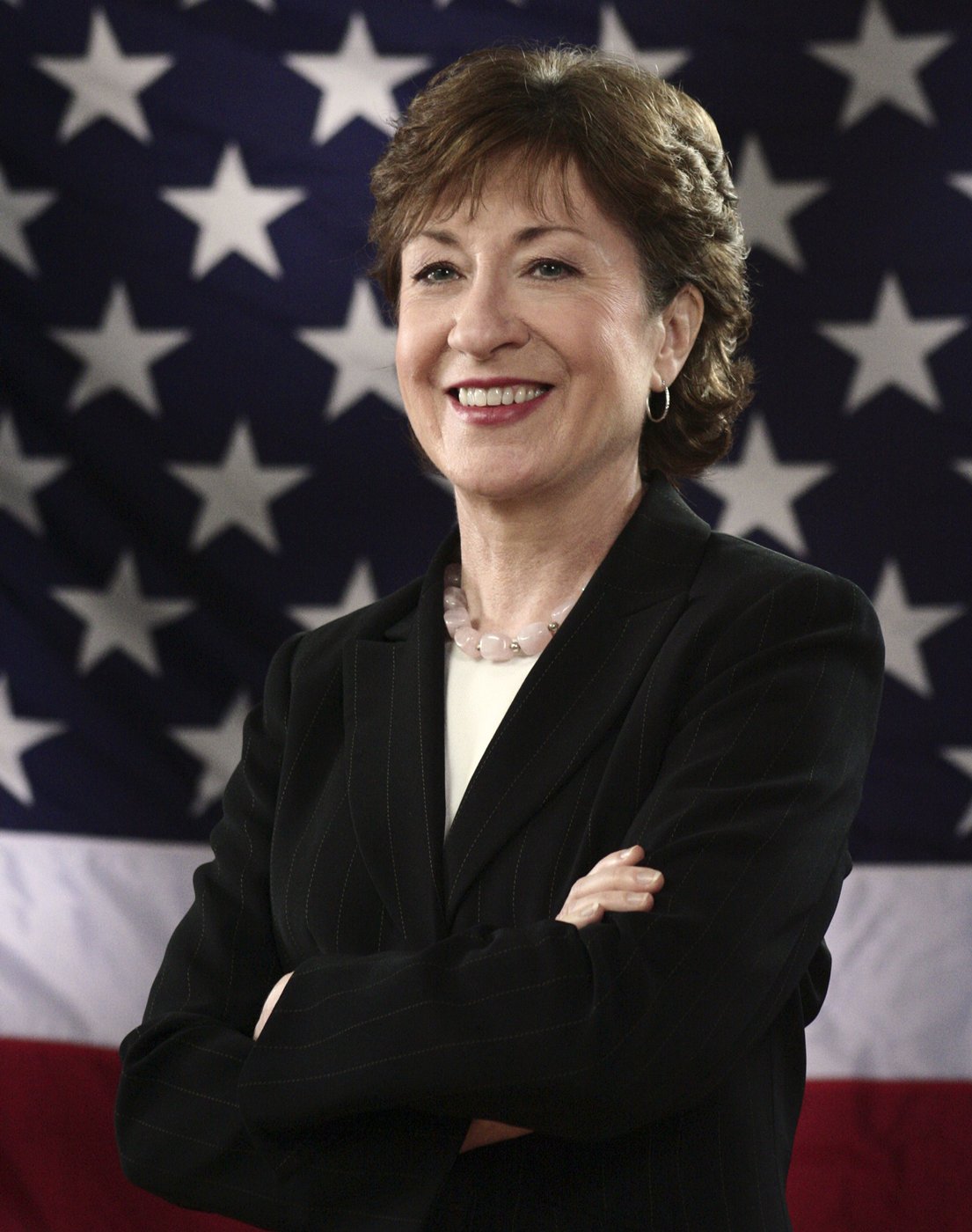
Two of the sharpest examples are Maine and Texas. Polling averages cited by CNN placed Republican Sen. Susan Collins and Texas Attorney General Ken Paxton at minus-12 on net favorability, meaning unfavorable views exceeded favorable ones by 12 points in each case.
In Maine, former state Senate President Troy Jackson had a plus-3 net image rating, creating a 15-point advantage over Collins on that measure. Collins has a long record of winning in a state that leans Democratic in presidential contests, so her personal standing could be especially important to her coalition.
A Fox News poll in Maine found 55% of registered voters were extremely or very concerned that Collins voted with President Donald Trump too often. That is nearly identical to the 54% in the Michigan Fox poll who said they were extremely or very concerned that El-Sayed’s positions were too extreme.
Texas presents a different kind of test. Democrat James Talarico was 5 points above water in the cited averages while Paxton was 12 points underwater, a 17-point spread. Texas remains challenging territory for Democrats, but the contrast illustrates why candidate perceptions can make a theoretically unfavorable state more competitive.
Candidate recruiting may be paying off
The favorable Democratic numbers are not confined to one region. In Georgia, Sen. Jon Ossoff and Republican Rep. Mike Collins had one of the widest image gaps. In Iowa, state Sen. Josh Turek held a similarly strong advantage over Republican Rep. Ashley Hinson.
Former North Carolina Gov. Roy Cooper was 14 points above water in the polling averages, while former Republican National Committee Chair Michael Whatley stood at minus-1. In Ohio, former Democratic Sen. Sherrod Brown was plus-4, compared with minus-5 for appointed Republican Sen. Jon Husted.
Even Alaska, the one race where the Republican candidate had a positive net rating, was not necessarily a Republican advantage on this measure. Sen. Dan Sullivan was plus-1, while Democrat Mary Peltola was plus-9.
The numbers may reflect Democratic recruitment as much as ideology. Familiar statewide figures such as Cooper, Brown and Ossoff have already built public identities. Candidates such as Turek and Talarico may benefit from being less defined by voters, although lower name recognition can become a liability once opposition advertising intensifies.
National politics can still override image
Candidate favorability offers a useful snapshot, not a forecast. A voter can view a nominee unfavorably and still choose that nominee because of party loyalty, views on the economy, abortion, immigration, taxes or the president.
Republicans could also argue that the current ratings partly reflect a national environment in which frustration with Trump is filtering down to GOP candidates, especially those voters see as aligned with him. If the political climate changes, so can perceptions of individual contenders.
Democrats have their own constraint: the party itself is not especially popular, a fact noted in the CNN analysis. Stronger personal ratings for nominees may help them separate themselves from the national party brand, but it is unclear how durable that separation will be in a highly nationalized midterm campaign.
For now, the contrast is straightforward. El-Sayed is a significant Democratic vulnerability in Michigan, and Democrats cannot assume his race will be rescued by better-looking candidates elsewhere. But the available comparisons suggest Republicans are carrying a wider burden: multiple pivotal nominees begin the contest with voters already more skeptical of them than of their Democratic opponents.
The real test is conversion
The next phase will show whether these image ratings harden or move. Campaigns will spend heavily to define opponents, and voters who have not focused on lesser-known candidates will receive far more information before Election Day.
Democrats need to improve El-Sayed’s standing enough to keep Michigan competitive. Republicans need to narrow candidate-image deficits in several states without losing the benefits of states’ underlying partisan lean.
The key takeaway is not that favorability decides Senate control. It is that the personal-popularity ledger, at this stage, looks more favorable to Democratic nominees in most of the races that matter most—even as Michigan gives Republicans a potentially important opening.









Leave a Reply