
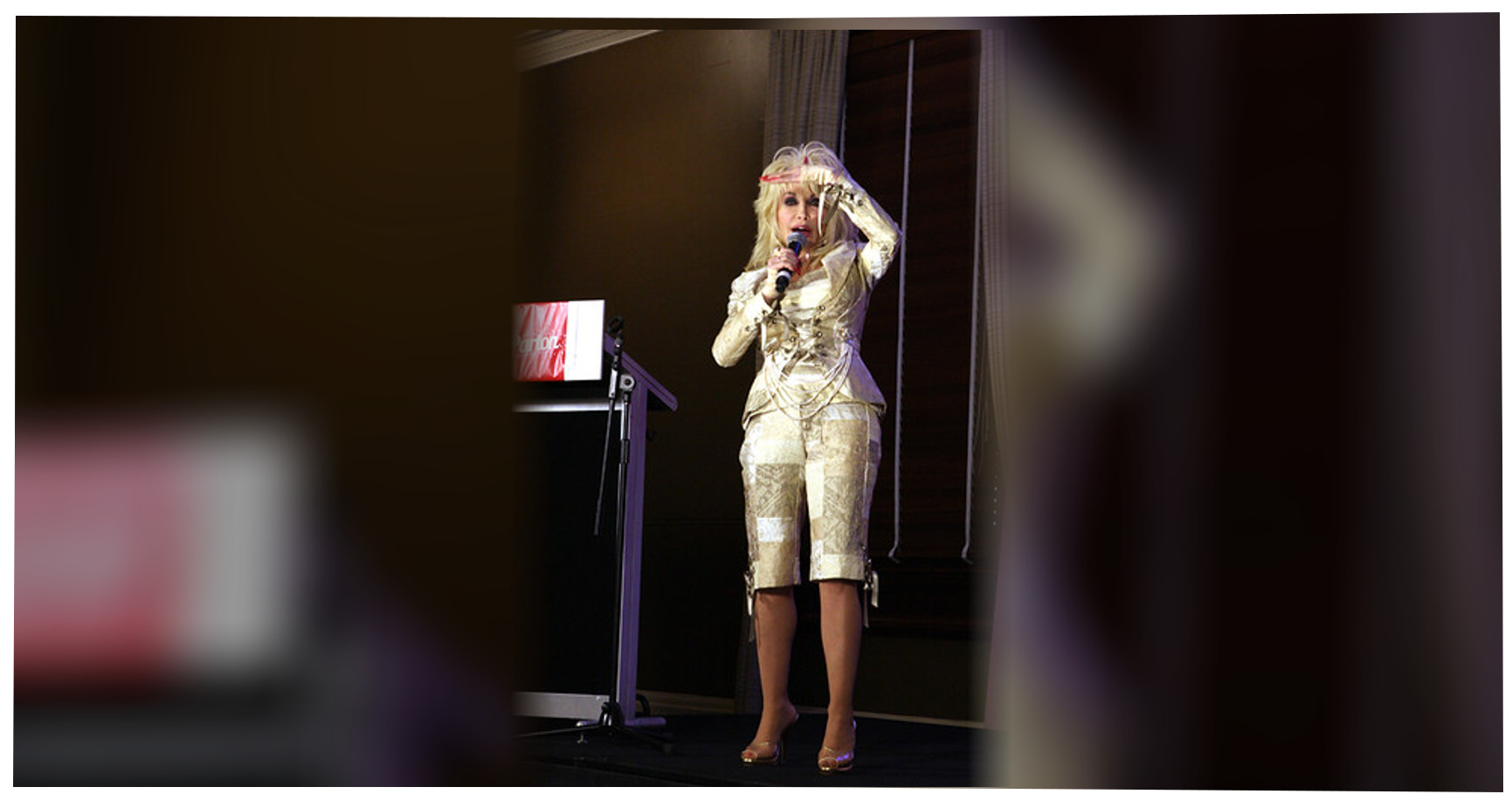
Dolly Parton’s broad appeal was more than nostalgia for a country music legend. Her public life offered a rare model of how a celebrity could speak plainly, stand for compassion and still avoid becoming a partisan symbol.
Dolly Parton could unite a deeply divided country because she transcended political and cultural divisions without pretending those divisions did not exist. After Parton’s death Tuesday, the breadth of grief around her—from country fans and faith leaders to feminists, LGBTQ supporters, Republicans and Democrats—put that unusual reach into focus.
Parton appealed to people across opposing sides through music, humor, faith, business acumen and a public ethic of letting others live with dignity. It was not a magic trick, and it did not mean everyone agreed with her. It meant she built a cultural identity large enough that people with sharply different politics could see some part of themselves in it.
She resisted the partisan audition
Modern celebrity culture often demands a side, a statement and a reaction. Parton generally declined that audition. CNN’s analysis of her legacy described an artist who stayed out of the culture-war machinery while still making her own views clear when she felt it mattered.

That distinction is central to her appeal. Political neutrality can be a way of avoiding consequences, but Parton’s approach was more specific: she resisted endorsing candidates and turning her brand into a party vehicle, while speaking in favor of personal freedom and kindness.
When a false report suggested she had endorsed Hillary Clinton in 2016, Parton clarified that supporting the idea of a woman in the White House was not an endorsement of Clinton. She punctuated the clarification with a joke about having the hair for politics, then moved on. The humor lowered the temperature without making her position disappear.
Her stance also left room for disagreement. Some people will see that professional caution as a wise refusal to deepen division; others may view it as an insufficient response when political questions carry real consequences. Both readings help explain why her example is difficult to copy.
Plain language cut through arguments
Parton had a gift for putting complicated subjects into everyday terms. During a 2016 discussion about restroom access for transgender people, she told CNN that people should be able to use the restroom where they felt comfortable and said she hoped everyone could be who and what they are.
Then came the line that sounded unmistakably like Parton: if she had to pee, she said, she was going to pee. It was funny, unvarnished and direct. More importantly, it translated an abstract national dispute into a basic question of ordinary human need.
That style gave her a way to express compassion without adopting the rigid language of political camps. It also kept her public voice recognizable. She did not sound like a consultant’s statement, a campaign surrogate or a celebrity trying to win a social-media argument.
There is a limit to the lesson. Humor can make a difficult conversation more accessible, but it cannot resolve policy differences or erase the experiences of people directly affected by them. What Parton demonstrated was a way of treating people as human before treating them as symbols.
Her contradictions became common ground
Parton’s public image held together elements that are too often presented as mutually exclusive. She was a country star with pop crossover power, a devout Christian associated with a family-friendly Tennessee theme park, a businesswoman, a performer embraced by drag culture and an actor in the feminist comedy 9 to 5.
She did not spend her career trying to smooth out those contradictions. She leaned into glamour, laughed openly about cosmetic surgery and maintained a persona that was deliberately larger than life. Yet the spectacle was paired with self-awareness, not contempt.
That combination made her hard to place in one ideological box. Fans did not have to agree on every cultural question to recognize her talent, generosity and control over her own career. Parton’s persona could feel traditional and boundary-breaking at the same time.
Her choice to call herself a “woman in business,” rather than embrace every label others offered, also mattered. It reflected an insistence on self-definition. In a public culture that rewards sorting people into categories, she gave audiences fewer easy ways to claim her exclusively.
The numbers showed unusual goodwill
Parton’s appeal was not merely anecdotal. CNN cited an April University of Massachusetts Amherst and YouGov survey of 1,000 people that measured views of globally famous figures. Parton posted a net favorability rating of +65, with strong majorities among both liberals and conservatives.
That put her well ahead of the next most popular person in the survey, former President Barack Obama, at +14. President Donald Trump and former President Joe Biden were in negative territory, a reminder of how difficult it is for political figures to retain broad cross-party affection.
Polls are snapshots, not final judgments on a life or a culture. The survey’s sample size and question design matter, and favorability does not prove that people agree about Parton’s views. Still, the gap captured something visible for decades: Americans who disagreed on politics often agreed that Dolly Parton was worth admiring.
After her death, that shared regard took on a civic dimension. Trump said flags would be lowered to half-staff, and former President Obama had previously said it was a “screw-up” that he had not awarded her the Presidential Medal of Freedom. The tributes came from political worlds that seldom share an emotional register.
Decency was the durable message
Parton’s warmth was not simply a branding strategy, although she was one of America’s most capable self-made brands. Her biographer Martha Ackmann told NPR in 2025 that Parton was shaped by her grandfather’s church and by the biblical idea of withholding judgment.
Ackmann described the quality beneath the big hair, makeup and punch lines as “hardcore decency”: respect for others, compassion and openness. That framing helps explain why Parton could project conviction without presenting contempt as courage.
Her songs also helped. “Jolene” is built around vulnerability rather than conquest, while much of her catalog makes room for longing, loss, love and insecurity. Those are emotions that travel more easily across social groups than a political slogan ever will.
The larger takeaway is not that public figures should never take sides or that politics can be fixed by charm. It is that Parton made people feel less judged before she asked them to hear her. In a divided country, that may be the rarest form of influence.
Why her example remains hard to replace
Parton’s broad acceptance grew over a lifetime, not a news cycle. It depended on an extraordinary body of work, an unmistakable voice, a willingness to laugh at herself and a public record that gave different audiences genuine reasons to care.
That legacy does not erase the country’s conflicts, and it should not be used to demand that everyone avoid difficult conversations. But it clarifies why her loss resonated so widely. Dolly Parton showed that a public figure can have values, humor and ambition without making division the price of attention.
For Americans looking at a fractured culture, her enduring appeal is less a call to imitate her sequins or her one-liners than a reminder of the power of generosity. She made room for people who did not always make room for one another.




Leave a Reply