
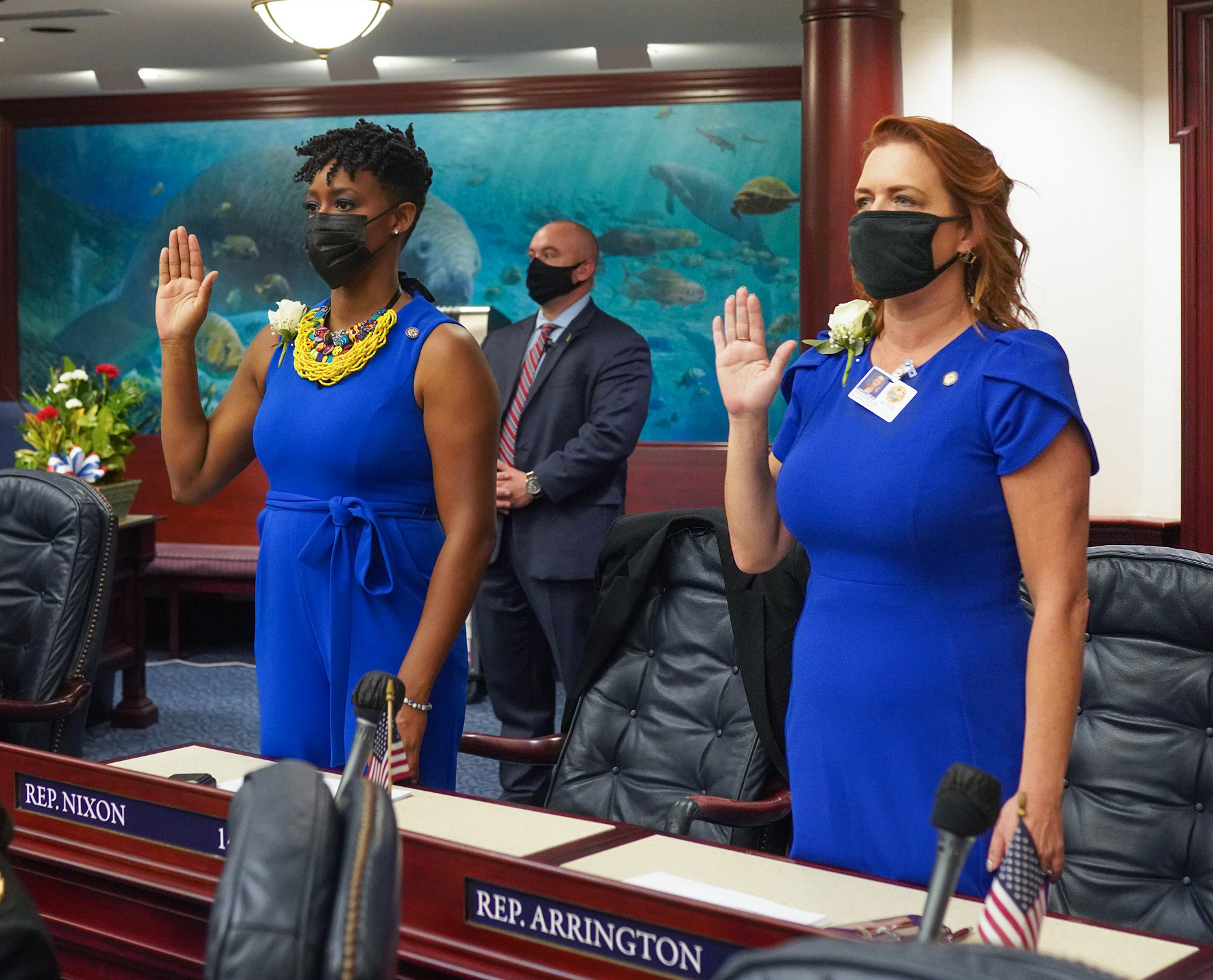
Nixon’s victory puts an outspoken Democratic Socialist at the center of a major Florida Senate contest. It also spotlights the Democratic Party’s continuing argument over how prominently its progressive wing should shape statewide campaigns.
Angie Nixon won the Florida Senate Democratic primary, defeating Alexander Vindman and advancing to a November race against Republican Sen. Ashley Moody. Angie Nixon is a Democratic Socialist and a member of Democratic Socialists of America, making her victory a significant test of the progressive movement’s reach in Florida.
The Florida state representative’s Aug. 18 upset did not simply settle a party nomination. It elevated a candidate who has embraced a working-class economic message, survived a major fundraising disadvantage and signaled she is prepared for an ideologically charged general-election campaign.
A primary upset in Florida
Nixon defeated Vindman, a retired Army lieutenant colonel known nationally for his testimony during President Donald Trump’s first impeachment proceedings in 2019. The Associated Press and Decision Desk HQ called the race shortly after Florida’s polls closed at 8 p.m. ET, according to USA TODAY.
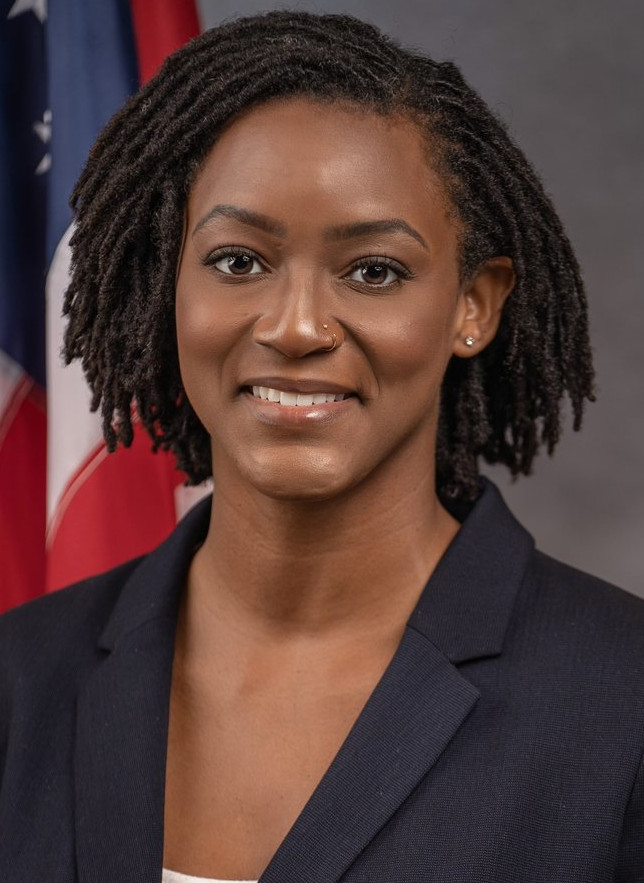
Vindman entered the contest with support from parts of the Democratic establishment. Nixon, meanwhile, had the backing of prominent progressive lawmakers, including Florida Rep. Maxwell Frost, Minnesota Rep. Ilhan Omar and Michigan Rep. Rashida Tlaib.
That split made the primary a clear contest between different visions of Democratic politics. Nixon’s win suggests that endorsements, fundraising and national name recognition do not always overcome an energized local campaign with a sharply defined message.
After the race was called, Nixon thanked people who had put their hearts into the campaign. Her next challenge is considerably larger: winning statewide in a Florida general election against an incumbent Republican.
What Nixon means by Democratic Socialist
Nixon’s campaign confirmed to USA TODAY that she is a member of the Democratic Socialists of America, or DSA. The organization is distinct from the Democratic Party, though some members run as Democrats and work within its electoral coalition.
Democratic socialism covers a range of views, but Nixon has centered her campaign on policies that put a greater role for government and organized labor at the center of economic life. Her platform includes universal health care, higher taxes on wealthy people and raising the federal minimum wage to $25 an hour, according to her campaign.
In her victory speech, Nixon framed those priorities as practical concerns rather than an ideological exercise. She spoke about living wages, housing, child care, public education, veterans, immigrants and family farmers.
She has also pushed back on the idea that a political label should be the whole story. In an NBC News interview before the primary, Nixon said people could argue about labels but that she was focused on people’s needs. Still, her DSA membership is likely to be a major feature of the race ahead because Nixon’s opponents now have a clear ideological contrast to emphasize.
The November matchup takes shape
Nixon will face Ashley Moody, the Republican senator seeking to serve the remainder of the term won by Marco Rubio in 2022. Rubio left the Senate after becoming secretary of state.
The general election will put Nixon’s progressive agenda against a Republican incumbent in a state where the GOP has recently held a strong statewide advantage. That does not make the Democratic nomination unimportant; it makes the way Nixon builds her coalition especially consequential.
Nixon has already indicated she expects attacks focused on her politics. In her victory speech, she said Moody and wealthy donors were afraid of a united working-class movement and accused corporate politicians of doing whatever they could to win.
Republicans will likely argue that Nixon’s policy agenda is too far left for Florida voters. Nixon and her allies are likely to counter that rising costs, pay, housing and health care are the more immediate issues facing households. The contest will test which argument has broader appeal beyond a Democratic primary electorate.
A wider Democratic Party fight
Nixon’s win arrives during a continuing debate over the direction of the Democratic Party. Progressive candidates and DSA members have won notable primaries in some districts, particularly in places with strong left-leaning organizing networks. But those gains have not produced a uniform pattern.
USA TODAY noted that other candidates aligned with the party’s left lost Florida races on the same night Nixon prevailed. Elijah Manley lost his challenge to Rep. Debbie Wasserman Schultz, while Oliver Larkin lost to Rep. Jared Moskowitz.
Those outcomes matter because they complicate any broad claim that one ideological wing has taken control. Nixon’s result may reflect the strength of her own campaign, Jacksonville-area roots and coalition as much as it reflects a statewide shift toward democratic socialism.
There is also an important distinction between being progressive, being a democratic socialist and belonging to DSA. Candidates may overlap on policy while using different political identities. Nixon has chosen to be unusually direct about hers, which could motivate supporters and sharpen opposition at the same time.
Nixon’s record will draw scrutiny
Nixon is a Jacksonville native who lives in the city’s Moncrief neighborhood. Before serving in the Florida Legislature, she worked as a district aide to former state Rep. Mia Jones, according to her campaign biography.
Her activism will also be part of the general-election story. Nixon was arrested in May after staging a sit-in at Gov. Ron DeSantis’ office to protest mid-cycle redistricting. She has said she sought a conversation about fair representation and voting rights.
DeSantis described the action as “performative nonsense.” Nixon faces misdemeanor charges of trespassing and resisting an officer without violence and was scheduled to appear in court Sept. 21, according to USA TODAY. The charges are allegations, and no conviction was reported in the source material.
Supporters may view the protest as evidence of Nixon’s willingness to confront Florida’s Republican leadership. Critics may present it as a question about judgment. How that episode develops legally and politically remains unresolved.
The stakes go beyond one seat
If Nixon wins in November, she would become the first DSA member in the U.S. Senate, according to USA TODAY. The campaign says she could also become Florida’s first Black U.S. senator.
Those potential milestones explain why the primary result has attracted attention well beyond the district-level political circles that first knew Nixon as a state representative. Her candidacy joins questions of representation, ideology and electoral strategy in a single statewide race.
For now, the clearest fact is that Florida Democrats selected Nixon over a better-known national figure. The next phase will show whether her candidacy can broaden from a primary coalition into a statewide one—and whether an explicit Democratic Socialist identity becomes an asset, a liability or both.







Leave a Reply