
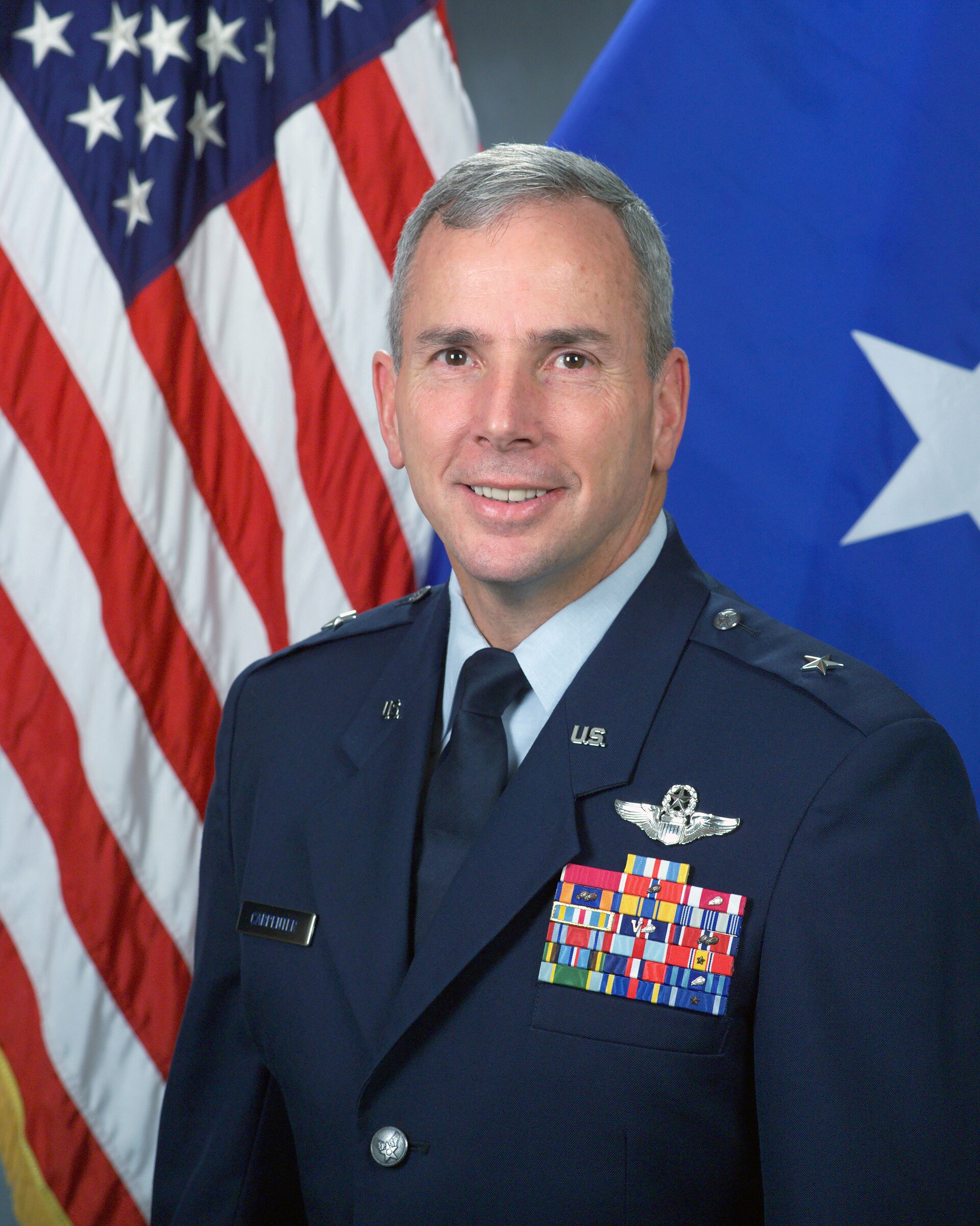
The case puts an unusual military-law provision at the center of a dispute over an officer’s public criticism of a president. Watson has not been convicted, and major decisions about any court-martial remain ahead.
Maj. Jason Watson, a U.S. Air Force officer, was criminally charged Monday after criticizing President Donald Trump and calling for Trump’s impeachment, including at a U.S. Capitol protest in July. The charges include three alleged violations of Article 88 for contemptuous remarks about Trump, five alleged violations of Article 92 and two alleged violations of Article 133—an unusually rare use of military law tied in part to Watson’s June interview and public actions.
Watson has not been convicted. But the case matters because it brings one of the military’s least-used speech-related provisions into a highly visible political dispute, raising questions about where service members’ obligations end and personal political expression begins.
The allegations against Watson
According to a charging document shared with CNN by Watson’s attorney, the Air Force major faces 10 alleged violations of the Uniform Code of Military Justice, or UCMJ. The document includes three Article 88 specifications, which bar commissioned officers from using contemptuous words against the president and certain other senior civilian officials.

The five Article 92 allegations concern claimed failures to obey orders or regulations. Prosecutors allege that Watson supported partisan causes in violation of Defense Department rules, wore his uniform at a Capitol press conference, violated leave rules by traveling to Washington, and declined to wear his uniform to work the morning after a CNN interview.
The final two allegations fall under Article 133, which prohibits conduct unbecoming an officer. Prosecutors say Watson’s Capitol protest and his CNN appearance constituted such conduct.
Each allegation remains an accusation. The charging document lays out the government’s claims; it does not establish that Watson violated the code or that a military court will ultimately find him guilty.
Why Article 88 stands apart
Military members do not surrender all constitutional protections, but their speech and political activity are subject to rules that would not ordinarily govern civilian workers. The UCMJ reflects the military’s emphasis on discipline, civilian control and public confidence in an armed force that is expected to remain institutionally nonpartisan.
Article 88 is especially narrow because it applies to commissioned officers and focuses on contemptuous language about named officials, including the president. The issue is not merely whether a statement is political or sharply critical. The legal question can turn on whether it meets the military’s standard for contemptuous language and the circumstances in which it was made.
Retired Army judge advocate Frank Rosenblatt told CNN that the standard is not especially precise. He described contemptuous remarks as language that is insulting, rude, disdainful or disrespectfully attributes worthlessness or disreputableness to an official.
That ambiguity may be central if Watson’s case advances. His defense could argue that his remarks were protected fair criticism, while prosecutors may contend they crossed the line Article 88 draws for officers.
A protest in uniform
The allegations are not limited to Watson’s comments about Trump. CNN reported that the Article 88 accusations relate to a June interview with the Defenders of our Republic Substack newsletter, Watson’s July 1 appearance in uniform at the U.S. Capitol, and an August 17 CNN interview.
At the Capitol, Watson called for Trump’s impeachment. CNN reported that he was arrested while protesting in uniform and was arrested again after criticizing Trump in a later television interview.
The prominence of the conduct appears to be a key factor in why the matter has become a formal criminal case rather than a lower-level administrative or disciplinary response. Military rules generally restrict troops from participating in overtly partisan political activity while in uniform, even though service members may vote, hold personal political views and engage in certain political activities as private citizens.
Air Force Secretary Troy Meink said in a July social-media post that airmen must comply with laws and policies governing personal conduct, political participation and uniform wear. He said the service could not compromise the public’s trust.
Rare charges, limited precedent
The Article 88 component is what makes Watson’s case particularly unusual. CNN’s review found only two convictions involving contempt of officials since the modern UCMJ was enacted in 1951.
One was the 1965 case of Army Lt. Henry Howe, who was convicted after participating in an off-base protest against the Vietnam War in El Paso, Texas. Howe received dismissal from the service and a year in military prison, though Defense Secretary Robert McNamara later granted him parole.
The more recent example came in 2021, when former Marine Lt. Col. Stuart Scheller pleaded guilty to contempt of officials and other charges connected to social-media videos criticizing the Biden administration’s handling of the Afghanistan withdrawal. Scheller’s plea agreement included a $5,000 pay forfeiture and his resignation from the Marine Corps without a pension.
The differences matter. Each case involves its own language, setting, orders, rank and record. Prior cases offer context, not a preset outcome for Watson.
Watson’s defense and confinement
Watson’s attorney, Chris Mutimer, told CNN that Watson was ordered into pretrial confinement, a military measure comparable in some ways to being held without bond before a civilian trial. Mutimer said Watson was effectively in solitary confinement for safety reasons.
Mutimer portrayed his client as acting out of commitment to the Constitution and the oath he took as an officer. The founder of the Removal Coalition, which organized the July protest, told CNN that Watson understood the personal and professional risks when he contacted the group.
That account is likely to sharpen the case’s public debate. Supporters may see Watson as an officer voicing an alarm about constitutional government. Critics may see an officer using his position and uniform in ways that undermine the military’s nonpartisan role.
The military justice system will have to separate those larger political arguments from the specific questions in the charging document: what Watson said, whether the words were legally contemptuous, what orders or regulations applied, and whether the alleged conduct met the standards for an officer.
Key decisions still ahead
It remains unclear whether the case will be referred to trial. A preliminary Article 32 hearing could be used to examine the evidence and evaluate whether the charges should move forward.
If there is a court-martial, the Air Force must also decide what type. A special court-martial is broadly comparable to a misdemeanor-level proceeding, while a general court-martial can impose more serious penalties.
The immediate fact is that Watson faces formal military accusations, not a final judgment. The broader significance lies in Article 88’s rare return to the spotlight—and in how the Air Force applies rules meant to keep the armed forces disciplined and politically neutral during an intensely polarized period.





Leave a Reply