
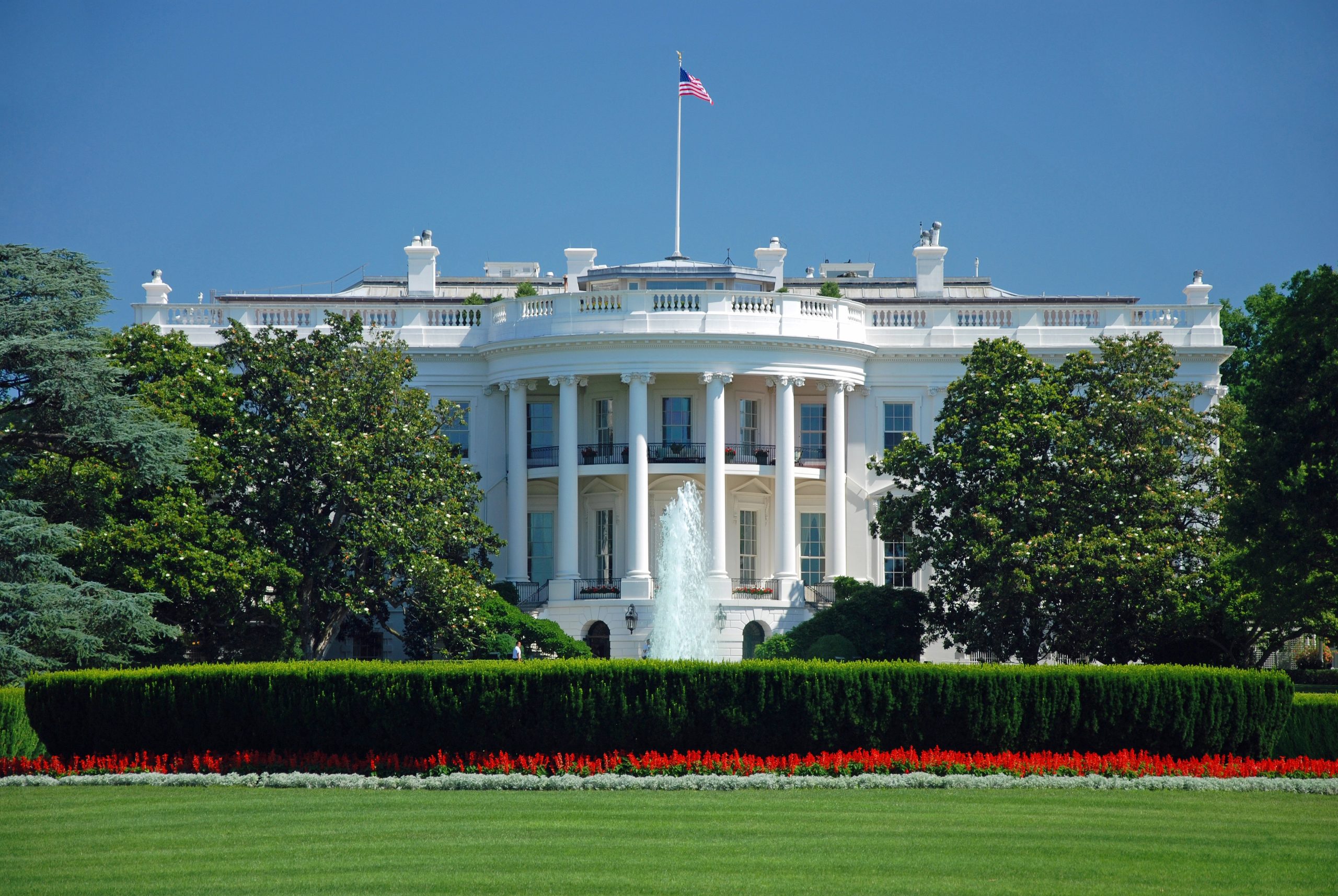
White House officials reportedly intervened ahead of President Donald Trump’s July 16 election-security speech to prevent the public identification of intelligence personnel whom administration allies accused of suppressing information about foreign election activity.
Two anonymous senior administration officials told Politico that acting Director of National Intelligence Bill Pulte had pushed to name certain personnel in the days leading up to the address. According to the officials, White House aides opposed the proposal because publicly identifying individual analysts could subject them to harassment, threats or potential violence.
The report is based on private discussions and has not been independently verified through publicly available records. According to the submitted article, Pulte did not respond to Politico’s request for comment.
Trump did not identify any intelligence analysts during the speech.
Reported Debate Over the Speech
The unnamed officials said senior White House officials, including chief of staff Susie Wiles, were also concerned that naming individuals would divert attention from the administration’s wider arguments about weaknesses in election systems.
According to the officials, aides encouraged Trump to adhere to prepared remarks and address the issue in a more measured way. They further claimed that Pulte abandoned his proposed release of the names before the address.
The original version included an official’s speculation about Pulte’s emotional response and profane descriptions of earlier speech drafts. Those comments have been excluded because they provide limited factual value and reflect the subjective interpretation of an anonymous source.
A White House spokesperson defended the administration’s broader election policy without directly responding to the reported internal dispute.
“President Trump and millions of Americans agree that we must have integrity in our elections, otherwise we have no country at all,” spokesperson Davis Ingle said in the original report.
What Trump Released
In his July 16 address, Trump announced the release of formerly classified documents dealing with foreign access to voter data, weaknesses in electronic voting systems and the intelligence community’s handling of election-related reports.
The White House launched an election-integrity website containing the records and maintained that the documents showed extensive vulnerabilities and the suppression of intelligence involving China. Those interpretations represent the administration’s conclusions about the material.
The documents did not demonstrate that China or any other foreign actor changed voter-registration systems, ballots, vote-counting processes or officially reported results during the 2020 election.
A declassified intelligence-community assessment published in March 2021 stated that agencies had no evidence that a foreign actor attempted to alter any technical component of the voting process. It also concluded with high confidence that China considered, but ultimately did not conduct, an influence campaign intended to affect the election outcome and did not carry out interference operations.
The assessment did identify foreign influence efforts by other governments, including Russia and Iran. Foreign influence generally involves attempts to affect public attitudes, while interference may include more direct or covert actions. Neither term should be presented as evidence that fraudulent votes were submitted or that vote totals were changed.
Trump also claimed that China had acquired information associated with roughly 220 million American voters. The released records did not establish that such information was used to manipulate ballots or election outcomes, and certain voter-registration data is publicly accessible under state laws. Independent examinations of the newly released material concluded that it did not support allegations of widespread fraud in the 2020 election.
Pulte’s Current Roles
William J. Pulte serves as acting director of national intelligence while remaining director of the Federal Housing Finance Agency.
The original report inaccurately described him as a former housing official. FHFA continues to identify Pulte as its director, and the Office of the Director of National Intelligence lists him as the acting leader of the intelligence community.
Pulte took over the acting intelligence role on June 19 after Tulsi Gabbard’s departure. On June 11, President Trump announced that he intended to nominate Jay Clayton, the U.S. attorney for the Southern District of New York and a former chairman of the Securities and Exchange Commission, to serve as permanent director.
Clayton testified before the Senate Intelligence Committee on July 15. Committee Chair Tom Cotton said the panel intended to vote on the nomination the following week, but Clayton had not been confirmed when the submitted article was prepared.
The article therefore should not claim that Clayton’s confirmation is certain or that he is definitively “expected” to be confirmed in the near future.
Scrutiny of Pulte’s Record
Pulte had previously drawn controversy in his role at FHFA after submitting mortgage-fraud referrals concerning several of Trump’s political opponents, including Federal Reserve Governor Lisa Cook and New York Attorney General Letitia James.
Those targeted denied any wrongdoing. News reports also questioned whether Pulte avoided standard internal ethics and inspector-general procedures when making some of the referrals. Because the related legal matters have produced different or still-unresolved outcomes, they should not be reduced to the claim that none resulted in convictions.
Pulte also supported the introduction of 50-year home loans. Advocates said longer repayment periods could reduce monthly mortgage costs, while opponents warned that homeowners would accumulate equity more slowly and pay considerably more interest over the life of the loan.
These disputes offer relevant context but should not be characterized with editorial terms such as “bombastic” or “widely panned” unless those descriptions are clearly attributed to identified sources.
The SAVE Act Distinction
The White House used Trump’s remarks to call on Congress to pass an election proposal it refers to as the SAVE America Act.
The terminology requires clarification. H.R. 22 is formally titled the Safeguard American Voter Eligibility Act, commonly known as the SAVE Act. The legislation would modify federal voter-registration rules by requiring documentary proof of U.S. citizenship to register for federal elections. The House approved that version on April 10, 2025, but it had not become law by the date of Trump’s address.
The White House’s use of “SAVE America Act” refers to a wider policy campaign that includes voter-identification rules and additional election-related changes. The administration’s preferred branding should not be presented as though it necessarily represents the official name or precise provisions of one pending piece of legislation.
Republicans continued considering legislative strategies to advance portions of Trump’s election agenda in July 2026, although the likelihood of enactment remained unclear.
What Is Verified and What Remains Unconfirmed
It is confirmed that Trump delivered a prime-time speech on July 16, released documents concerning election security and advocated stricter voting legislation.
It is also confirmed that Pulte was simultaneously serving as acting director of national intelligence and director of FHFA, while Clayton’s nomination was still awaiting Senate action.
Claims that Pulte sought to identify intelligence officials, that Wiles intervened and that Pulte later withdrew the proposal rely on accounts from two unnamed administration officials. No public speech draft, internal memorandum or statement from Pulte has confirmed that reported sequence.
The article may describe those allegations, but anonymous sources’ claims about another person’s intentions, fears or emotional state should not be reported as established fact.
The wider election-security context also demands careful wording. The United States faces legitimate threats from cyberattacks, foreign influence operations and weaknesses in election technology. The documents released by Trump, however, did not prove that foreign actors changed ballots, manipulated vote totals or altered the result of the 2020 presidential election.






Leave a Reply