
The reported message from the nuclear-powered USS Abraham Lincoln is less about one ship than the pressure modern conflict puts on the Navy’s people, deployment plans and carrier strike groups. Publicly available details remain limited, but the readiness debate is real.
USS Abraham Lincoln, the U.S. Navy’s nuclear-powered aircraft carrier CVN-72, has a reported message for the U.S. Navy: it did not plan for the war it is now facing. That framing puts Navy preparedness at the center of the story, using the carrier’s experience to question whether deployment schedules, maintenance cycles and crew endurance match the demands of a real-world conflict.
The available reporting does not establish that the ship itself issued a formal institutional warning, and the precise circumstances behind the phrase are not fully clear in the research provided. But the USS Abraham Lincoln’s reported lesson matters because carriers are designed to give U.S. leaders flexible military options—and flexibility can be strained when a mission lasts longer, changes faster or becomes more dangerous than planners expected.
A carrier is more than a ship
The USS Abraham Lincoln is the fifth Nimitz-class nuclear-powered aircraft carrier, according to Naval Air Force, U.S. Pacific Fleet. Its nuclear reactors allow it to operate for long periods without conventional refueling, but that does not make the ship independent of the system around it.
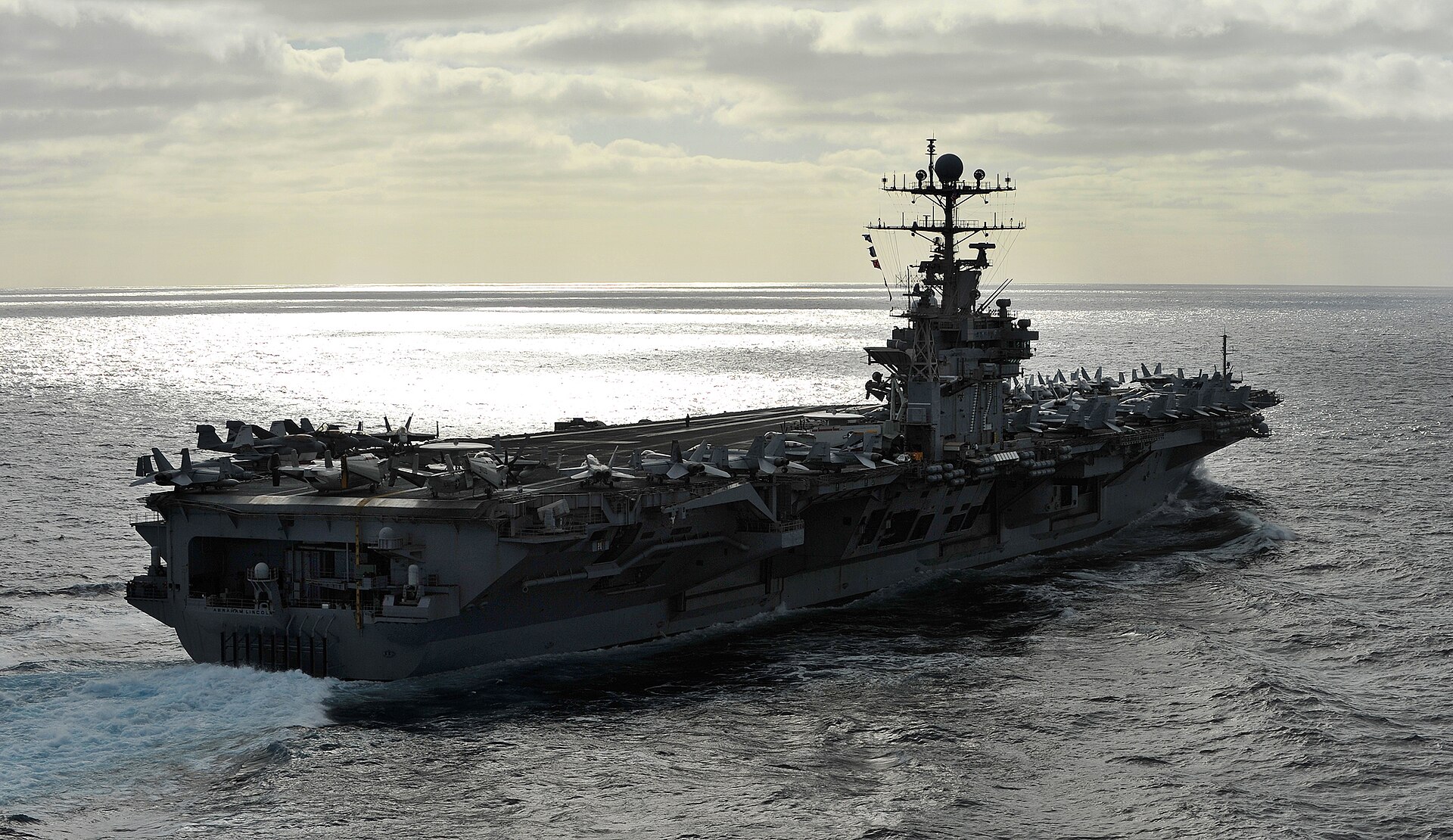
A carrier’s combat power relies on an air wing, escorts, supply ships, aircraft maintenance, munitions, intelligence, communications and thousands of sailors. The Navy describes Lincoln’s mission as conducting carrier air warfare and helping plan, control, coordinate and integrate air-wing squadrons.
That is why a warning about readiness should not be read simply as a question of whether a carrier can sail or launch aircraft. The tougher question is whether the entire strike group can sustain the pace, uncertainty and logistical burden of an unplanned or extended fight.
Planned rotations meet real conflict
Navies build deployment plans around maintenance needs, training pipelines, personnel rotations and the availability of other ships. Those plans are essential: a carrier that deploys too often or postpones maintenance repeatedly can create readiness problems later.
Conflict does not necessarily follow that timetable. The Defense Department illustrated that tension in an October 2024 announcement saying the Abraham Lincoln carrier strike group would remain in the U.S. Central Command area beyond its regular rotation date as Washington sought to bolster regional deterrence and protect U.S. forces.
Keeping a carrier on station can offer continuity during a crisis. It can also push costs elsewhere in the force, including on crews expecting relief, ships and aircraft needing maintenance, and commanders trying to cover other regions with fewer available assets.
The reported line that the Navy “didn’t plan for this war” captures the central dilemma. Military organizations can prepare for broad categories of conflict, yet still be forced to adapt when the duration, geography, adversary tactics or political limits differ from assumptions.
Readiness has a human limit
Carrier operations are often described through platforms and firepower, but sustained readiness is also a personnel issue. Sailors work in an environment where flight operations, watchstanding, repairs and security continue around the clock.
Long or altered deployments can affect morale, family stability and retention. They can also complicate training, since crews focused on immediate operations have less room to rehearse other missions or absorb new equipment and tactics.
There is an important counterargument. The Navy exists to deploy when national security conditions demand it, and experienced crews operating under pressure may become more capable in ways peacetime exercises cannot reproduce. An extension or difficult mission is not, by itself, proof of failure.
Still, the distinction between a demanding deployment and an unsustainable pattern matters. A force can meet today’s task while quietly taking on risks that appear later in maintenance backlogs, personnel departures or gaps in global coverage.
The Middle East context matters
The Abraham Lincoln has previously been used as part of a broader U.S. effort to deter escalation in the Middle East. In its 2024 statement, the Pentagon said the carrier strike group’s extended presence was among measures intended to deter aggression, reduce the risk of a wider regional conflict and defend U.S. people and interests.
That context helps explain why aircraft carriers remain central to U.S. strategy. They can move substantial airpower without relying on a host country’s air base, signal American commitment and provide options ranging from deterrence patrols to defensive operations.
But a carrier in a contested region is not operating in the relatively permissive environment assumed by older power-projection models. Modern threats can include missiles, drones, cyber disruption and attacks on supply routes. Those risks place a premium on escorts, air and missile defense, intelligence and the ability to replenish forces.
Public reporting available here does not spell out the exact conflict, operational tasking or internal assessment behind the reported Lincoln warning. Those omissions are significant. It would be premature to treat the phrase as a definitive official verdict on the Navy’s current readiness.
What the Navy may need to test
The broader takeaway is that readiness is not a fixed score. It is the ability to generate forces, keep them supplied, protect them, rotate personnel and make decisions under conditions that do not resemble the original deployment plan.
For the U.S. Navy, that can mean testing several questions at once:
- Whether carrier strike groups have enough escorts and air-defense capacity for prolonged operations.
- How quickly ships, aircraft, weapons and replacement personnel can be moved into a growing crisis.
- Whether maintenance and training schedules can absorb unexpected deployment extensions.
- How long sailors and their families can carry the burden of high-tempo operations without eroding retention.
- Whether the Navy can maintain commitments in multiple regions when a single crisis consumes major assets.
Some of those questions are longstanding, and none has a simple answer. More funding can help with maintenance, munitions and shipbuilding, but industrial capacity, crew experience and time are not instantly created. Likewise, concentrating resources on one urgent theater can reduce risk there while increasing exposure elsewhere.
The warning is about adaptation
The USS Abraham Lincoln’s reported message is ultimately a reminder that a nuclear-powered carrier is not a guarantee of effortless staying power. Its reactors provide endurance, but its effectiveness depends on people, logistics, training and a wider fleet that can absorb the demands of conflict.
For now, the public record supplied with this report supports caution about the exact wording and circumstances of the warning. What is clear is the underlying strategic issue: the U.S. Navy must prepare not only for the war plans it writes, but for the messy, extended and rapidly changing conflicts that can overturn those plans.
That is the real test behind the Lincoln’s reported lesson—and one likely to shape debates over Navy budgets, force structure and deployments long after a single carrier leaves station.









Leave a Reply