
The rock singer’s aside during “Pink Houses” shows how a federal naming order has moved from maps and agencies into pop culture. The dispute is less about one concert line than who gets to decide what Americans call familiar places.
The White House responded to John Mellencamp’s criticism of the “Gulf of America” name change after the singer mocked President Donald Trump’s directive for federal agencies to call the Gulf of Mexico the “Gulf of America” during two “Pink Houses” performances in New York and New Jersey, including Holmdel, New Jersey, on July 25. The controversy over renaming the Gulf of Mexico traces to Trump’s January 20, 2025, order and his February 9, 2025, “Gulf of America Day” proclamation, making a concert-stage jab a White House culture-war flashpoint now.
Mellencamp’s point was not subtle, and neither was the reply. A familiar lyric about the Gulf of Mexico became a test of how far an official federal name can travel once ordinary people, artists and political opponents decide they are not buying it.
The lyric that sparked it
Mellencamp, 74, has been performing on his “Dancing Words Tour,” where his 1980s hit “Pink Houses” gives him a natural opening to mention the Gulf of Mexico. In videos cited by The Hill and Nexstar, he briefly stopped during the song at recent shows to take aim at the new federal wording.
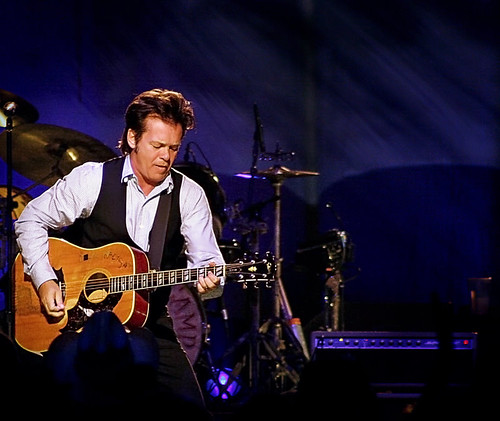
At the July 25 show in Holmdel, New Jersey, Mellencamp asked the crowd, “Wait a minute. The Gulf of Mexico? Is that right? It’s not the Gulf of America?” He then called the idea “stupid,” using profanity.
Another recent video from the tour shows him saying he was “not buying” the change and adding, “That’s just not right.” The moments were brief, but they landed because they turned an administrative renaming policy into something more personal: the words people actually use in songs, conversation and memory.
The White House fired back
White House spokesperson Davis Ingle responded in a statement to The Hill with a dismissal that was aimed as much at celebrity critics as at Mellencamp himself.
“Nobody in their right mind cares what out-of-touch, woke Hollywood celebrities have to say,” Ingle said, according to The Hill.
The line fits the administration’s broader posture toward culture figures who criticize Trump. Rather than defend the name change on procedural grounds, the response framed Mellencamp as part of a celebrity class the White House says is disconnected from ordinary Americans.
That attack also creates a slightly awkward target. Mellencamp is not primarily known as a Hollywood figure; he has long been associated with Indiana, Midwestern imagery and working-class themes. That tension is part of why the exchange spread: the White House used a familiar political label against an artist whose public persona is built around small-town America.
How the rename began
Trump signed an executive order on January 20, 2025, directing federal agencies to use “Gulf of America” for the Atlantic ocean basin long known in the United States and internationally as the Gulf of Mexico. The order placed the change inside a larger push to restore or promote names the administration said better honored American greatness.
On February 9, 2025, Trump issued a proclamation marking “Gulf of America Day,” further elevating the new phrase from bureaucratic instruction to political symbol. The practical effect was clearest inside the federal government: agencies were directed to use the new name in official references.
Congress later took up the issue. The House passed a bill intended to codify the name change, but the Senate had not taken a vote, according to The Hill’s report. That matters because an executive directive can shape federal usage, while legislation would make the renaming harder to reverse.
For now, the divide is plain: federal agencies are under direction to use “Gulf of America,” but that does not force singers, private companies, newsrooms, schools, foreign governments or the public to abandon “Gulf of Mexico.” That gap between official usage and public language is where the fight lives.
Why this fight traveled
On paper, a geographic naming dispute can sound minor. In politics, names are rarely just labels. They carry ownership, history, identity and power.
Supporters of the change argue that “Gulf of America” is a patriotic term for a body of water that borders the United States and is central to American energy, shipping, tourism and storm forecasting. Rep. Marjorie Taylor Greene, a Georgia Republican who supported the House effort, argued during floor debate that “names matter” and connected the issue to national pride.
Opponents see something different: a symbolic fight that uses federal time and resources to rename a globally recognized place. Democrats largely opposed the move, and The Hill reported that some moderate Republicans also viewed it as frivolous.
Mellencamp’s criticism gave that opposition a pop-culture voice. He did not make a committee argument or a cartographic argument. He made the kind of argument that sticks with fans: that the old name still sounds right, and the new one sounds imposed.
Mellencamp’s political history matters
Mellencamp’s jab did not come out of nowhere. He has criticized Trump before and has distanced himself from the former president’s politics in past interviews.
In 2017, he suggested on MSNBC that Trump was “the worst president ever,” though he avoided saying Trump’s name directly, according to The Hill’s account. That same year, he told Katie Couric he would not have performed at Trump’s inauguration if asked. He had performed during festivities tied to President Barack Obama’s 2009 inauguration.
At the same time, Mellencamp has also cast himself as broadly distrustful of politicians. In the MSNBC interview, he said he trusted no politicians, whether Democratic, Republican or independent, because “they all have an agenda.”
That combination makes his latest comments more than a standard partisan celebrity statement. They are also consistent with a songwriter who often presents American life as complicated, frustrated and resistant to slogans.
What remains unsettled
The immediate answer is clear: the White House has brushed off Mellencamp’s criticism, and Mellencamp has given no sign in the reported videos that he plans to adopt the new name onstage.
The bigger question is whether “Gulf of America” becomes common language outside the federal government. Names can change quickly when institutions, maps, schools and media move together. They can also fail to take hold when people hear them as political branding rather than shared description.
The Senate’s inaction leaves the legislative push unfinished. A future administration could also revisit how federal agencies refer to the Gulf, especially if the name remains politically polarizing rather than broadly accepted.
For now, the dispute has entered a place no executive order can fully control: a concert crowd singing along to an old song. The administration can tell agencies what to print. It cannot easily make John Mellencamp, or anyone else, say the line differently.





Leave a Reply